
Major Breakthrough in Residual Stress Research on Key Aviation Materials in China
 Scan to share
Nickel-based single-crystal superalloys are key materials for manufacturing turbine blades in aviation engines. Recently, the neutron scattering team from the Department of Nuclear Physics at the China Institute of Atomic Energy (CIAE) under CNNC, leveraging the Engineering Science Stress Spectrometer at the China Advanced Research Reactor (CARR), overcame technical challenges in residual stress measurement of single-crystal superalloys and established a precise three-dimensional residual stress testing method based on neutron diffraction. This provides an effective solution for residual stress assessment of critical aviation materials and lays a solid methodological foundation for the in-depth application of the CARR Engineering Science Stress Spectrometer in high-end manufacturing.
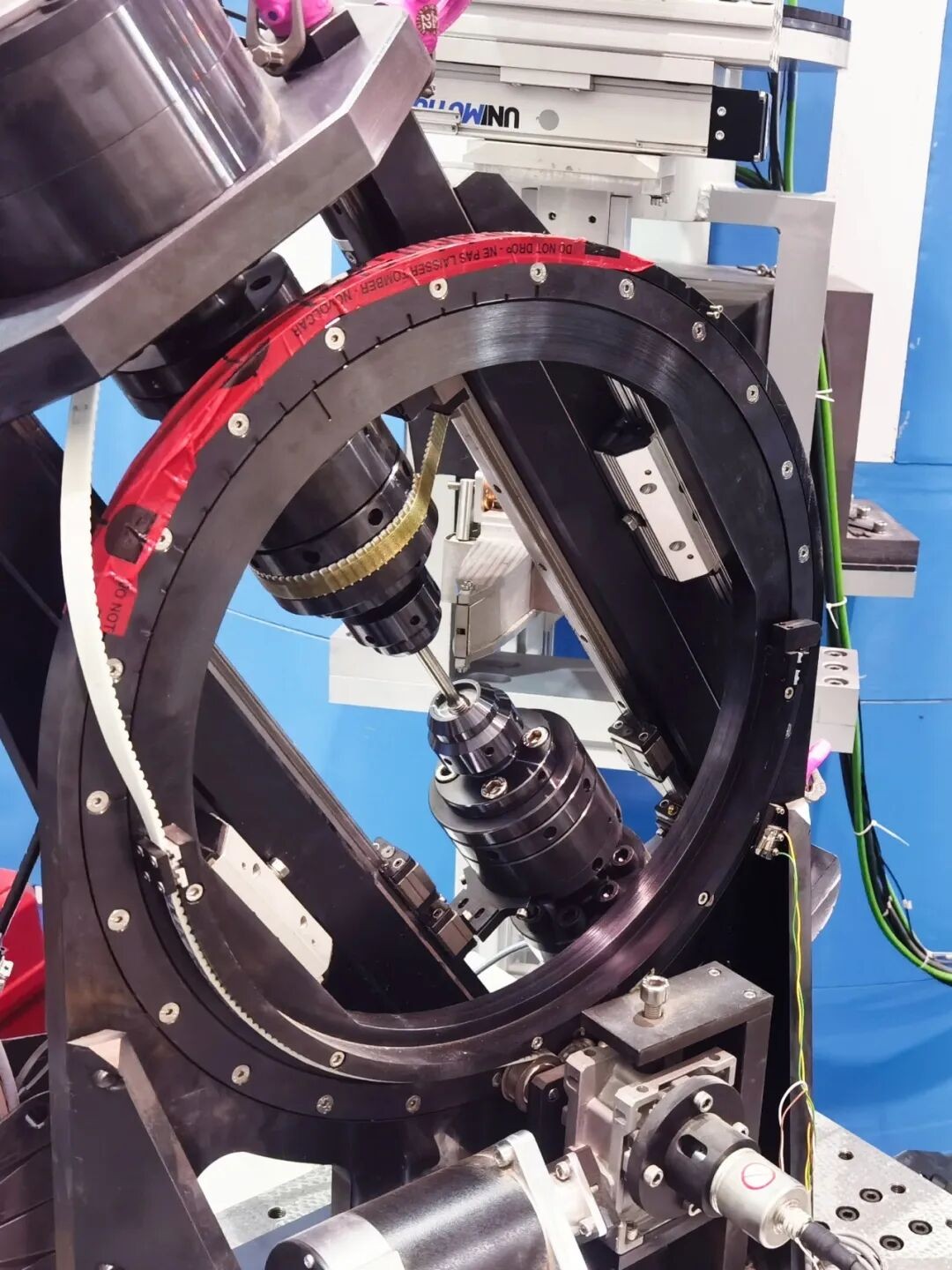
During high-temperature heat treatment or service of nickel-based single-crystal superalloys, residual stress in blades can readily induce recrystallization of the single crystal, destroying its single-crystal structure and severely degrading the high-temperature mechanical properties of the blades. Due to the anisotropy of single crystals, traditional polycrystalline neutron diffraction stress measurement techniques are not applicable. How to convert measured interplanar spacings into a complete three-dimensional stress tensor has long been an international challenge constraining residual stress assessment of single-crystal components.
To address this challenge, the neutron scattering team from the Department of Nuclear Physics at CIAE established multi-coordinate system transformation matrices, constructed a strain–stress theoretical model, and solved for the complete residual stress tensor. Meanwhile, the team utilized the CARR Engineering Science Stress Spectrometer to apply a series of known loads to samples, comparing measured stresses with known stresses to verify the high precision and reliability of the method. The relevant results were published in the internationally renowned academic journal in materials science, Journal of Materials Research and Technology.
Disclaimer: Information republished from partner media, institutions or other websites is provided for reference and communication purposes only. It does not imply endorsement of its views or verification of its accuracy. Please contact us if any content infringes rights or requires correction.