
Nuclear energy startup Hylenr completes Phase 1 testing of lattice confinement fusion reactor validation study
 Scan to share
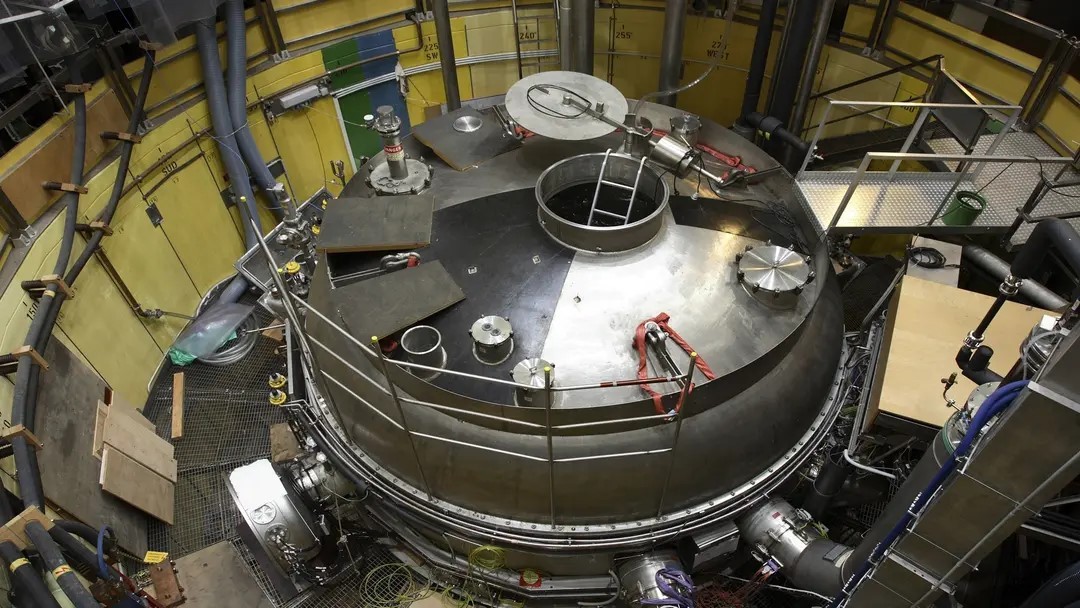
Hylenr Inc., a nuclear energy startup based in Michigan, USA, recently completed Phase 1 testing of an independent validation study of its Lattice Confinement Fusion (LCF) reactor at Texas A&M University. Experimental results showed anomalous signals in areas including heat, gas, and materials, and Hylenr stated that the data indicate the technology warrants further in-depth investigation.
Basic Test Information
In a strictly controlled laboratory environment, researchers conducted tests on Hylenr's BRT-NiUCS-2 reactor and multiple hydrogen-absorbing nickel-palladium catalyst samples, focusing on monitoring post-test heat, radiation, residual gases, and changes in catalyst materials.
The company stated that although the current results cannot yet prove that the reactor can produce fusion energy with commercial practical value, the data lay the foundation for Phase 2 research centered on reproducibility and precise measurement.
Anomalous Signal Detection
Gas Signals
Inside the operating reactor, gas analysis detected elevated signals of helium, argon, and neon. Among these, helium and argon concentrations were approximately two to three orders of magnitude above the corresponding background values. Since residual gas analysis under high vacuum did not find a corresponding increase in nitrogen, researchers preliminarily ruled out atmospheric leakage as the sole source of these anomalous gases.
Thermodynamic Measurements
Using thermocouples and a calibrated infrared imager, researchers found a significant temperature difference between the operating reactor and the calibration equipment under comparable input power conditions. In addition, analysis results from scanning electron microscopy (SEM) and energy-dispersive X-ray spectroscopy (EDX) confirmed that the catalyst samples after reaction underwent changes in both morphology and elemental composition.
Radiation Diagnostics
Unlike the heat and gas signals, radiation detection results presented a completely different picture. Geiger-Muller counters and neutron detectors did not detect any significant gamma-ray or X-ray radiation. Over a monitoring period of up to five days, neutron counts were statistically indistinguishable from the background environment.
Hylenr co-founder and CEO R. Ramaseshan stated that the company's goal has always been to go beyond internal observations and submit the technology to rigorous independent testing. Validation by Texas A&M University provided the company with important external data support.
Shao Lin, professor of nuclear engineering at Texas A&M University, noted that the Phase 1 study utilized multiple complementary analytical techniques, expanding the experimental basis for evaluating the observed phenomena and identifying priority directions for subsequent investigation.
It is understood that Hylenr will next launch Phase 2 testing, focusing on evaluating the operational reproducibility of multiple independent reactors and using quantitative calorimeters to more precisely measure heat generation.
The team will also conduct in-depth research on hydrogen absorption parameters and, through methods such as secondary ion mass spectrometry (SIMS) and inductively coupled plasma mass spectrometry (ICP-MS), carry out more detailed isotopic ratio and material characterization analysis of the reaction materials to verify whether this lattice confinement fusion technology has the engineering potential for scalable energy systems.
Disclaimer: Information republished from partner media, institutions or other websites is provided for reference and communication purposes only. It does not imply endorsement of its views or verification of its accuracy. Please contact us if any content infringes rights or requires correction.