
Zambia's Nuclear Power Planning Progress Reviewed by IAEA
 Scan to share
Recently, Zambia is committed to considering the construction of a nuclear power plant and has made progress in establishing a framework for informed decision-making. An “International Atomic Energy Agency” (International Atomic Energy Agency, IAEA) review mission stated that Zambia is steadily advancing preparations for nuclear power development along a structured path. Zambia's “Minister of Electricity” Peter·Kapala (Peter Kapala) stated that in advancing the national goal of expanding the country's generating capacity by 10,000 megawatts, nuclear energy can provide potential reliable low-carbon baseload electricity, and Zambia will continue to responsibly advance its nuclear power program in accordance with international nuclear safety, security and safeguards requirements and the standards established by the “International Atomic Energy Agency”.
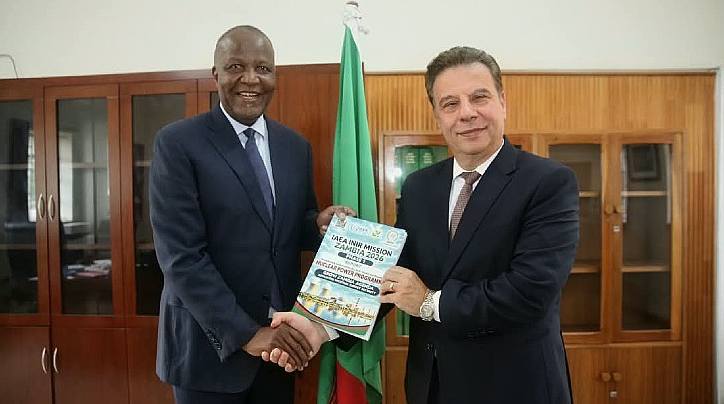
Zambia's “Minister of Science and Technology” Felix·Mutati (Felix Mutati) stated that the “International Atomic Energy Agency” mission's visit is an important component of Zambia's plan to expand energy capacity; Zambia is following a structured process to advance nuclear energy development, and the Cabinet approved in principle in 2025 the continuation of the nuclear power program and directed relevant institutions to carry out the preparatory work required for each phase of the nuclear power program, while adding that the “Integrated Nuclear Infrastructure Review” (Integrated Nuclear Infrastructure Review, INIR) mission is very valuable for planning the next steps.
It is understood that Zambia not only aims to expand energy capacity but also to reduce its dependence on hydropower, seeking reliable, low-carbon power sources to support industrialization, economic growth and national sustainable development; the “International Atomic Energy Agency” mission conducted its visit in the first week of November, with members including five experts from “Egypt” (Egypt), “Kenya” (Kenya), “Morocco” (Morocco), “Russia” (Russia) and “South Africa” (South Africa) as well as four “International Atomic Energy Agency” staff members. The mission identified good practices in several areas that could benefit other nuclear power newcomer countries, including regional knowledge sharing with other “African” (Africa) countries to support the transformation of Zambia's “Radiation Protection Authority” (Radiation Protection Authority) into a nuclear regulatory body, the early establishment of university postgraduate programs to support nuclear power program capacity building, and the involvement of the national census agency in conducting public opinion surveys.
“Senior Nuclear Engineer of the International Atomic Energy Agency's Nuclear Infrastructure Development Section and Mission Leader” John·Haddad (John Haddad) stated that Zambia has made good progress in building nuclear power program infrastructure, having initiated relevant studies and policy development, institutional and legal and international cooperation measures, and implemented new coordination arrangements, with the related work reflecting strong government support and effective coordination among the institutions involved in the nuclear power program. The “International Atomic Energy Agency” team's recommendations include strengthening the nuclear power program coordination mechanism, finalizing the comprehensive report and related studies needed to formulate the national strategy, improving the national legal framework, and clarifying the funding and human resource needs for each phase of the nuclear power program. The mission's visit results will help the “International Atomic Energy Agency” and Zambia develop an integrated work plan to provide coordinated support as the country's nuclear power program develops in the future.
Disclaimer: Information republished from partner media, institutions or other websites is provided for reference and communication purposes only. It does not imply endorsement of its views or verification of its accuracy. Please contact us if any content infringes rights or requires correction.