
White Mesa Mill in the United States to Restart Uranium Processing
 Scan to share
Recently, the latest quarterly update report from the U.S. "Energy Information Administration" (EIA) shows that U.S. "uranium concentrate" (U3O8) production in the third quarter of 2026 totaled 243,673 pounds (approximately 93.7 tonnes of uranium), a significant decline from 1,087,504 pounds in the first quarter; during the quarter, a total of 8 facilities produced uranium, including 4 in "Wyoming" ("Ross CPP", "Lost Creek Project", "Smith Ranch-Highland Operation", and "Willow Creek Project"), 3 in "Texas" ("Alta Mesa", "Burke Hollow", and "Hobson ISR"), and 1 in "Nebraska" ("Crow Butte Operation"); all 8 facilities are "in-situ recovery" (ISR, also known as "in-situ leach") projects.
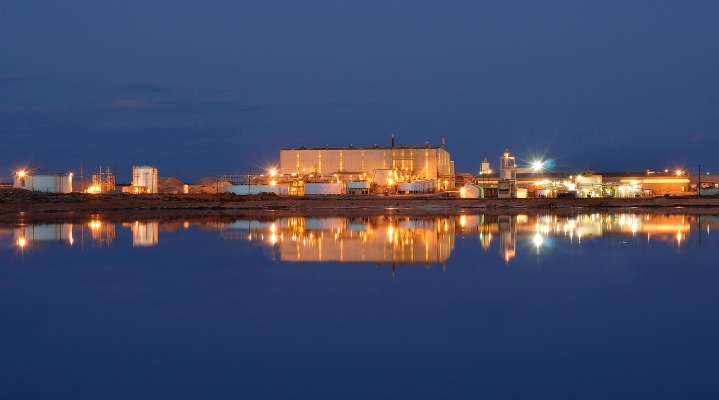
The production decline is mainly attributed to the fact that the "White Mesa mill", the only operating conventional uranium mill in the United States, located in southern "Utah", did not conduct uranium production in the third quarter. "Energy Fuels" announced earlier this year that after meeting its production guidance for the year, it stopped uranium processing in June to rebuild ore inventory and instead carried out "rare earth elements" (REE) processing; the company now states that it plans to launch a processing campaign in December, expected to produce approximately 1 million pounds of "uranium concentrate" to support deliveries under its existing uranium supply contracts through 2028, while retaining flexibility for spot market sales when market conditions are favorable; the mill will then continue producing "rare earth elements" for most of the remainder of 2027 and in 2028.
"Energy Fuels President and Chief Executive Officer" Ross Bhappu stated that "Energy Fuels" is currently the leading uranium producer in the United States, and the company plans to maintain and consolidate this position; in 2026 alone, the company expects to mine and produce approximately 1.6 million to 2 million pounds of uranium in total, with the mill processing campaign planned to begin at the end of 2026 and continue into 2027 providing important support; at the same time, the company recognizes that the "Pinyon Plain mine" in "Arizona" is expected to gradually decline in production over the coming years, and is therefore advancing multiple additional U.S. uranium projects to replace production and provide future growth opportunities.
It is reported that these projects include the "Whirlwind" project in "Colorado", and the "Energy Queen" and "Bullfrog" projects in "Utah"; the company is also conducting supplementary drilling and resource delineation work at the "Nichols Ranch in-situ recovery project" in the "Powder River Basin" in "Wyoming"; these projects together are expected to add approximately 1.25 million pounds per year of "uranium concentrate" production capacity.
Among them, the "Whirlwind" project is a partially developed conventional uranium and vanadium deposit in the permitting advancement stage, located at the border of "Colorado" and "Utah", approximately 150 miles (about 241 kilometers) north of the "White Mesa mill" along the highway; recent work includes dewatering, rehabilitation of the existing decline, and initiation of underground development operations; "Energy Fuels" states that the mine is close to production-ready status upon completion of permitting, with first production currently scheduled for 2028, but possibly earlier depending on permitting and market conditions; a 2011 "NI 43-101 technical report" (which the company states is now considered historical data) shows that the project has 1 million pounds of "uranium concentrate" indicated uranium resources and 3.3 million pounds of "vanadium pentoxide" (V2O5), plus 2 million pounds of "uranium concentrate" inferred resources; the company plans to conduct a drilling program after the mine goes into production to seek conversion of historical inferred resources into current mineral resources.
The "Energy Queen" project is a partially developed conventional uranium and vanadium deposit in "Utah" in the permitting advancement stage, with estimated mineral resources of 750,000 pounds of "uranium concentrate" (compliant with "S-K 1300" and "NI 43-101"); as an extension of the company's currently producing "La Sal Complex", the project was partially developed in the 1980s by "Hecla Mining Company" and produced 41,922 pounds of "uranium concentrate" between 1981 and 1982; rehabilitation work on existing systems is currently underway to restore active mining status.
In addition, the "Bullfrog" project is described by "Energy Fuels" as a large undeveloped conventional uranium deposit located in the historically resource-rich "Henry Mountains Mining District" in "Utah", approximately 100 miles west of the "White Mesa mill"; a 2025 "Initial Assessment" prepared in accordance with "S-K 1300" and "NI 43-101" standards shows that the deposit has 10.51 million pounds of "uranium concentrate" indicated mineral resources and 3.42 million pounds of inferred mineral resources; pre-permitting preparation work is progressing smoothly, and "Energy Fuels" regards it as a near-term potential feed source for the mill; meanwhile, "Nichols Ranch" is a fully permitted and developed in-situ recovery uranium project that produced approximately 1.2 million pounds of "uranium concentrate" between 2016 and 2018, and was subsequently placed on standby due to weak uranium market conditions; the company is advancing work to enable a relatively rapid restart of the project when conditions permit.
Disclaimer: Information republished from partner media, institutions or other websites is provided for reference and communication purposes only. It does not imply endorsement of its views or verification of its accuracy. Please contact us if any content infringes rights or requires correction.