
Pilot Testing to Be Conducted at Russia's Zheleznogorsk Reprocessing Centre
 Scan to share
Recently, “Rosatom” stated that the nuclear fuel reprocessing centre located in “Zheleznogorsk”, “Krasnoyarsk region”, Russia, will soon begin pilot-scale trial operation after completing the equipment commissioning process. The “Experimental and Demonstration Centre” in “Zheleznogorsk” is part of Russia's goal to achieve a closed fuel cycle, aimed at recovering valuable materials from spent fuel for use in producing new fuel for fourth-generation energy systems.
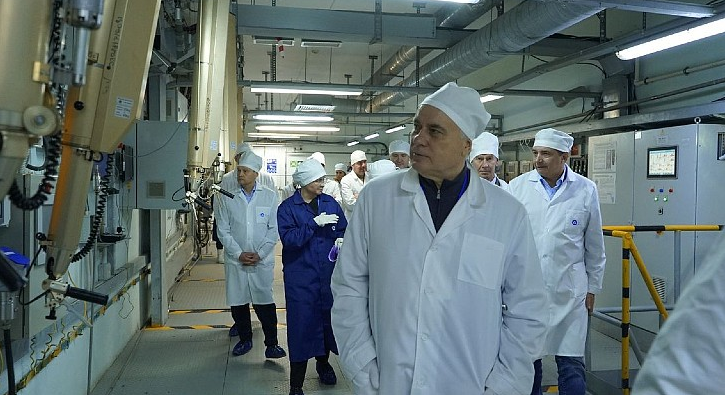
“Andrey Nikipelov”, “Deputy Director General for Mechanical Engineering and Industrial Solutions of Rosatom”, stated that spent fuel is no longer an endpoint but a starting point, a resource for generating new clean zero-carbon energy. The closed fuel cycle also means returning valuable materials to production and continuously addressing the issue of greatest public concern over decades, reducing the volume of radioactive waste and ensuring the safe isolation of reprocessing residues. He also stated that if the established schedule for constructing spent fuel reprocessing-related infrastructure is maintained, the volume of high-level waste generated from nuclear power plant operation can be reduced by a factor of 100 by 2050. Environmental responsibility is not limited to power generation but also covers the entire nuclear fuel lifecycle.
It is understood that the advancement of reprocessing pilot testing and the construction of the underground laboratory are coordinated and interconnected, providing both technical validation for the new fuel cycle of fourth-generation energy systems and an experimental foundation for the long-term safe disposal of waste that is difficult to reuse, further improving Russia's spent fuel recovery and radioactive waste management system.
“Rosatom” stated that infrastructure construction of the underground laboratory in the same region by the “National Operator for Radioactive Waste Management” (NO RAO) is also progressing, aimed at providing a scientific basis for the safe isolation of radioactive waste that cannot be reused. At a depth of more than 500 metres in the gneiss formations of the “Nizhnekansky Granite Massif”, researchers will study the feasibility of disposing of high- and intermediate-level long-lived radioactive waste in a geological environment. The laboratory aims to obtain experimental data to assess the ability of rock formations and engineering barriers to reliably retain radionuclides over thousands of years. The new laboratory is planned to be commissioned in 2031.
It is understood that the advancement of reprocessing pilot testing and the construction of the underground laboratory are coordinated and interconnected, providing both technical validation for the new fuel cycle of fourth-generation energy systems and an experimental foundation for the long-term safe disposal of waste that is difficult to reuse, further improving Russia's spent fuel recovery and radioactive waste management system.Disclaimer: Information republished from partner media, institutions or other websites is provided for reference and communication purposes only. It does not imply endorsement of its views or verification of its accuracy. Please contact us if any content infringes rights or requires correction.