
Search Results
Keyword:Digital Twin
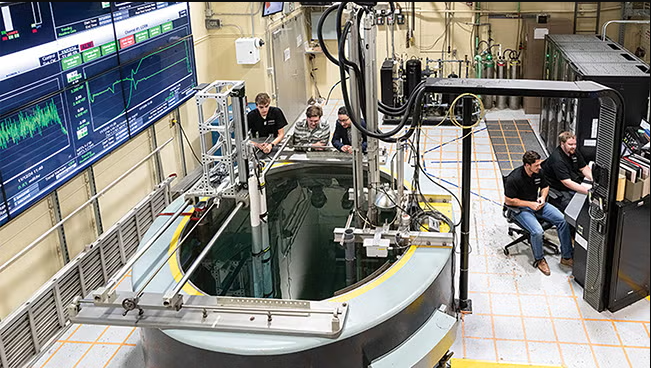
Purdue University Completes the First Remote Real-Time Autonomous Power Control Experiment on a Nuclear Reactor in the United States, Building a Cross-State Digital Twin Closed Loop
Purdue University, in collaboration with Idaho National Laboratory (INL) and the University of Illinois Urbana-Champaign (UIUC), has for the first time in the United States achieved remote, automatic, and real-time experimental regulation of nuclear reactor power. The demonstration validated a three-site control closed loop spanning Indiana, Idaho, and Virginia, providing a cutting-edge engineering paradigm for future centralized remote monitoring and automated scheduling of advanced reactors from hundreds or even thousands of miles away. The experiment relied on Purdue University's 64-year-old Reactor Number One (Purdue University Reactor Num...
2026-09-24
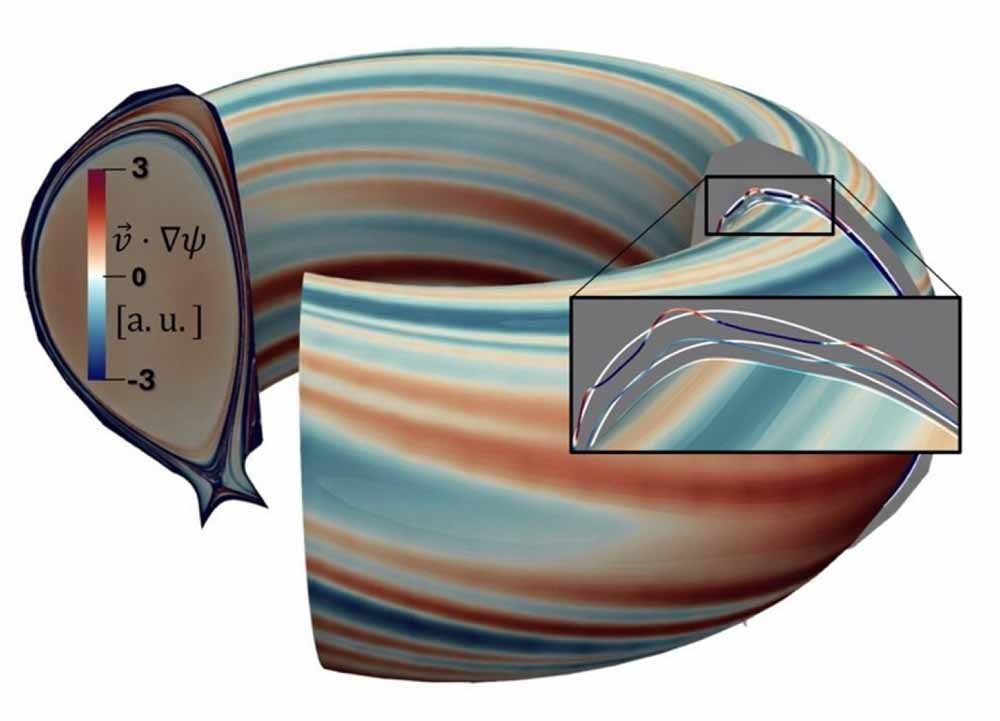
Digital twins are becoming an important R&D pathway in fusion research
Recently, a new paper reviewed the progress of digital twin technology in fusion research over the past five years and noted that several key gaps remain before a complete digital twin model of a fusion power plant can be achieved. Simulating the movement of tungsten in the plasma core. Copyright: (F. Jenko et al., 2026, *Nuclear Fusion* 66 116014) Digital twins are a class of virtual models that reflect the structure, environment, and behavior of physical systems, and can be used to predict future system states and inform real-world decision-making. In fusion research, as issues in plasma physics, device engineering, and material interactions grow increasingly complex, digital twins are considered promising...
2026-09-07
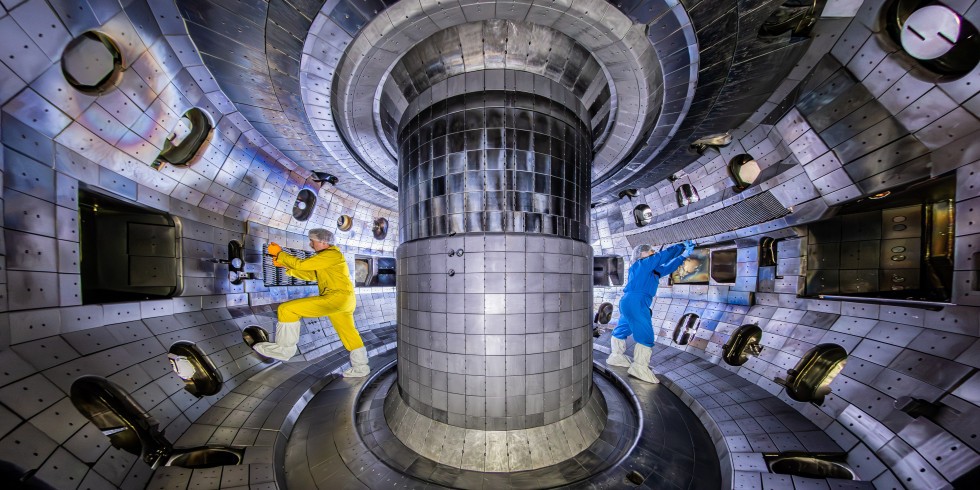
Machine learning framework predicts micro-displacements of DIII-D fusion device coils
Researchers at the U.S. Department of Energy's (DOE) Thomas Jefferson National Accelerator Facility (Jefferson Lab) and collaborating teams have developed a machine learning framework that can predict subtle changes in critical fusion device hardware before the next experiment begins. The method targets the DIII-D National Fusion Facility in San Diego, and the findings have been published in the journal Machine Learning with Applications. Interior of the DIII-D National Fusion Facility tokamak. (Image courtesy of General Atomics) DIII-D is a tokam...
2026-08-17

Aegis to Develop Digital Twin Control Platform for Marine Nuclear Hybrid Energy with Ontario Tech University
Aegis Critical Energy Defence Corp. announced on August 12 that it will undertake a multi-year research collaboration with Ontario Tech University through the Mitacs Accelerate program. The project, valued at CAD 480,000, aims to develop and test a digital twin-based control platform to support the safe, reliable, and robust operation of small modular reactor and micro modular reactor (SMR/MMR) hybrid energy systems in marine environments. Under the project arrangement, the research team will simulate changing loads, system faults, and...
2026-08-13