
Search Results
Keyword:Korea nuclear safety

Korea Nuclear Safety Foundation Signs MRA with IEEE of the United States to Enhance International Credibility of Nuclear Power Equipment Performance Verification
The Korea Nuclear Safety Foundation (Chairman Kim Sung-jin) formally signed a Mutual Recognition Agreement (MRA) in the field of nuclear power equipment performance verification with the Institute of Electrical and Electronics Engineers, Incorporated (IEEE) on the 14th in Seongnam City, Gyeonggi Province. The core of this MRA lies in: both parties mutually recognizing that their respective performance verification certification systems possess equivalent levels of professional competence and quality management capability. Under the agreement, the Korea Nuclear Safety Foundation and IEEE will mutually confirm that each other's performance verification systems continuously maintain the same...
2026-09-14
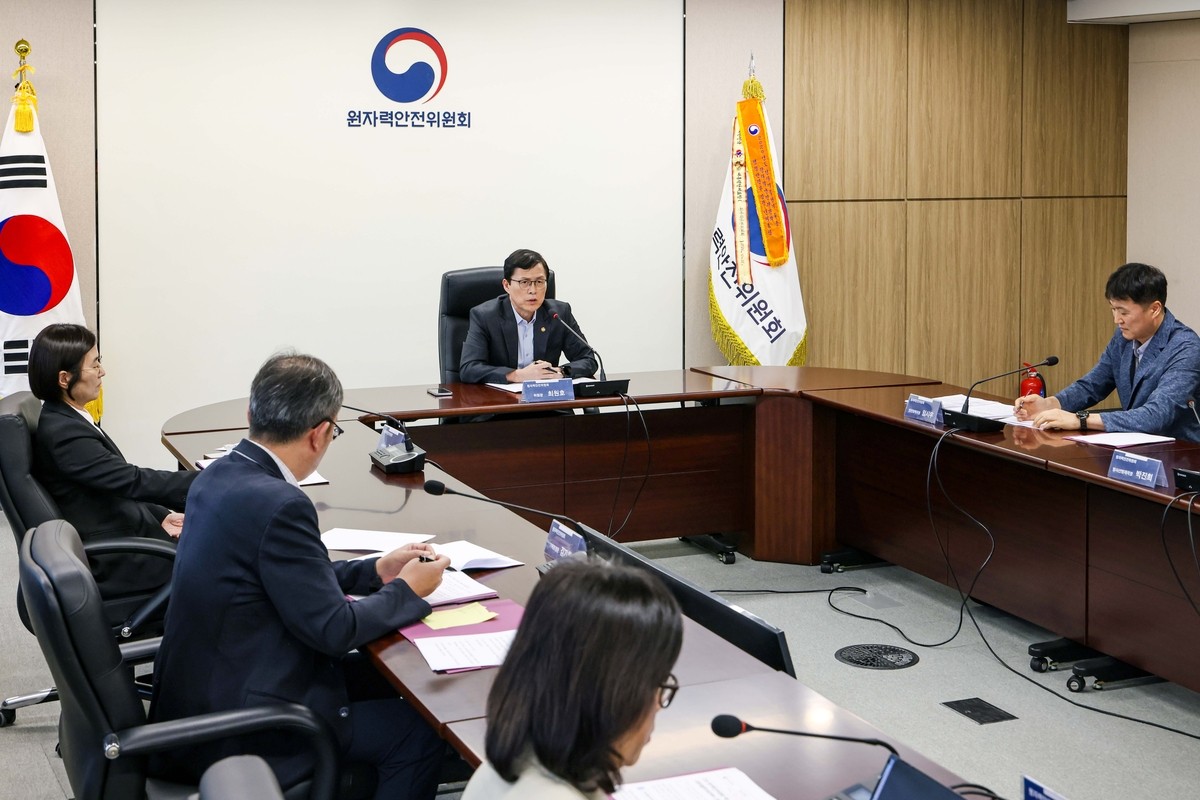
South Korea's Nuclear Safety Regulatory Budget for 2027 Rises to KRW 303 Billion
The Nuclear Safety and Security Commission (NSSC) of South Korea announced on September 1 that it has allocated KRW 303 billion for the 2027 budget, an increase of KRW 10.4 billion from this year. The new budget focuses on areas such as small modular reactor regulation, spent nuclear fuel safety, nuclear facility decommissioning review, environmental radiation monitoring, and nuclear safety information disclosure. Regarding small modular reactors, as non-light water reactor-type small modular reactor development projects aim to obtain licenses by the early 2030s, South Korea will invest KRW 8 billion in R&D to establish a new safety evaluation system. In addition, in line with the preliminary review system set to take effect in November this year, the government has allocated KRW 2.7 billion to conduct preliminary reviews of non-light water reactor-type small modular reactors expected to file applications next year. This system allows applicants to request regulatory review of reactor designs before formally submitting license applications.
2026-09-02
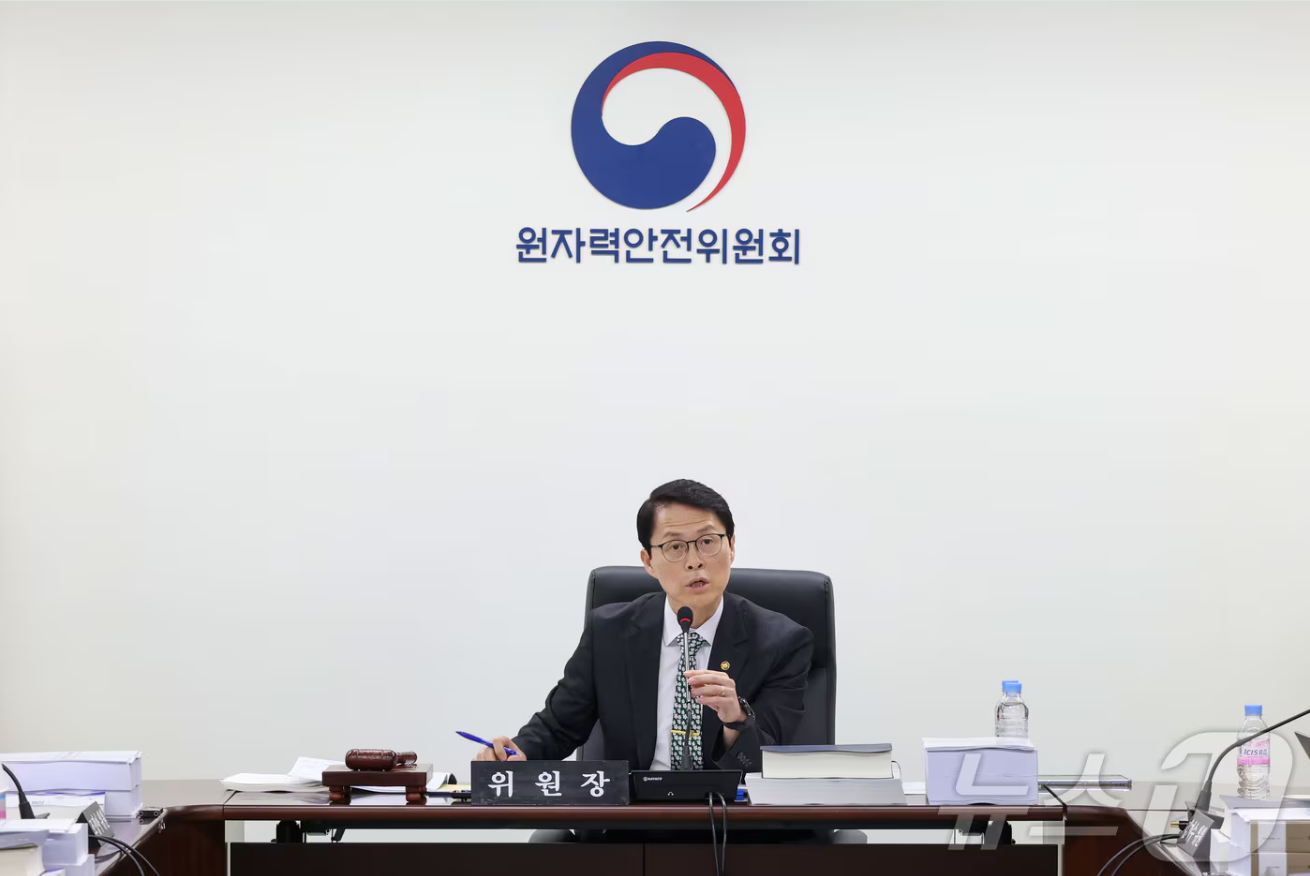
South Korea to Launch National Radiation Monitoring Center in 2027
The South Korean government reviewed and approved the "2027 Budget Plan" at a cabinet meeting on September 1. According to the budget arrangement, South Korea will launch the National Radiation Monitoring Center in 2027 to centrally collect and manage national environmental and marine radioactive information; simultaneously, it will expand the Nuclear Safety Information Sharing Center to strengthen direct communication with residents near nuclear power plants. The Nuclear Safety and Security Commission (NSSC) has allocated 1.4 billion KRW for the construction and operation of the National Radiation Monitoring Center. The project aims to strengthen the environmental radioactivity monitoring and analysis system to address regulatory demands arising from the expansion of domestic nuclear power utilization in South Korea and the increased operation and construction of nuclear facilities in neighboring countries. The National Radiation Monitoring Center is planned...
2026-09-01

South Korea Amends Nuclear Safety Act to Clarify Safety Responsibilities of Nuclear Facility Operators
The National Assembly of South Korea passed a partial amendment to the Nuclear Safety Act at its 438th special session on August 20, marking the first time that nuclear-related business operators' primary responsibility for nuclear facility safety has been explicitly established at the legal level. This move signifies that South Korea's nuclear safety management system will further transition from a licensing and regulation-centered approach to a responsibility system aligned with the safety principles of the International Atomic Energy Agency (IAEA). The amendment was proposed by South Korean lawmaker Oh Se-hee. Prior to the revision, South Korea's Nuclear Safety Act primarily established safety standards and regulatory procedures around reactor construction and operating licenses, nuclear material use, and radioactive waste management facility operations, but lacked...
2026-08-21
South Korea Accelerates Safety Reviews of Long-Term Operating Nuclear Reactors and Advances Licensing of First Spent Fuel Dry Storage Facility
The Nuclear Safety and Security Commission (NSSC) of South Korea stated at its second-half work report meeting on August 4 that it will accelerate safety reviews of long-term operating nuclear reactors while simultaneously advancing regulatory efforts such as licensing systems for spent fuel dry storage facilities and small modular reactors. Under the plan, the NSSC will conduct safety inspections on nine reactors applying for continued operation, with review standards referencing newly built nuclear power plants and confirming safety margins in consideration of the characteristics of long-term unit operation. Among these, whether Kori Nuclear Power Plant Units 3 and 4 will be approved for continued operation in the second half of this year, and whether Hanbit Nuclear Power Plant Units 1 and 2 will be approved for continued operation in the first half of next year, are the near-term review priorities...
2026-08-05