
Search Results
Keyword:Nuclear

U.S. Fusion Company Advances Deuterium-Helium-3 Fusion Testing
American Fusion Inc. on August 27 announced progress in ongoing testing of the Texatron Fusion Engine and released computational and experimental observations regarding the device's ability to achieve deuterium-helium-3 (D-³He) fusion conditions. The company stated that the test program is evaluating two Texatron configurations at approximately 500 kilowatts and 5 megawatts, with the core technical approach being proprietary pulsed magnetic compression. Texatron's R&D focus is on utilizing short-duration, high-intensity electromagnetic pulses to compress and heat plasma in extremely short timeframes, simultaneously creating the conditions required for fusion, including high temperature, high pressure, high density, and a certain confinement time. American Fusion Inc...
2026-08-28
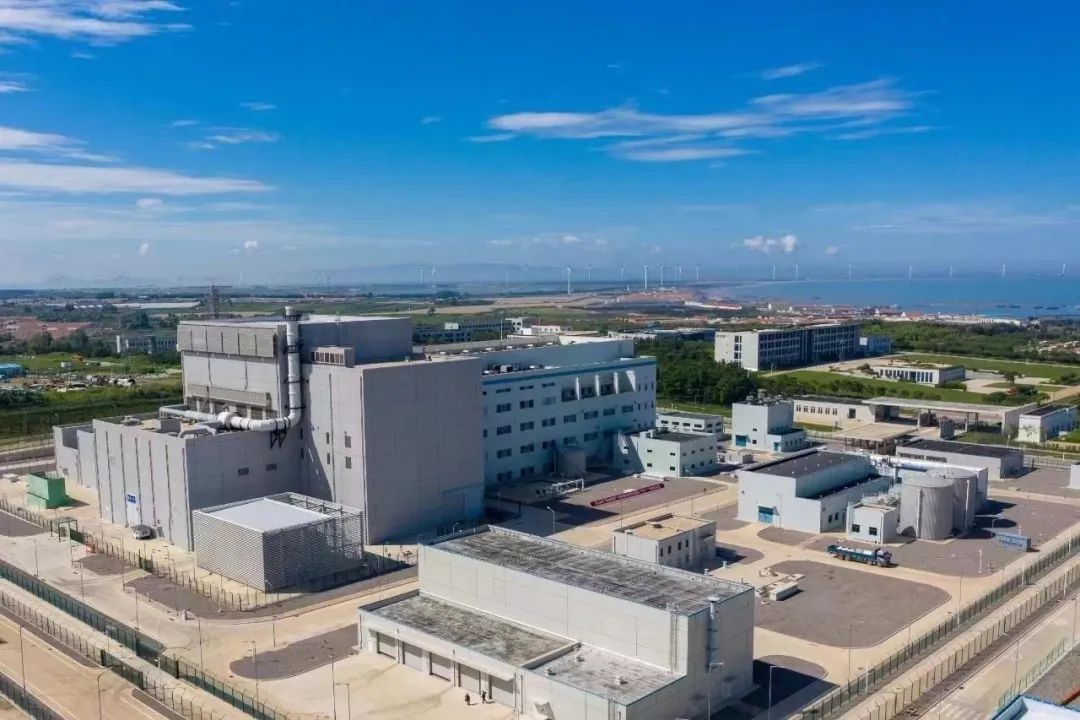
China Unicom Yantai Branch and CNNC Shandong Build 5G Dedicated Network for Nuclear Power
Recently, the 5G dedicated network project jointly built by China Unicom Shandong Yantai Branch and CNNC Shandong was officially deployed and put into operation. Targeting the requirements of nuclear power scenarios for communication network security, reliability, and low latency, the project introduces technologies such as 5G dedicated networks, edge computing, artificial intelligence, and big data to promote the implementation of digital capabilities in nuclear power park construction and production support scenarios. CNNC Shandong, affiliated with China National Nuclear Corporation, undertakes tasks related to nuclear power unit power generation and grid connection. During project construction, China Unicom Shandong Yantai Branch, in collaboration with Huawei, adopted end-to-end domestically produced equipment, achieving independent controllability in both hardware and software, filling the gap in domestic 5G dedicated network construction in the nuclear power sector...
2026-08-28
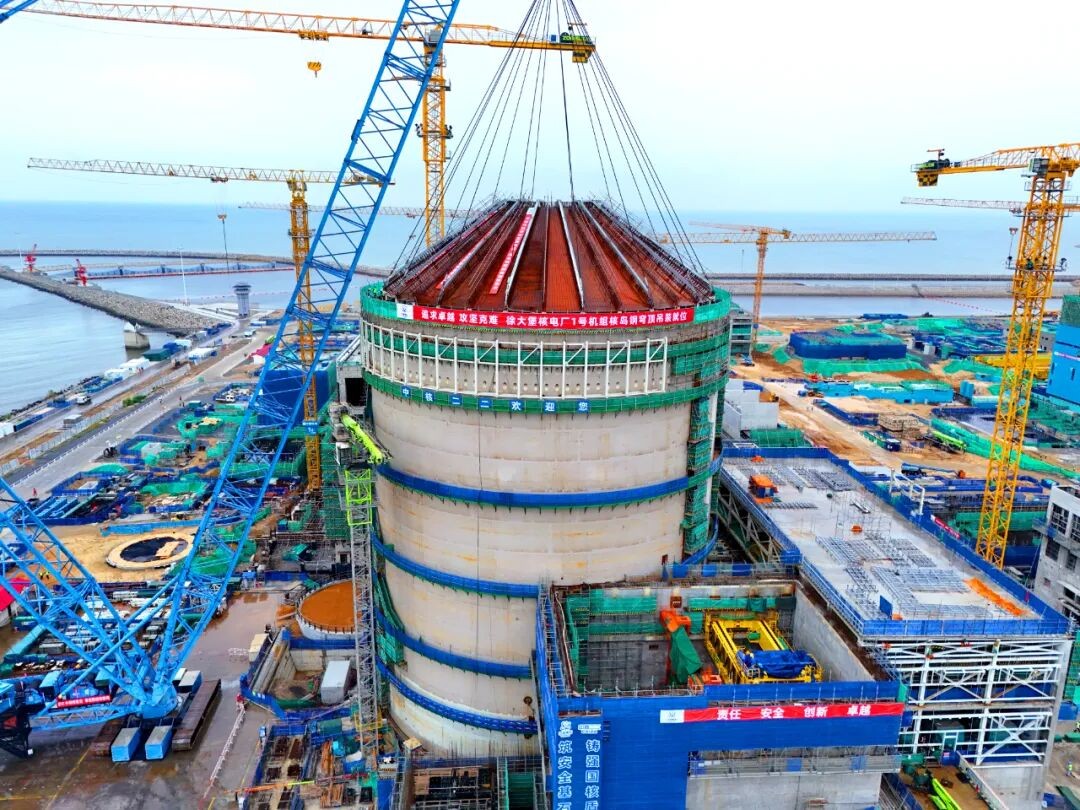
Steel Dome of Unit 1 at Liaoning Xudabao Nuclear Power Plant Hoisted into Place
On August 28, the steel dome of the nuclear island of Unit 1 at Liaoning Xudabao Nuclear Power Plant, invested and controlled by China National Nuclear Corporation (CNNC)'s China National Nuclear Power, was hoisted into place, marking that the large steel structure module construction of the unit has entered its final stage and laying a solid foundation for achieving the milestone of structural completion of the nuclear island buildings. As the core load-bearing structure of the nuclear island, the steel dome sits atop the steel-plate concrete structure, bearing all loads from the passive containment cooling water storage tank and the structures above. It serves as a critical barrier safeguarding the structural integrity and sealing reliability of the reactor building. The dome is conical in shape, composed of radial main beams, ring beams, steel cladding panels, and a bottom steel platform, with a diameter of approximately 41 meters, a height of 11 meters, and a total hoisting weight of nearly 1,000 tons...
2026-08-28

Tianwan Nuclear Power Advances AI-Empowered Intelligent Upgrade of Maintenance Operations
In recent years, the maintenance domain of Tianwan Nuclear Power has relied on platforms such as Hezhi·Longling to address pain points in efficiency, quality, and management across the entire maintenance business chain, promoting the integration of artificial intelligence with nuclear power maintenance scenarios. To date, applications including personnel profiling, work order generation, compliance inspection, and auxiliary generation of electric actuator maintenance plans have achieved phased results, while projects such as the intelligent lifting command platform and marine tunnel cleaning robot are also under development. In personnel management, Tianwan Nuclear Power has established a seven-dimensional personnel capability scoring model, setting differentiated evaluation indicators for different maintenance positions to form position-based, data-driven personnel capability profiles. The system can integrate historical data, support multi-period data retention and trend comparison, and display personnel capability distribution through radar charts, bar charts, and trend graphs. After batch data import, the backend automatically completes normalization calculation, multi-dimensional scoring, and ranking, generating materials that include overall overview, position comparison, special analysis of responsibility performance, and improvement suggestions, providing a basis for training resource allocation, position matching, and differentiated management. To address the issues of time-consuming maintenance work order preparation and reliance on manual experience, the relevant team has developed an intelligent work order preparation assistant based on the Longhuitong intelligent agent platform, forming an application solution of "1 intelligent agent, 1 Skill capability, and 7 categories of professional knowledge bases." The system integrates the historical work order library, maintenance procedure library, equipment ledger library, risk and safety measure library, spare parts and tools library, personnel qualification library, and management procedure library. It can dynamically generate work package catalogs based on historical operation data and procedural requirements, automatically fill in work order business content, and output downloadable Excel work package drafts that can interface with the EPM system. In terms of maintenance quality control, Tianwan Nuclear Power has developed an AI intelligent agent for maintenance compliance inspection. Based on large language models and RAG retrieval-augmented generation technology, this agent can batch receive maintenance procedures, preventive maintenance program lists, and maintenance completion reports, automatically parse document content, and conduct semantic comparison. The system can check item by item the coverage of maintenance procedure implementation steps by the program, while also identifying issues in completion reports such as missing items, omissions, data anomalies, missing signatures, and logical contradictions. The structured inspection reports it outputs can be traced back to specific procedure steps or report entries, and provide rectification suggestions. Intelligent assistance is also being introduced into maintenance of key equipment. Given the large number of electric actuators in nuclear power plants, their complex models, and high maintenance requirements, Tianwan Nuclear Power has developed an auxiliary generation system for electric actuator maintenance plans. After engineering personnel input equipment information and fault descriptions, the system can call upon the electric actuator maintenance knowledge base, historical plans, and equipment data to automatically generate a draft maintenance plan, covering cause analysis, maintenance steps, technical key points, spare parts and tool preparation, and safety precautions. Verified by maintenance engineers, the relevant plans have basically met the conditions for on-site application and can save preparation time for emergency repairs. In addition to applications already deployed, Tianwan Nuclear Power is also advancing the construction of an intelligent lifting command platform. Given the high professionalism and numerous control links involved in crane lifting operations at nuclear power plants, the platform is planned to support both web and API interface usage, and to manage processes such as development, training, and online monitoring through AI models. According to the design, the platform can assist in lifting planning after inputting lifting object parameters and site conditions, recommending equipment and lifting point positions, and alerting to risks such as overload and collision. It can also generate lifting plans based on cargo information, provide handling steps, required materials, and contact person information for emergency situations, and be used for training question bank generation, operation record analysis, and rectification report output. Tianwan Nuclear Power stated that it will continue to expand AI application scenarios in the maintenance domain based on actual production needs, promote the digitalization and intelligent upgrade of maintenance operations, and strengthen network security management while advancing intelligent applications, providing support for the safe and stable operation of the units.
2026-08-28

Multiple African countries push nuclear power projects from planning to financing and construction
According to the nuclear energy special report in the recently released "Nuclear Industry Insights, Fourth Quarter 2026," more than a dozen African countries are attempting to advance nuclear power from policy concepts to financeable, constructible project stages. The report notes that rising demand for reliable, low-carbon baseload power is an important backdrop for nuclear energy's return to Africa's energy strategy discussions. Currently, two of Africa's more advanced nuclear projects have reached new milestones. The reactor pressure vessel for Unit 2 of Egypt's El Dabaa Nuclear Power Plant was installed on July 9, 2026. Previously, Unit 1 completed a similar installation in November 2025. El Dabaa is Egypt's first nuclear power plant, planned with 4 units and a total installed capacity of 4...
2026-08-28
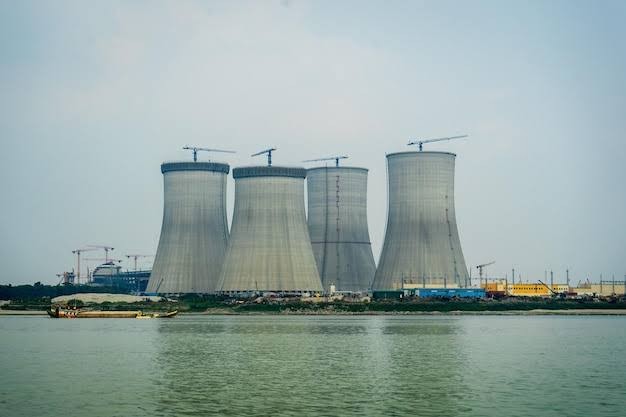
Bangladesh Science and Technology Minister Meets Russian Delegates to Advance Rooppur Nuclear Power Plant Grid Connection
Bangladesh Science and Technology Minister Fakir Mahbub Anam met with Andrey Rozhdestvin, General Director of Rosatom Energy Projects JSC, a subsidiary of Russia's Rosatom, in Washington, D.C., USA, on August 27. The two sides held bilateral talks on the construction progress of the Rooppur Nuclear Power Plant and subsequent grid connection arrangements. The discussions focused on the overall construction progress of the Rooppur Nuclear Power Plant, acceleration of remaining work, and the technical and coordination measures required to deliver power from the unit to Bangladesh's national grid as soon as possible while adhering to established procedures...
2026-08-28
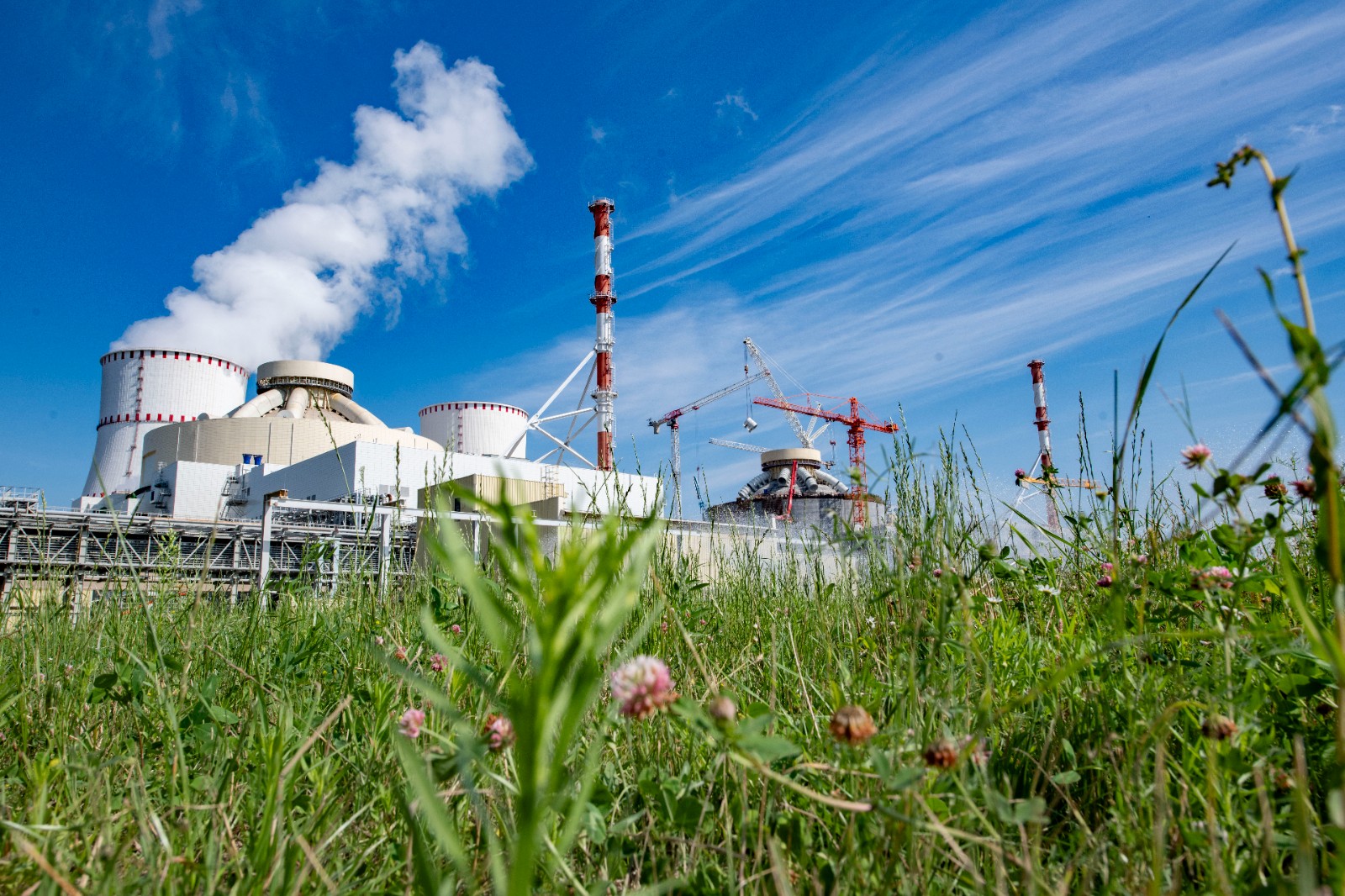
Unit 3 of Russia's Kursk Nuclear Power Plant resumes operation after short-term maintenance
Rosatom reported on August 27 that Unit 3 of the Kursk Nuclear Power Plant has resumed operation after completing short-term unscheduled maintenance. Rosatom stated that Unit 4 of the Kursk Nuclear Power Plant remains under planned preventive maintenance. The announcement did not disclose the specific reasons for or the duration of the maintenance on Unit 3. Meanwhile, construction of new units at the Kursk Nuclear Power Plant continues to progress. The new units employ modern VVER-TOI reactor technology, with the first unit already commissioned and generating electricity...
2026-08-28
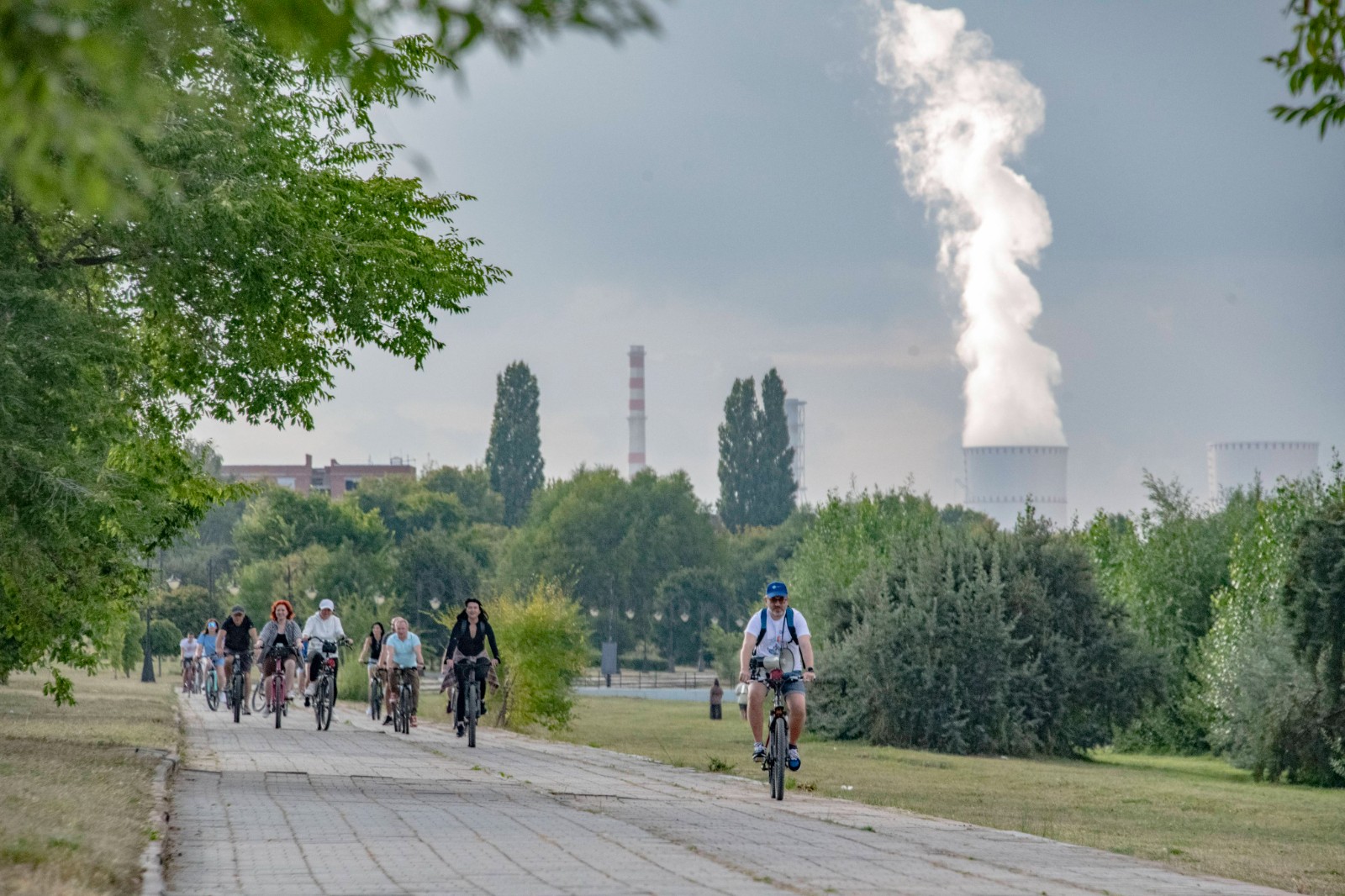
Russia's Kursk Nuclear Power Plant Releases Annual Environmental Report
Russia's Kursk Nuclear Power Plant recently presented its annual environmental report to local residents in the city of Kurchatov. This year's presentation adopted a cycling event format for the first time, with participants including local residents, city Duma deputies, and relevant personnel, held in the area of Warm Coast Park. The Kursk Nuclear Power Plant is part of Rosenergoatom, the power generation division operator of Russia's state nuclear corporation Rosatom. The plant stated that the event route was specially designed to allow participants to learn about environmental protection data during the ride and directly observe the environmental conditions in the area surrounding the plant. Kursk...
2026-08-28
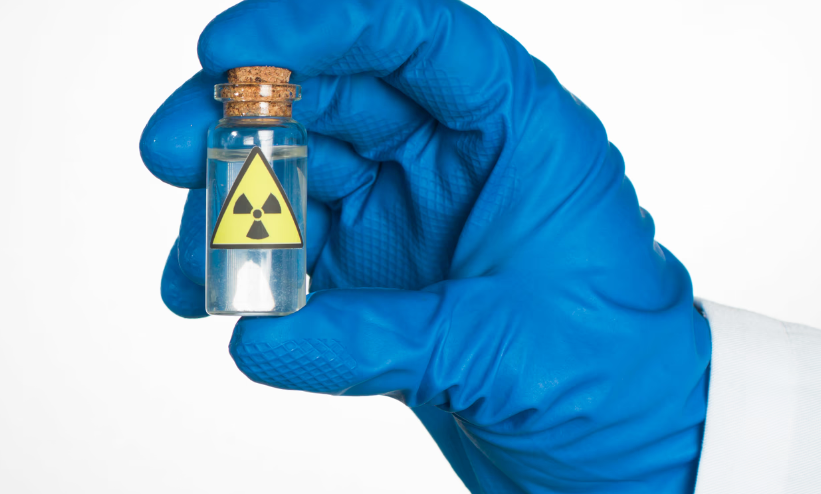
Russian Thorium-Based Radiopharmaceuticals Expected Within 1-2 Years
On August 27, Igor Korobko, Professor of the Russian Academy of Sciences and Director of the Department of Medical and Scientific Development in Healthcare of the Russian Ministry of Health, stated at the Technoprom Forum held in Novosibirsk that thorium-based drugs for precision radionuclide therapy of tumors are expected to become available in Russia within the next 1 to 2 years. Korobko noted that tumor treatment still requires support from more available isotopes. For example, when patients develop resistance to actinium-related therapies, clinical practice necessitates the use of different isotopes for treatment. He stated that Russia is advancing the development of related therapies domestically and expects to have thorium-based drugs within the next year or two. Currently, actinium-225 is considered one of the more promising radionuclides...
2026-08-28
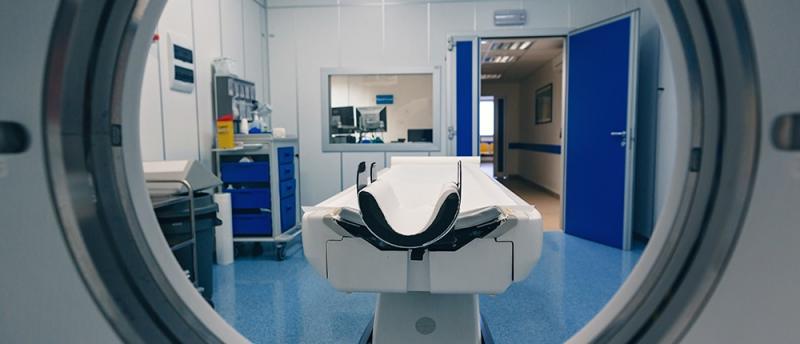
Russia Plans to Complete Development of First Domestic Proton Beam Therapy Cyclotron by 2027
Russian scientists plan to complete the development of the country's first domestically produced proton beam therapy cyclotron by 2027, with commissioning to begin in the same year. This progress was announced by Sergey Gertzog, CEO of the Russian National Institute of Electronics and Atomic Energy (NIIEFA), at the recent Technoprom forum held in Novosibirsk. A proton beam therapy cyclotron is a type of charged particle accelerator that uses magnetic and electric fields to accelerate protons to high-energy states, reaching speeds of one-half to two-thirds the speed of light. The accelerated proton beam can target cancerous tumor areas with relative precision for oncological treatment. According to the schedule outlined in Gertzog's report...
2026-08-28
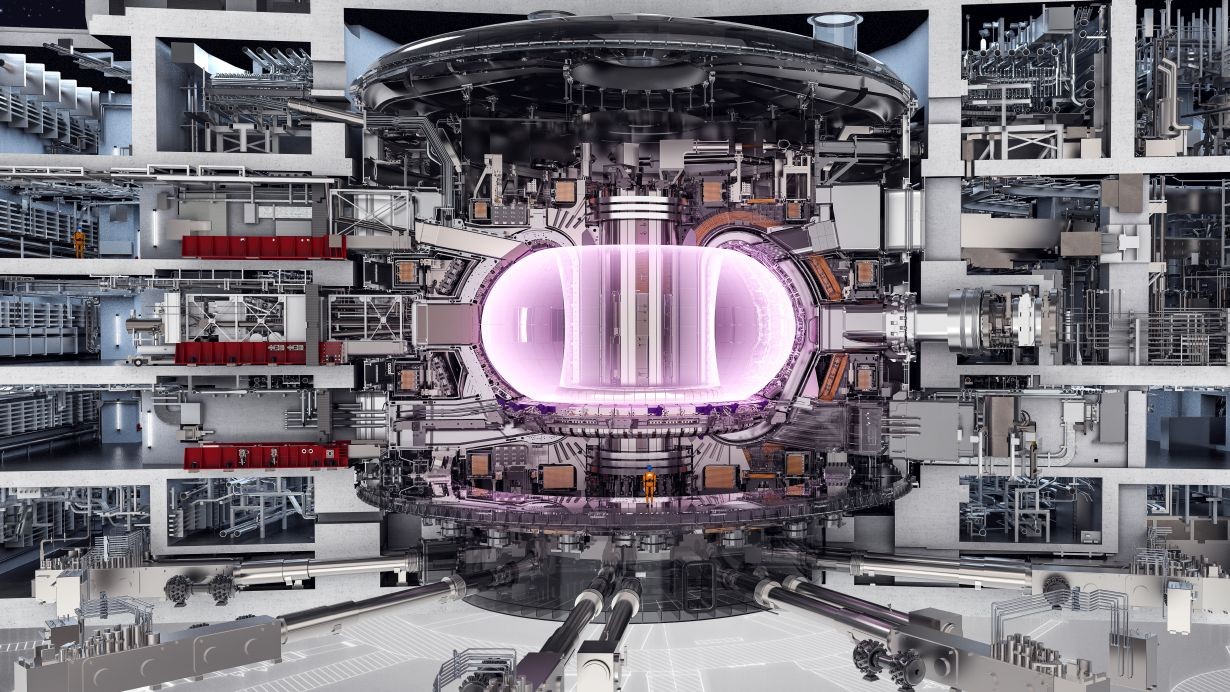
France's ITER research program may start before 2034
Scientific preparation work for the International Thermonuclear Experimental Reactor (ITER) is currently about 7 months ahead of the original schedule, and the research program may start earlier than the previously set target of 2034. Anatoly Krasilnikov, Director of the ITER Project Center at Rosatom, revealed this progress during the Technoprom-2026 forum. Krasilnikov stated that the project team no longer uses the milestone term "first plasma," but has instead adjusted the objective to "start of the research program," with a target date of 2034. Based on the current progress, the work is 7 months ahead of schedule, and there is a possibility of achieving the goal ahead of time...
2026-08-28

Russia Advances Radiopharmaceutical Development, Plans to Expand into Diagnostics and Treatment of Heart Disease and Other Conditions
Rosatom is developing radiopharmaceuticals for the diagnosis and treatment of neurodegenerative diseases, heart disease, and rheumatic conditions, further expanding the application of radionuclide technology in medicine. During the 13th International Technology Development Forum Technoprom-2026 held in Novosibirsk, Sergei Surov, Director of the Department of Radionuclide Products and Nuclear Medicine at Rosatom's Science Division, stated that the company is advancing the development of these drugs. Radiopharmaceuticals typically contain radioactive isotopes, i.e., radionuclides, and are currently used in medicine primarily for the diagnosis and treatment of various cancers. Surov noted that the new development directions mean...
2026-08-28
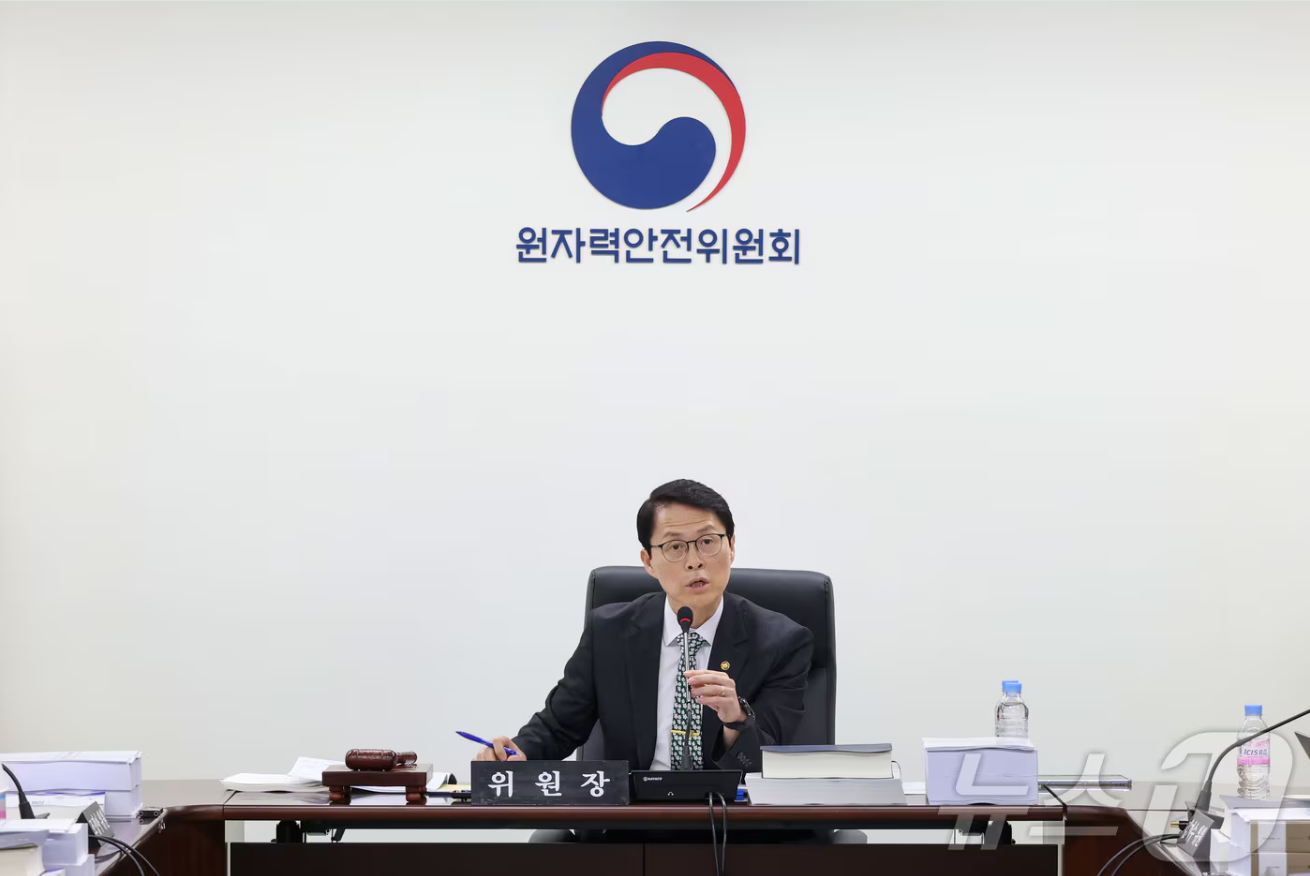
South Korea Launches Standard Design Approval Review for i-SMR
The Nuclear Safety and Security Commission (NSSC) of South Korea is set to initiate a safety review of the standard design approval application for the innovative Small Modular Reactor (i-SMR). This project is part of the small modular reactor research and development program led by the South Korean government. The NSSC stated on August 28 that, at its 13th meeting of 2026 held on August 27, the Korea Institute of Nuclear Safety (KINS) reported on the review plan for the i-SMR standard design approval application. KINS had previously conducted a suitability review of the standard design approval application documents submitted in February of this year and determined that the documents met the conditions for entering the safety review phase, thereby establishing a subsequent review plan. The standard design approval system is designed to...
2026-08-28

Construction Advances for Holtec's SMR-300 Test Facility at Idaho National Laboratory
Holtec International recently announced that construction of its HI-TEST test facility, supporting the SMR-300 small modular reactor, is advancing at Idaho National Laboratory (INL), with manufacturing of key test components and preparation for facility installation already underway. The facility simulates the SMR-300 plant at approximately one-third scale and is designed to quantify reactor design and operational performance margins, providing a test basis for potential future power uprates. Supported by the U.S. Department of Energy (USDOE), the HI-TEST facility's primary mission is to validate SMR-300 design margins under steady-state and transient conditions, offering physical test data for the plant's power generation capacity, resilience, and operability...
2026-08-28

Sweden's Oskarshamn New Nuclear Project Applies for State Aid
NuCore Energi AB, a project company under Fortum, has submitted a state aid application to the Swedish government to initiate consultations on the framework and conditions for a new nuclear power project in Oskarshamn municipality. The project is planned to proceed near the existing Oskarshamn Nuclear Power Plant, with options covering small modular reactors (SMRs) and large reactors, with a total installed capacity expected to range between 1,200 MW and 3,400 MW. NuCore Energi submitted the state aid application on August 27, 2026. In the photo, from left to right: NuCore Energi CEO Laurent Leveugle and Minister Niklas Wykman. Fortum...
2026-08-28