
Search Results
Keyword:PET nuclear medicine

Bayer Presents Phase III Data for Iodine-124 PET Tracer: High Sensitivity Shown in Cardiac Amyloidosis Diagnosis
At the 2026 European Society of Cardiology Congress, Bayer presented results from the Phase III REVEAL study of its investigational PET radiotracer iodine-124 evuzamitide (I-124 evuzamitide). Data showed that the tracer met the study's primary endpoints in diagnostic sensitivity and specificity when used for imaging in patients with suspected cardiac amyloidosis. The REVEAL study, sponsored by Brigham and Women's Hospital, is a multicenter, open-label, single-arm Phase III clinical trial conducted at 18 sites in the United States, enrolling 170 adult patients with suspected cardiac amyloidosis. Following a single intravenous injection of I-124 evuzamitide, subjects underwent cardiac and...
2026-09-01
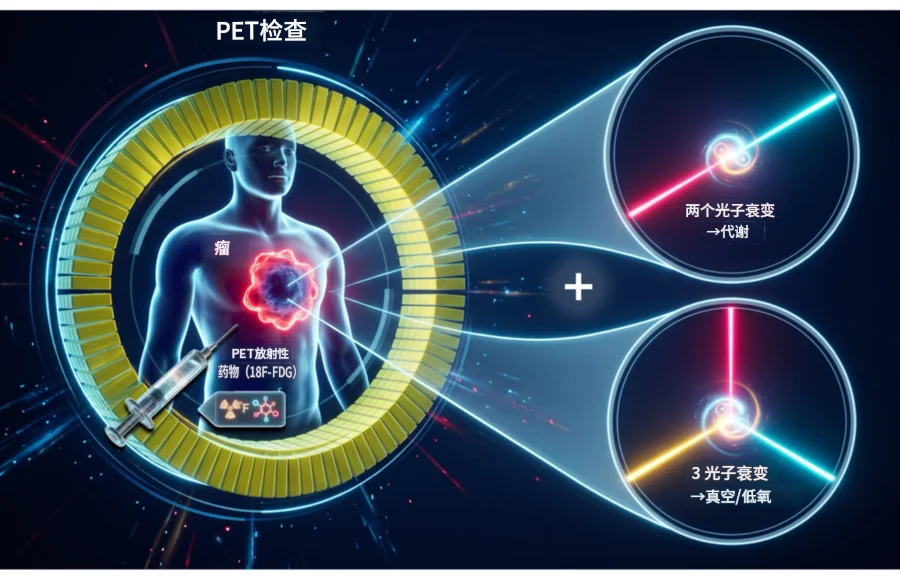
First Validation of Novel PRI Technology: Existing PET Tracers Can Image Tissue Microenvironment
August 6, 2026 - A joint research team from the Graduate School of Engineering at the University of Tokyo and the University of York in the UK announced that they have established a novel geometric imaging principle utilizing positron three-photon decay and successfully validated Positronium Ratio Imaging (PRI) technology for the first time. This method can be used in conjunction with existing clinical PET tracers and is expected to provide a new means of observing tissue microenvironments in nuclear medicine imaging. Conceptual diagram of next-generation nuclear medicine imaging utilizing positron-3-photon decay. Current clinical PET scans primarily rely on the positron two-photon annihilation process to visualize the distribution and accumulation of tracers in the body, but they provide limited information on microenvironmental factors such as tissue hypoxia that are associated with disease malignancy...
2026-08-07