
Search Results
Keyword:RI
UK Parliament Recommends Improving Fusion Planning Policy and Public Engagement Mechanisms
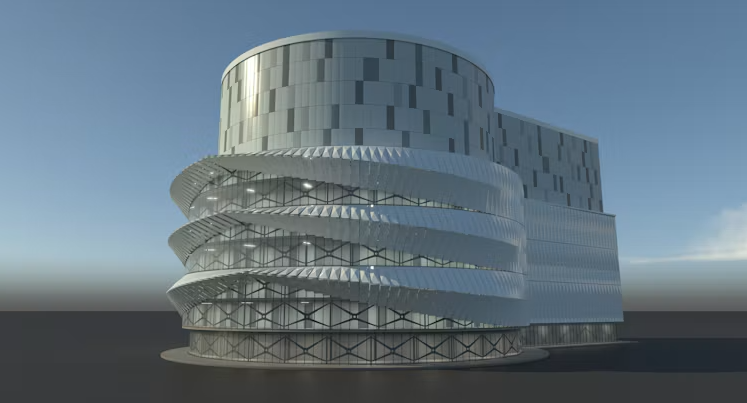
Recently, the House of Commons Energy Security and Net Zero Committee completed its scrutiny of the draft National Policy Statement for fusion energy EN-8, proposing recommendations including supplementary nuclear non-proliferation guidance, strengthened early public engagement, and clarified community benefit arrangements. The scrutiny focused on the institutional conditions required for fusion to develop from research devices to commercial facilities; the relevant opinions have been submitted for government response and do not yet constitute implemented new policy. Nuclear non-proliferation is a key area the Committee requires to be further improved. As fusion device scale expands, mechanisms for identifying and assessing facility-related risks also need to develop accordingly. The Committee recommends that the government provide guidance to developers preparing construction projects as soon as possible...
2026-11-05
Urenco USA Completes Production of First Commercial Upgraded Low-Enriched Uranium Product Cylinder
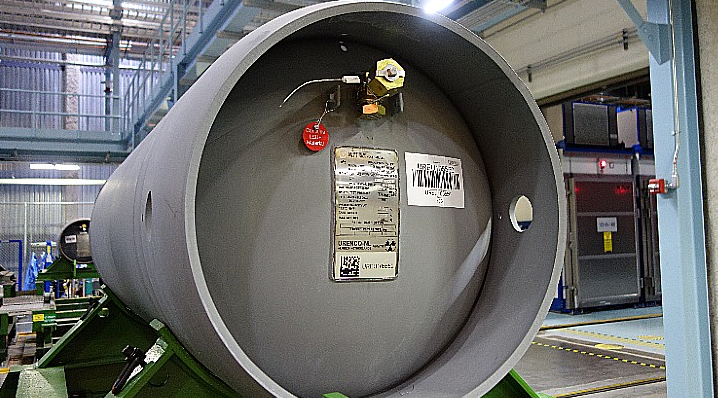
Recently, Urenco USA completed the production of its first upgraded low-enriched uranium (LEU+) product cylinder at the National Enrichment Facility in New Mexico, advancing this fuel feedstock from production readiness to the commercial product supply stage. This development provides a new enriched uranium option for operating light water reactors and some advanced reactors, but completing the production of enriched product does not equate to fuel assemblies having been manufactured or loaded into a reactor. LEU+ is Urenco's product name for enriched uranium with uranium-235 assays of approximately 5% to 10%, higher than the typical enrichment levels of fuel commonly used in operating commercial nuclear power plants. Fuel made from this material is expected to support longer operating cycles and reduce refueling outages...
2026-11-05
U.S. Microreactor Project Submits All Eighteen Chapters of Safety Analysis Materials
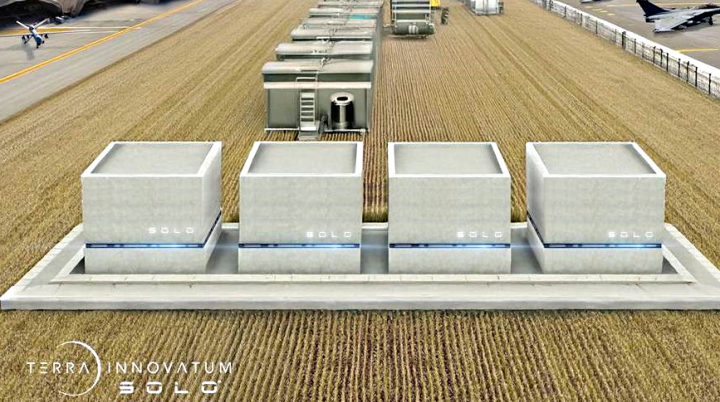
Recently, all 18 chapters of the preliminary safety analysis report for the SOLO micro modular reactor have been submitted to the U.S. Nuclear Regulatory Commission (NRC), entering the readiness review prior to formal application. Project developer Terra Innovatum had previously provided 14 of the chapters, and this submission of the remaining materials further completes the safety analysis documentation, advancing one step toward the subsequent formal submission of a construction permit application. The readiness review focuses on assessing the completeness and quality of the application materials, helping to identify content that needs to be supplemented or improved before formal submission. Throughout this process, the project team will continue technical exchanges with regulatory staff, addressing review comments and information requests, so that the react...
2026-11-05
Startup and Grid Connection Procedure for Unit 1 of the Cernavodă Nuclear Power Plant in Romania
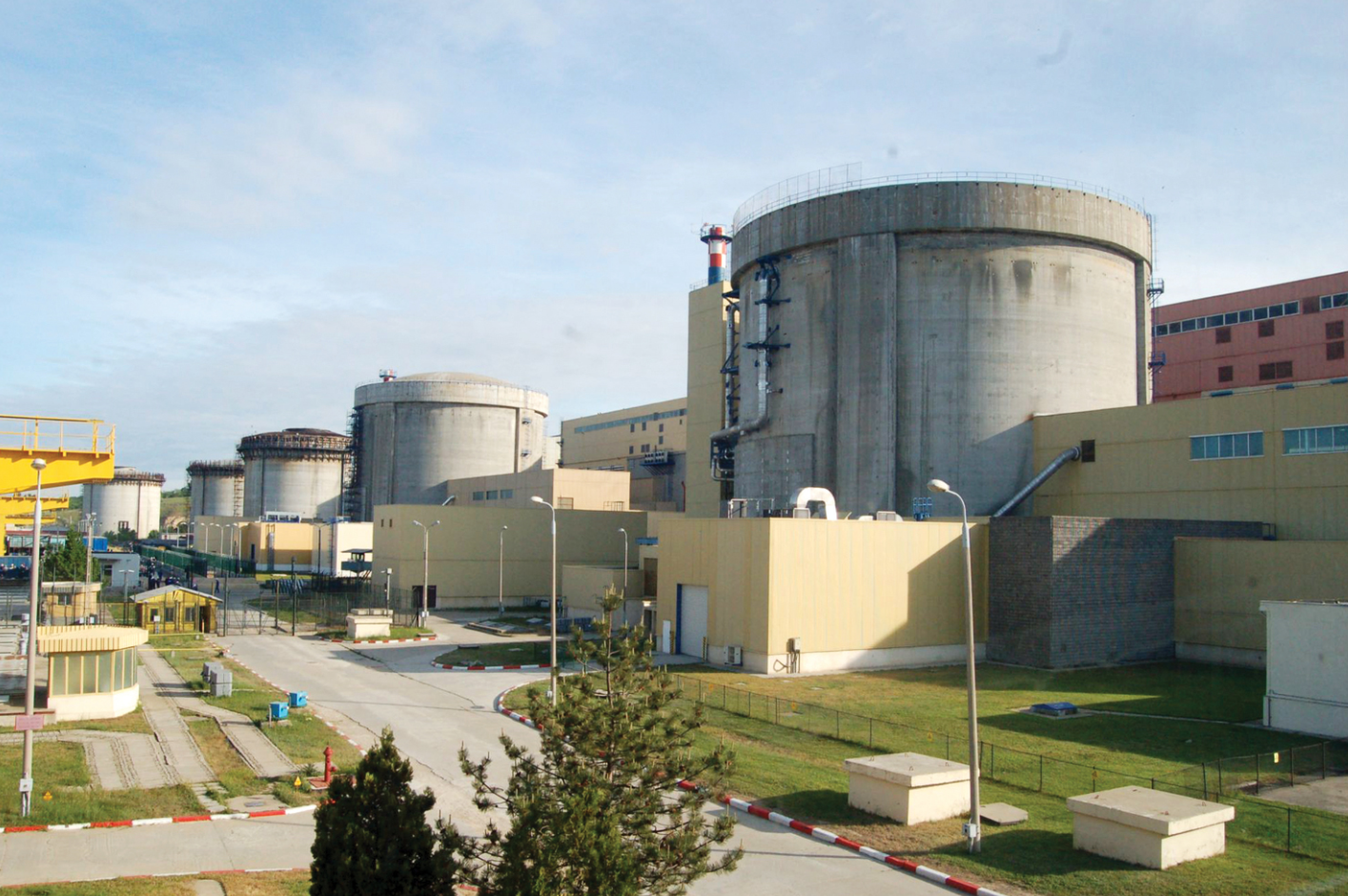
Recently, Nuclearelectrica announced that, after meeting the minimum necessary conditions, it has initiated the procedures for reconnecting Unit 1 of the Cernavodă Nuclear Power Plant to the national power grid. This action marks a new implementation phase in the unit's return to operation; actual restoration of power supply still requires the completion of corresponding operations and compliance with nuclear safety requirements. The reconnection of a nuclear power unit to the grid is a complex operation subject to strict regulation. During the outage, the plant's professional team continued to carry out necessary work to maintain the unit in a safe state. Upon entering the grid reconnection preparation phase, all operations must still comply with applicable procedures to ensure that the return-to-service process meets nuclear safety...
2026-11-05

Beyond 5% Uranium Enrichment: Why Does Nuclear Power Fuel Upgrading Require an Integrated Delivery Chain?
Nuclear Power Operational Needs Behind a Single Product Container On November 2, Urenco USA announced the completion of production of the first commercial LEU+ enriched uranium product container in New Mexico. This development brings fuel upgrading to a concrete industrial milestone: enrichment plants are beginning to supply new products, downstream enterprises need to process them into fuel, and power plants must demonstrate that these fuels can improve operations within established safety boundaries. For operators seeking to extend refueling cycles, higher enrichment levels provide more options, but whether these options can be translated into benefits still depends on whether manufacturing, transportation, licensing, and in-core use can be linked together. Urenco uses LEU+ to...
2026-11-04
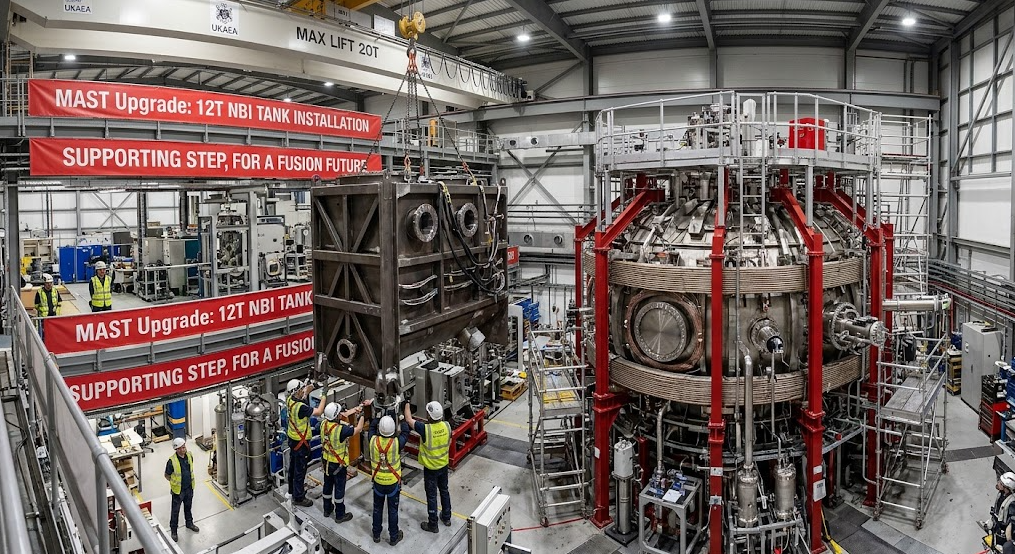
UKAEA Completes Heavy Enclosure Lift for Spherical Tokamak
Recently, the UK Atomic Energy Authority (UKAEA) flagship spherical tokamak experimental device (MAST Upgrade) reached an important engineering milestone with the successful lifting and installation of a 12-tonne dual-layer beam enclosure. The enclosure is specifically designed to house two additional neutral beam injectors (NBI). With the subsequent installation of related infrastructure and supporting systems, the neutral beam heating power of the MAST Upgrade device is planned to increase from the current 4.4 MW to 8.8 MW, doubling its heating capability. The core strategic objective of this upgrade is to explore plasma physics behavior under extremely high temperature and pressure conditions, and to focus on testing the ultimate capability of the core heat exhaust system (such as the Divertor) to handle the heat load of higher-performance plasmas, thereby providing key technical and physics parameter support for the UK's prototype fusion power plant (STEP) project.
2026-11-04

Steel Containment Vessel Second Ring of Guangdong Lianjiang Nuclear Power Unit 2 Hoisted into Place
Recently, the second ring of the steel containment vessel (CV) for Guangdong Lianjiang Nuclear Power Unit 2, manufactured by State Nuclear Equipment, was successfully hoisted into place, creating favorable conditions for subsequent main construction of the nuclear island. It is reported that the second ring of the steel containment vessel hoisted this time is assembled from four layers of curved steel plates, with an overall height of approximately 16 meters, an inner diameter of nearly 40 meters, and a total hoisting weight of up to 1,124 tons. Throughout the assembly and hoisting process, the project team fully drew on the engineering and construction experience of Unit 1, strengthened on-site coordination and quality control, and ensured that the entire hoisting process was safe, smooth, and precisely positioned. The Lianjiang Nuclear Power Project, as a key batch construction project independently built by China based on CAP1000 third-generation nuclear power technology...
2026-11-04

The National Development and Reform Commission Deploys the 15th Five-Year Plan to Designate Nuclear Fusion as a Future Industry
Recently, the National Development and Reform Commission (NDRC) held the first press conference of the "Striving for the 15th Five-Year Plan" series, systematically introducing the strategic planning and key task deployments for cultivating and strengthening new growth drivers during the 15th Five-Year Plan period, marking the official unveiling of China's macro-level blueprint for emerging and future industries in the next stage. It is reported that Ren Zhongbao, Deputy Director of the Department of Innovation and High-Tech Development, stated at the meeting that the CPC Central Committee and the State Council, after comprehensively assessing technological trends, have explicitly designated fusion energy, together with quantum technology, biomanufacturing, hydrogen energy, brain-computer interfaces, embodied intelligence, and sixth-generation mobile communications, as the main directions for future industry development during the 15th Five-Year Plan period. The state will adhere to a nationwide coordinated approach and support regions with favorable conditions in selecting sub-sectors for development in accordance with local conditions.
2026-11-04

America's First "Large Reactor in a Chemical Plant" Clears the Hurdle: X-energy Xe-100 Ushers in the Conclusion of Safety Review and a Key Springboard to Commercialization
In the global race to industrialize advanced nuclear energy technologies, the high-temperature gas-cooled reactor is reaching a milestone. In late October 2026, the U.S. Nuclear Regulatory Commission (NRC) formally issued the Final Safety Evaluation Report (FSER) for the construction permit application of the Long Mott Generating Station, proposed to be built at Dow Chemical's Seadrift site along the Texas Gulf Coast. This means that the Xe-100 high-temperature gas-cooled reactor, developed by X-energy with an installed capacity of 320 megawatts electric, has successfully passed the most central safety examination at the U.S. nuclear regulatory level, clearing...
2026-11-03

US NRC Finalizes New Rule to Speed Up Nuclear Licensing Through Contested Hearing Reform
Recently, according to relevant foreign media reports, the U.S. Nuclear Regulatory Commission (NRC) has formally completed the formulation of a new rule restructuring the contested hearing process in licensing applications for reactors and other nuclear facilities, aiming to significantly compress administrative adjudication timelines and support the rapid deployment and expansion of advanced nuclear technologies. It is reported that in the past, NRC adjudication of contested matters typically lasted for years, causing delays in nuclear power project approvals. The new rule introduces three hearing tracks—Standard, Focused, and Expedited—based on the complexity of applications, compressing the adjudication period for the simplest cases to approximately 6 months, with the vast majority...
2026-11-03
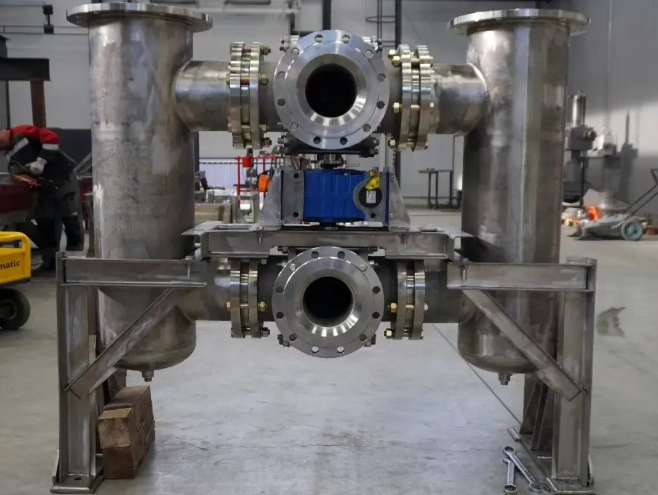
Russia's InterPolyaris Company Successfully Develops New Filter for Nuclear-Powered Icebreakers
Recently, the International Polyaris (InterPolyaris) company, located in Novovoronezh, successfully completed the manufacture and test preparation of a new type of mechanical filter specially designed for nuclear energy facilities and nuclear-powered icebreakers. It is reported that the new mechanical filter adopts a compact two-stage sealed architecture and is mainly deployed at the condensate and feedwater system nodes of turbine units, as well as in the makeup water and water treatment systems of reactor installations, for efficiently removing mechanical impurities from process media and ensuring high-standard water quality cleanliness requirements for nuclear power systems. The equipment consists of two independent sealed housings with built-in metal filter elements, connected in the middle by upper and lower three-way ball valves. By adjusting the upper valve...
2026-11-03
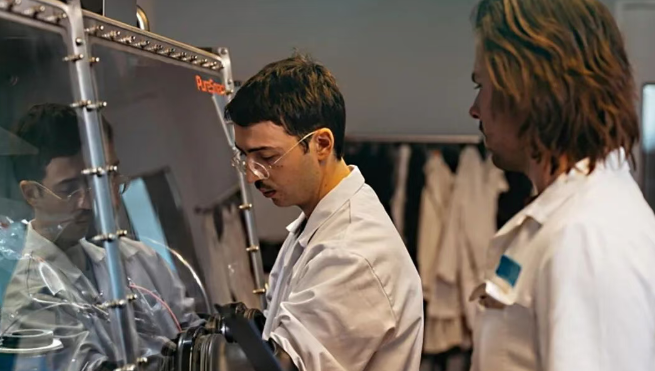
Dutch Company Thorizon Conducts Material Testing for Molten Salt Reactors
Recently, Dutch nuclear startup Thorizon, in collaboration with the Netherlands Organisation for Applied Scientific Research (TNO), officially launched corrosion resistance and radiation resistance testing of structural materials for molten salt reactors (MSRs), marking a key step toward commercial application of this innovative reactor technology. It is reported that molten salt reactors, with advantages including near-atmospheric pressure operation, passive safety, and reduced long-lived radioactive waste, are becoming an important technology option for clean power supply to data centers and heavy industry. However, corrosion of metal structures by high-temperature molten salt and material performance degradation caused by intense internal radiation have long been core engineering challenges constraining the widespread deployment of this technology. To overcome the material degradation bottleneck, Thor...
2026-11-03
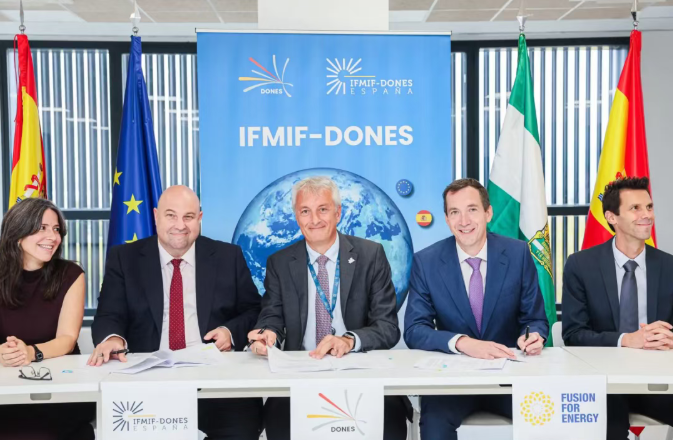
The "Chain-Building" Lessons from Europe's Fusion Supply Chain: An Industrial Paradigm Leap from "Building Devices" to "Nurturing Chains"
When examining the global race toward commercializing controlled nuclear fusion, external attention is often drawn to record-breaking plasma temperatures, confinement times, and device scales. However, as the industry gradually enters the deep waters of transitioning from physics experiments to engineering construction, what ultimately determines whether parties can cross the commercialization chasm is often no longer merely theoretical breakthroughs in the laboratory, but rather the thickness of the industrial supply chain hidden behind the spotlight. Recently, Europe's "Fusion for Energy" organization (F4E, Fusion for Energy) officially released the research report "Building Europe's Fusion Supply Chain: 2007–2026." This report, which systematically reviews nearly two decades of construction history, discloses that through more than €7 billion...
2026-11-02
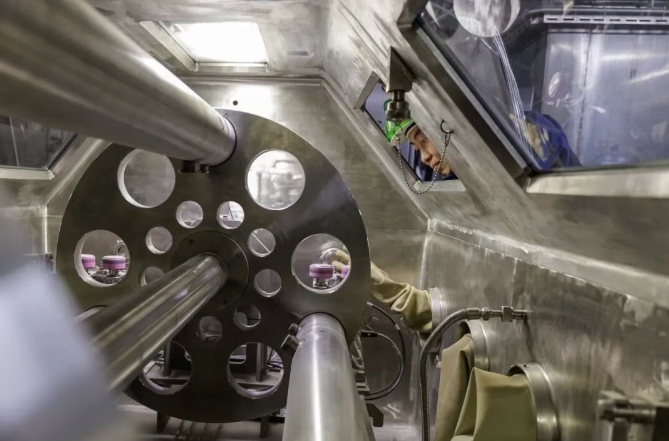
Russia proposes optical laser monitoring method for spent nuclear fuel reprocessing
Recently, a research team from Sechenov University in Russia, together with the Proryv Project and the All-Russian Scientific Research Institute of Inorganic Materials (VNIINM), published latest results in the journal Applied Spectroscopy, proposing a non-contact optical method for continuous monitoring of the spent nuclear fuel reprocessing process. It is reported that in the liquid-liquid extraction process of spent nuclear fuel reprocessing, traditional laboratory analysis has problems such as long sampling time and increased risk of radioactive waste. The research team introduced Raman Spectroscopy to monitor the state of extractants such as tributyl phosphate in the organic phase, measuring a median error of about 1%; meanwhile, laser-induced breakdown spectroscopy (LIBS) was used to determine the concentration of metal elements in the aqueous phase, with an average error controlled at 4%–8%, achieving near-real-time synchronous monitoring of the two-phase streams.
2026-11-02

Framatome Commissions Chromium-Coated Facility to Advance Industrialization of Accident-Tolerant Fuel
Recently, France's Framatome officially commissioned an industrial pilot facility for chromium coating at its Paimboeuf manufacturing plant in western France, in order to accelerate the industrialization of its PROtect enhanced accident-tolerant fuel (E-ATF) technology. It is reported that the facility represents an investment of 30 million euros (approximately 33.5 million US dollars) and uses physical vapor deposition (PVD) technology to apply chromium coating to the surface of zirconium alloy cladding tubes for nuclear fuel assemblies. The pilot facility is designed with an annual production capacity of more than 100,000 chromium-coated cladding tubes, aimed at verifying process stability under serial production conditions. Framatome plans to complete industrial qualification of the process by the end of 2026, and...
2026-10-31