CERN measures niobium-94 neutron capture for the first time, shedding new light on the mystery of molybdenum abundance in ancient stardust
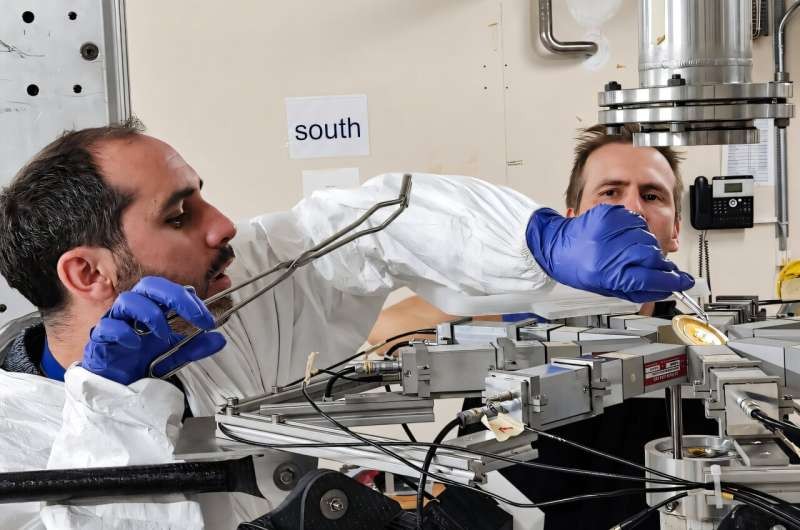
The n_TOF collaboration at CERN recently reported that researchers have for the first time measured the probability of neutron capture by niobium-94. The results, published in Physical Review Letters, provide new experimental evidence for explaining the anomalous abundance of molybdenum-94 in presolar grains. The EAR2 facility in the n_TOF experiment at CERN produces intense neutron beams, opening new possibilities for nuclear research. Credit: CERN Niobium-94 is a niobium isotope containing 41 protons and 53 neutrons, occupying a critical juncture in the nuclear reaction chain that produces heavy elements in dying stars. Researchers are interested in it because niobium-94 is very close to molybdenum-94, differing by just one fewer proton and one more neutron. Under the high-temperature, high-pressure conditions inside stars, niobium-94 may either transform into molybdenum-94 through beta decay or form niobium-95 through neutron capture. The competition between these two reaction pathways directly affects scientists' understanding of the origin of molybdenum-94.
2026-08-20