Registration
REGISTER FOR THE CONFERENCE
Registration
REGISTER FOR THE CONFERENCE
 Apply to Exhibit
APPLICATION FOR EXHIBITION
Apply to Exhibit
APPLICATION FOR EXHIBITION
 Sponsorship
SPONSORSHIP APPLICATION
Sponsorship
SPONSORSHIP APPLICATION
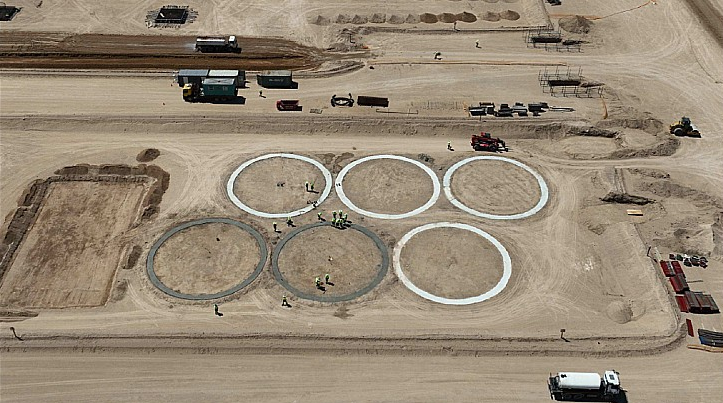
Australian company Aura plans to make final investment decision on Mauritania's Tiris uranium mine by year-end
Recently, Australian-listed company Aura Energy announced that its newly released feasibility study has confirmed the technical and economic viability of the Tiris uranium project in Mauritania, and the company plans to make a final investment decision (FID) by the end of 2026. The project is expected to require US$349.8 million in development capital, with annual uranium production of 1.8 million pounds after commissioning and a mine life of 26 years. It is understood that the Tiris uranium project is Mauritania's first uranium mine, with major approval procedures already completed, and the pilot plant at Bir Moghrein will begin processing ore in November to verify the process flow. Mauritania's Minister of Mines and Industry Eddy Ould Zeine stated that the government firmly supports the project's development, the state will hold a 15% interest and derive tax and employment benefits from it, regarding it as a cornerstone of the emerging national industry.
2026-10-21

The Philippines Advances Nuclear Power Planning, Aims for 1.2 GW by 2032
2026-10-21
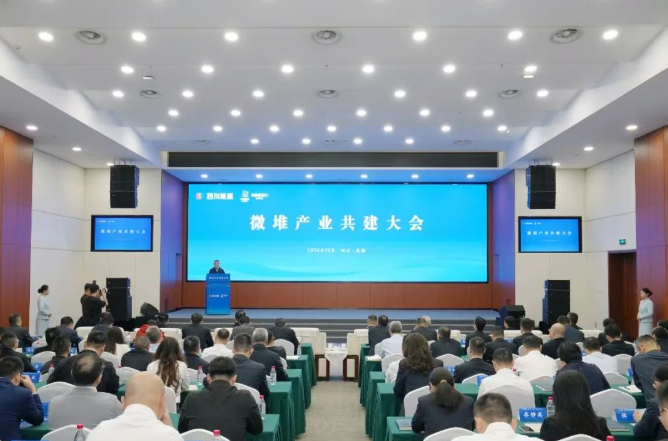
Sichuan Energy Nuclear Industry Company Unveiled in Chengdu, Accelerating Layout in the Microreactor New Track
2026-10-21

Zhejiang Ziming Cryogenics Secures Investment from Two Major Central Energy SOEs to Scale Up Fusion Cryogenic Systems
2026-10-21
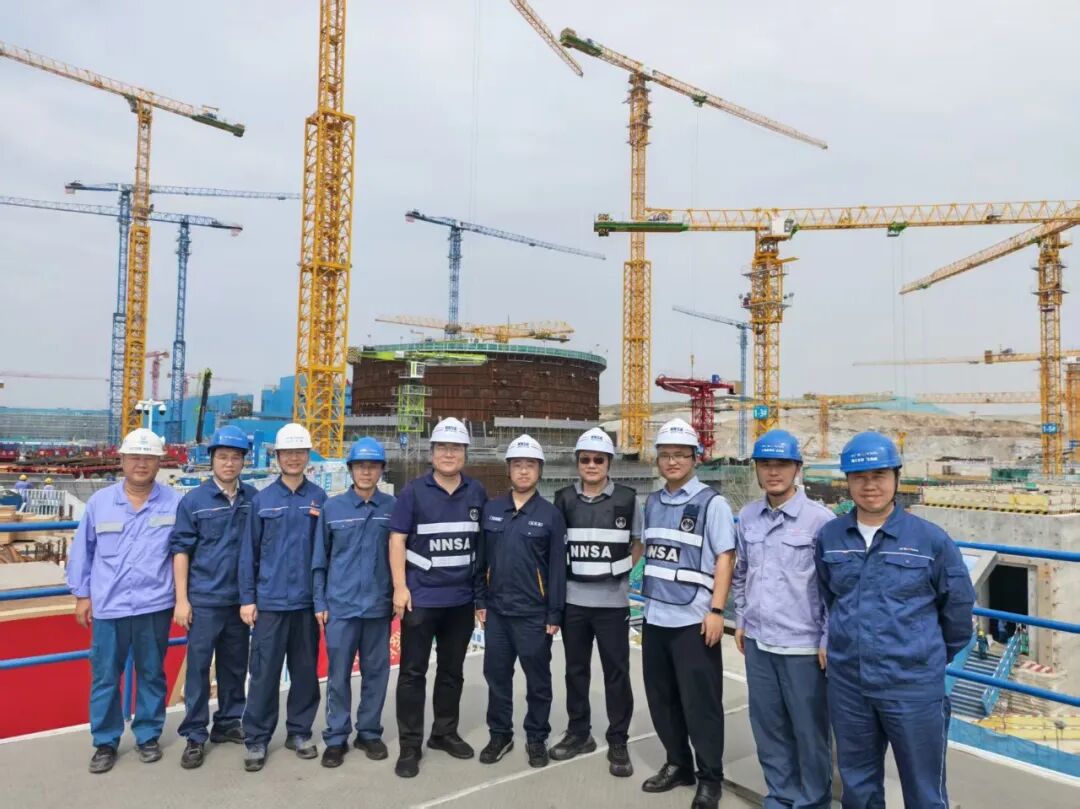
Nuclear safety starts from "one foundation"
2026-10-21

Bahrain and France Sign Nuclear Energy Cooperation Memorandum to Advance Civil Nuclear Power Program
2026-10-21
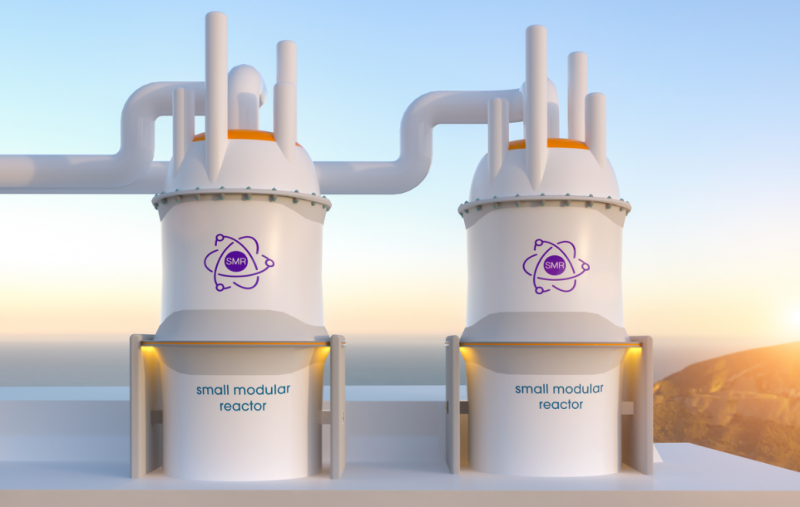
US SMR Developers Deepen EPC Partnerships to Reduce FOAK and Scaled Deployment Risks
2026-10-21

NASA's SR-1 Freedom deep-space nuclear reactor progresses smoothly, planned to set sail in 2028
2026-10-21
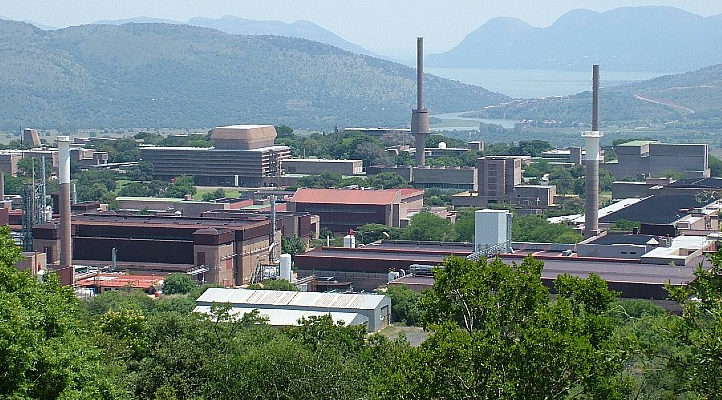
South Africa Advances High-Purity Low-Enriched Uranium Cooperation as Quantum Leap Energy Partners with Necsa to Build Facility
2026-10-20

On October 19, 2026, at the plenary session of the European Association of Nuclear Medicine Congress (EANM 2026) held in Vienna, Austria, Professor Paola Anna Erba, President of the European Association of Nuclear Medicine, raised the major issue of when prevention is early enough. The conference held in-depth discussions on whether positron emission tomography (PET), a core nuclear medicine imaging technology, can detect cancer, cardiovascular disease, and Alzheimer's disease before symptoms appear. Regarding PET-based cancer screening in asymptomatic populations, Dr. Ken Herrmann of the University Hospital Essen in Germany clearly stated that currently, promoting fluorodeoxyglucose (FDG-PET)-based cancer screening in the general population is premature.
2026-10-20
Recently, Borealis Fusion, a startup co-founded with the participation of the research team at the Princeton Plasma Physics Laboratory (PPPL) in the United States, announced its establishment. The company has chosen the magnetic mirror pathway, focusing on proton-boron-11 (pB11) neutron-free nuclear fusion technology, aiming to provide cost-competitive clean electricity. It is understood that Borealis Fusion was jointly founded by five doctoral scholars with backgrounds in physics and engineering from Princeton University: Damien Scott, Ian Ochs, Elijah Kolmes, Tal Rubin, and Alex Glasser. Its core technology originates from the pB11 frontier research led by Princeton University professor Nat Fisch, and the technology...
2026-10-20
Recently, the University of Tennessee, Knoxville, Arizona State University, and Purdue University jointly established the New Nuclear Academic Consortium (NNAC), aiming to build a national collaborative network to address the growing workforce shortage in the U.S. nuclear energy sector. With surging U.S. electricity demand and the accelerated deployment of small modular reactors (SMRs) and microreactors, the industry's demand for interdisciplinary talent with backgrounds in systems engineering, supply chain management, thermodynamics, and nuclear safety regulation...
2026-10-20
Recently, the Geospace Research Laboratory of the National Research Nuclear University MEPhI (Moscow Engineering Physics Institute, abbreviated as MEPhI) in Russia announced the successful development of a prototype instrument for detecting high-energy electrons in Earth's outer radiation belt. This device is a key scientific payload for investigating the causes of auroras and will in the future be launched into orbit as part of a CubeSat 3U space platform from Geoscan LLC. In terms of technical architecture and core parameters, the detector is specifically designed for small spacecraft, overcoming strict size and power consumption constraints. Its core component uses a thallium-doped cesium iodide (CsI(Tl)) scintillation crystal, capable of highly...
2026-10-16
It was learned from CNNC that the China Institute of Atomic Energy, leading a collaboration with Nanchang University, Shanghai Jiao Tong University and other institutions, has achieved an important breakthrough in research on the volatilization behavior of materials under high-temperature ultra-high vacuum conditions, quantitatively revealing for the first time the volatilization anisotropy mechanism of nickel-based alloys under high-temperature ultra-high vacuum. This provides important theoretical basis and experimental data support for the microstructure optimization, life prediction, and reliability design of high-temperature structural materials used in extreme thermal vacuum environments, and is of great significance for promoting the independent and controllable development of high-temperature ultra-high vacuum materials in China. The related research paper was published in the internationally leading journal in the field of corrosion and oxidation, Corrosion Science. Nickel-based alloys...
2026-10-15
Recently, U.S. nuclear technology startup Oklo announced that it will further advance the construction of the Groves-2 Forge isotope production and processing pilot facility. Located in Texas, the facility aims to build on the successful demonstration experience of the company's previous Groves Isotope Testing Reactor to comprehensively expand irradiation, processing, purification, and commercialization readiness capabilities for key isotopes. It is understood that the Groves-2 Forge facility will integrate cutting-edge hot cell processing capabilities, covering the full process chain including isotope separation, product recovery, packaging, and transportation. The facility's initial production focus will be on lutetium-177 (Lutetium-177) used for cancer radiopharmaceutical therapy and other important therapeutic isotopes...
2026-10-15
Recently, the Swiss Nuclear Forum officially announced the establishment of a dedicated Nuclear Medicine Section, aimed at bringing together professional representatives from the pharmaceutical, medical, and scientific fields to jointly improve the framework conditions for nuclear medicine diagnosis and treatment in Switzerland, strengthen the stable supply of radionuclides, and accelerate the clinical application of innovative medical procedures. The Section is established under the Swiss Nuclear Forum, headquartered in Olten, and will take over and continue the relevant work of the former Swiss Alliance for Innovation in Nuclear Medicine, and will position itself...
2026-10-15