
Supervision and assessment of the comprehensive on-site exercise at Fangchenggang Nuclear Power Plant successfully completed.
 Scan to share
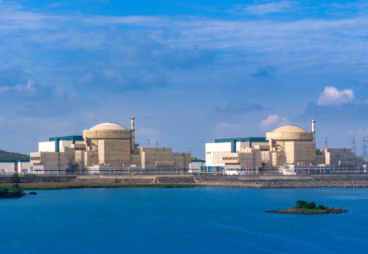
To enhance the realism and evaluative value of nuclear accident emergency drills and to improve the quality of drill assessments, the South China Regional Office of Nuclear and Radiation Safety Supervision (hereinafter referred to as the South China Regional Office) under the Ministry of Ecology and Environment recently organized the supervision and assessment of the 2026 on-site comprehensive emergency drill at the Fangchenggang Nuclear Power Plant.
Shortly before the drill, Typhoon Maysak caused sustained, torrential rainfall in Nanning and Fangchenggang, Guangxi. The resulting floods led to widespread train suspensions and blocked roadways. Faced with this unexpected situation, the South China Regional Office determined that the drill would not interfere with the operator's flood-control efforts. Based on a pre-established support plan and a comprehensive analysis of weather trends and drill procedures, the office decided to proceed with the drill as scheduled. Inspectors and assessment experts mobilized immediately, overcoming transportation obstacles to arrive on time.
The drill employed a "double-blind" format—meaning neither the specific timing nor the scenarios were disclosed in advance. Incorporating actual flood conditions, the team selected a scenario from the database involving a dual-unit accident triggered by a combination of typhoon-induced storms, loss of power, loss of cooling water, and the failure of three safety barriers. The drill focused on testing the operator's emergency response capabilities under extreme conditions involving multiple units and overlapping events. Additionally, drawing on past experience, the control team introduced eight types of secondary scenarios—such as communication congestion, public opinion issues, broadcast errors, and mass incidents—triggered according to a predetermined schedule to increase the complexity of the comprehensive exercise.
Following the drill, the assessment team utilized the Significance Determination Process (SDP) to classify the severity of identified issues. They focused on critical matters regarding protective actions and emergency monitoring, issuing specific requirements for corrective measures. The operator pledged to thoroughly review the drill's lessons, strengthen training and exercises, further optimize emergency preparedness, and enhance practical response capabilities.
Conducting this double-blind drill supervision and assessment as scheduled amidst typhoon-induced floods—and overcoming significant challenges—tested the operator's nuclear emergency response capabilities under extreme weather conditions. The successful completion of the mission fully demonstrated the "iron army" spirit of the South China Regional Office's nuclear safety supervision team: their unwavering dedication to duty and their resolve to rise to challenges. Moving forward, the South China Supervision Station will take into account the coastal region's susceptibility to typhoons and heavy rainfall, regularly conduct drills simulating scenarios where extreme natural disasters coincide with nuclear accidents, and fortify the regional nuclear and radiation safety defense through high-standard supervision.
Disclaimer: Information republished from partner media, institutions or other websites is provided for reference and communication purposes only. It does not imply endorsement of its views or verification of its accuracy. Please contact us if any content infringes rights or requires correction.