
Studies in Germany and Spain have found that bacteria can promote the immobilization of uranium contamination.
 Scan to share
Researchers from Germany and Spain have recently discovered a type of bacteria inhabiting the waters of an abandoned uranium mine that can participate in uranium immobilization, converting dissolved uranium into a solid form with lower mobility. This finding offers new insights for the remediation of uranium-contaminated water and the development of bioremediation technologies.
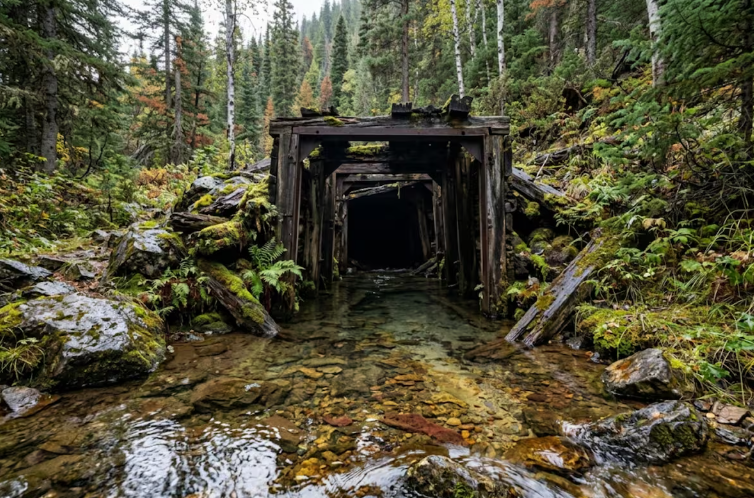
The study was conducted by scientists from the Helmholtz-Zentrum Dresden-Rossendorf and the University of Granada, with results published in *Nature Communications*. The subjects of the study originated from an abandoned uranium mine in Schlema-Alberoda, eastern Germany. Since its closure in 1990, the mine has gradually flooded, and the mine water requires continuous treatment to prevent contaminants from entering the natural environment.
A major challenge in managing uranium contamination is its mobility; dissolved uranium can migrate with groundwater into rivers or aquifers, posing risks to ecosystems and water supply safety. In the low-oxygen, heavy-metal-rich environment deep within the mine, researchers identified a microbial community adapted to local conditions that could alter the chemical form of uranium under specific circumstances.
In their experiments, the team collected mine water samples, simulated the underground environment in the laboratory, and added glycerol as a carbon and energy source for certain microorganisms. Bacterial activity subsequently altered the water chemistry, promoting the reduction of hexavalent uranium [U(VI)]. The researchers detected the formation of pentavalent uranium [U(V)] and found that it persisted through microbial action, participating in the formation of a uranium- and iron-bearing mineral phase, FeU(V)O₄, thereby helping to keep the uranium in a stable, less mobile state.
The study also observed the formation of tetravalent uranium mineral phases and carbonate-associated uranium complexes, indicating that the process relies not on a single reaction but is driven by multiple biological and chemical pathways. A 130-day experiment showed that, with glycerol stimulation, the concentration of dissolved uranium in the water dropped by approximately 96%. Analysis further revealed the accumulation of uranium-bearing nanoparticles on bacterial cell surfaces, providing additional evidence that microorganisms play a role in the formation and localization of these minerals.
The researchers noted that these microorganisms were not laboratory-engineered or genetically modified but were part of the mine's natural ecosystem. They survived in an environment characterized by long-term oxygen deprivation and the presence of various metals, and—upon gaining an energy source—participated in the transformation of uranium's chemical form. However, this discovery does not mean that the bacteria can immediately be used for the large-scale purification of all uranium-contaminated water bodies. Relevant experiments are still being conducted under controlled conditions; further research is needed to identify the specific microbial species involved at various stages, determine the long-term stability of the resulting uranium forms, and assess the process's applicability across varying water quality, metal compositions, and oxygen levels found in different mining areas. Researchers believe this mechanism holds promise as a supplementary approach to uranium remediation and could inform the development of bioremediation methods with reduced environmental impact.
Disclaimer: Information republished from partner media, institutions or other websites is provided for reference and communication purposes only. It does not imply endorsement of its views or verification of its accuracy. Please contact us if any content infringes rights or requires correction.