
Senegal Seeks to Leverage Nuclear Energy to Boost Agricultural Productivity
 Scan to share
Senegal is actively exploring the use of nuclear technology to enhance agricultural productivity. Facing numerous agricultural challenges, the country believes that nuclear science applications can effectively improve crop cultivation, soil health, and aquaculture, among other areas, with particular attention focused on the regional conference on nuclear science applications in agriculture held in Dakar from August 3 to 7.
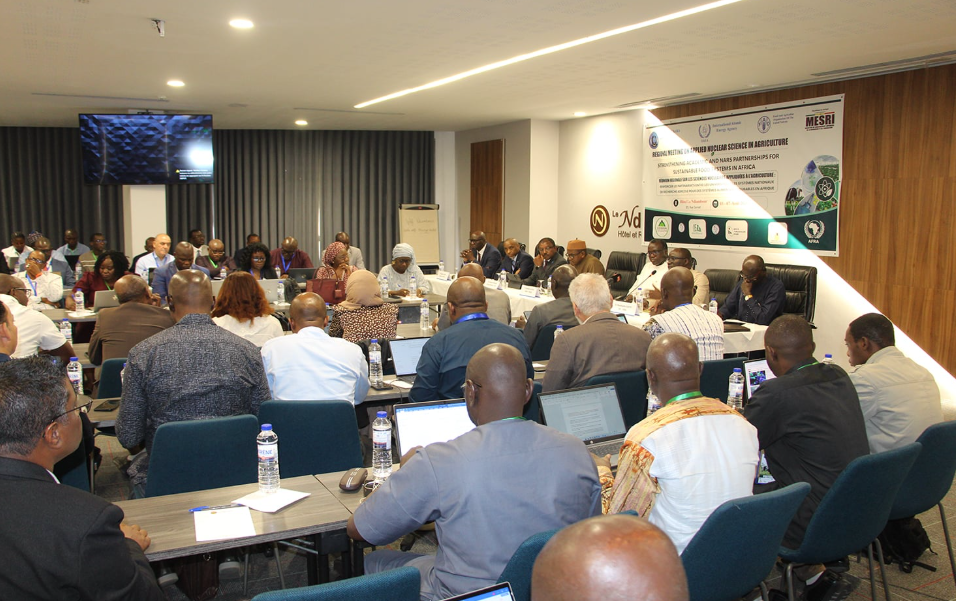
The event, organized by the Plant Biotechnology Laboratory led by Professor Diaga·Diouf at UCAD University in collaboration with the International Atomic Energy Agency (IAEA), is part of the “Atoms4Food” initiative launched in 2023. The conference brought together university presidents, faculty deans, directors of national agricultural research centers, and other experts and scholars in related fields, aiming to promote the utilization of nuclear science and technology and to reform curricula to meet the needs of agricultural development.
Professor Diouf stated that integrating nuclear technology into teaching programs is crucial, as it can be applied in areas such as plant improvement, soil health, and aquaculture. These applications cover critical aspects including crop variety improvement, water resource management, pest control, food safety, animal health, and reducing post-harvest losses—a significant challenge facing African countries, where perishable products such as onions, potatoes, and mangoes cause substantial waste.
To address this issue, Abdou·Salam·Ndiaye, Head of the Africa Division at the IAEA's Department of Technical Cooperation, pointed out that irradiation technology is an effective solution. It can sterilize food by eliminating bacteria, thereby extending shelf life. Senegal has already established a preliminary foundation for applying nuclear technology to agriculture, offering relevant courses such as a master's program in human nutrition and nuclear technology, an isotope hydrology module, and a mutation breeding module. What remains is to coordinate these resources and actively develop food sovereignty.
Disclaimer: Information republished from partner media, institutions or other websites is provided for reference and communication purposes only. It does not imply endorsement of its views or verification of its accuracy. Please contact us if any content infringes rights or requires correction.