
Vietnam to Develop 88 National Standards and 6 National Regulations Supporting Nuclear Power and Atomic Energy Applications from 2026–2030
 Scan to share
Vietnam will develop standards and regulations for nuclear power development to support the construction of future nuclear power plants and advancements in atomic energy applications. To align with this goal, the country plans to establish 88 national standards and 6 national regulations during the period from 2026 to 2030, covering key areas such as nuclear power plant safety, radiation safety, environmental monitoring, and related equipment. These standards will reference existing practical experience from the International Atomic Energy Agency (IAEA), the International Organization for Standardization (ISO), and the International Electrotechnical Commission (IEC), and will be periodically reviewed and adjusted based on project progress and actual management needs.
The development of these standards is carried out in four phases, each with clearly defined focal objectives. The initial phase (2026–2027) will focus on establishing standards for measurement and control systems, radiation safety, nuclear criticality safety, water quality, and environmental radioactivity monitoring. The subsequent phase (2027–2028) will address requirements for nuclear power plant design and assessment, including deterministic safety analysis, probabilistic safety assessment, safety classification of plant systems, structures, and components, as well as seismic design considerations.
A further phase (2028–2029) will delve into details such as hardware and software of control systems, key safety measurement systems, and electrical power systems. The final phase (2029–2030) will cover commissioning, personnel recruitment and competency assessment, accident management, maintenance, fuel handling, periodic safety reviews, and equipment aging management, aiming to ensure reliable operation and long-term safety of nuclear power plants.
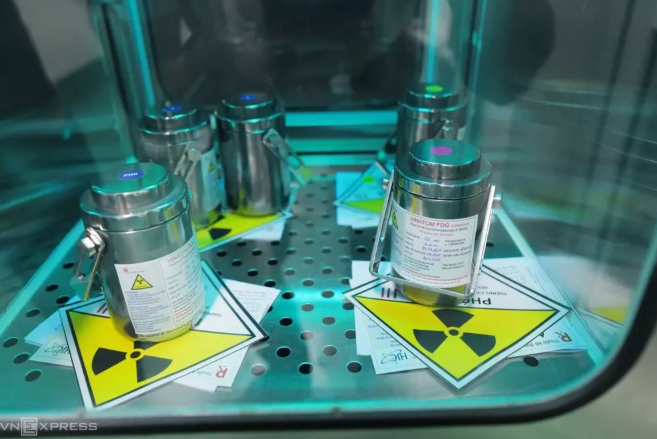
In addition to standardization efforts in the nuclear power sector, Vietnam will also expand the scope of atomic energy applications. Plans call for issuing three regulations before 2028, revising existing standards related to radiation safety and medical linear accelerators, X-ray diagnostic equipment, and others. Meanwhile, three additional regulations are planned for promulgation between 2028 and 2030, covering environmental monitoring and radioactive discharge limits, impact assessment of radioactive facilities and operations, and safety assurance for existing exposures, to promote the application of atomic energy technology in broader fields.
Vietnam has restarted its nuclear power program, aiming to build the Ninh Thuan 1 and Ninh Thuan 2 nuclear power plants, expected to become operational between 2030 and 2035, with a total installed capacity of 4,000 to 6,400 megawatts. Developing nuclear energy helps ensure national energy security and contributes to achieving the "net zero emissions" goal proposed by Deputy Prime Minister Hu Guoyong.
Disclaimer: Information republished from partner media, institutions or other websites is provided for reference and communication purposes only. It does not imply endorsement of its views or verification of its accuracy. Please contact us if any content infringes rights or requires correction.