
Vietnam Launches Nuclear Power Talent Training Program
 Scan to share
Vietnam's Ministry of Education and Training recently issued curriculum standards for undergraduate nuclear power engineering training, aiming to provide critical human resource support for Vietnam's nuclear power development. This training program will continue until 2035 and applies to 11 educational institutions approved to participate in the project. These institutions are Hanoi University of Science and Technology, University of Science (Vietnam National University, Hanoi), University of Science, University of Technology (Vietnam National University, Ho Chi Minh City), Electric Power University, Dalat University, Vietnam Atomic Energy Institute (Ministry of Science and Technology), University of Technology (University of Danang), Hanoi University of Civil Engineering, Ho Chi Minh City Electric Power College (Vietnam Electricity - EVN), and Vietnam Petroleum College (Vietnam National Energy Industry Group).
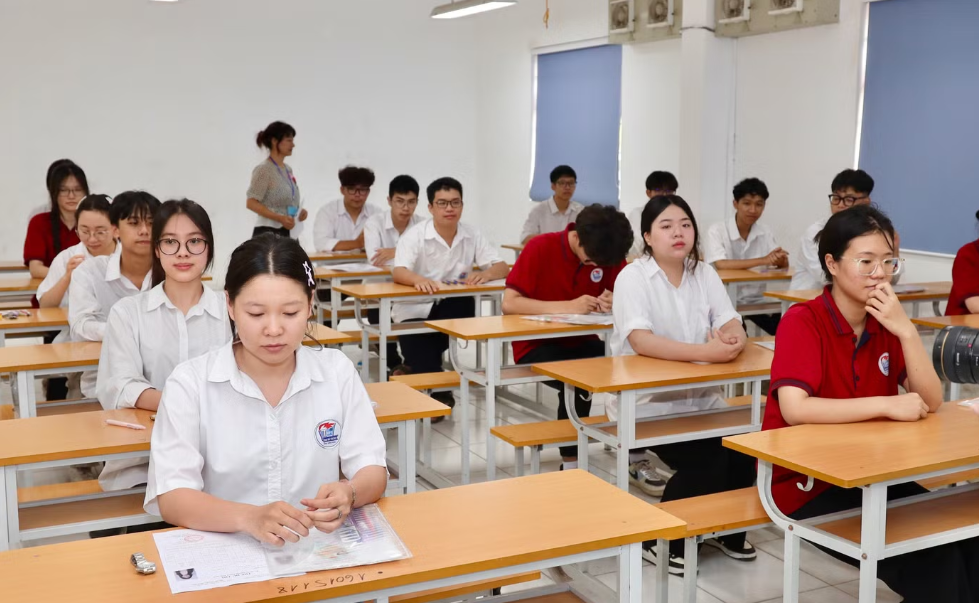
Candidates applying to enter the nuclear power engineering major need to meet the strict mathematics and physics admission quality standards set annually by each training institution. In addition to meeting general admission requirements, applicants also need to have a solid foundation in mathematics and physics, which typically means that scores in mathematics and physics subjects must reach the high percentile thresholds published by the training institution. For admission methods using comprehensive assessment, candidates need to achieve a high-level threshold score published by the training institution and ensure that their quantitative thinking skills assessment score reaches a considerably high standard.
To ensure the smooth progress of future nuclear power projects, the state's study requirements for the nuclear power engineering major are also relatively high. A bachelor's degree program requires at least 120 credits, while an engineering program requires at least 150 credits, with specific credit requirements determined by each educational institution according to its curriculum.
For students wishing to transfer into the nuclear power engineering program, specific conditions must be met, including currently studying engineering, technology, or related fields and possessing the corresponding knowledge base, meeting the equivalence standards set by the professional committee, while also achieving a cumulative grade point average at the minimum level specified by the educational institution, and ultimately passing an interview or competency assessment.
The long-term goal of this training program is very clear: by 2030, to cumulatively train approximately 4,000 professionals for Ninh Thuan 1 and Ninh Thuan 2 nuclear power plants. Some of these personnel will be selected from domestic higher education institutions to receive further specialized training overseas and are committed to working at the Ninh Thuan nuclear power plants, jointly promoting the development of Vietnam's nuclear power industry.
Currently, Vietnam is actively exploring vocational education pathways to create more employment opportunities for workers both domestically and internationally. Notably, the student Tran Thien Dat ranked first in the 2026 Ho Chi Minh City National University entrance examination and was awarded a "Science Excellence" scholarship worth 320 million Vietnamese dong, which is undoubtedly an encouragement for Vietnam's education sector and nuclear power talent training. This demonstrates that the state's emphasis on scientific and technological talent is increasing.
The Vietnamese government and education sector are actively promoting education and training in nuclear power-related fields, aiming to provide strong talent support for Vietnam's nuclear power development in order to achieve the national energy strategic goals.
Disclaimer: Information republished from partner media, institutions or other websites is provided for reference and communication purposes only. It does not imply endorsement of its views or verification of its accuracy. Please contact us if any content infringes rights or requires correction.