
University of Science and Technology of China Plans to Establish a Micro-Major in "Magnetic Confinement Controlled Nuclear Fusion"
 Scan to share
On the afternoon of July 28, the expert review meeting for the establishment of the "Magnetic Confinement Controlled Nuclear Fusion" micro-major at the University of Science and Technology of China was held at the university's Lishi College. Seven experts from Fudan University, Sun Yat-sen University, Hefei University of Technology, Anhui University, and fusion energy enterprises formed the review committee to deliberate on the micro-major construction plan. Following inquiries and discussions, the expert group unanimously agreed to establish the micro-major.
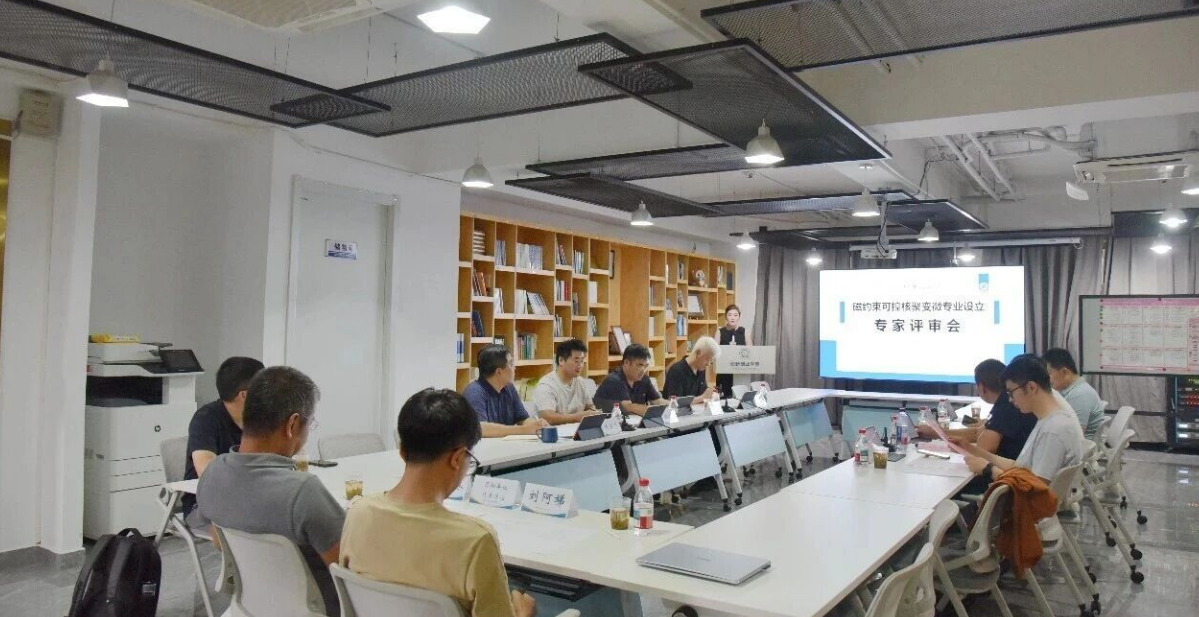
The meeting was hosted by Lishi College of USTC. Zhu Dongjie, Executive Vice Dean of Lishi College, attended the meeting, while Professor Xie Jinlin, Vice Dean of the School of Nuclear Science and Technology, and Associate Professor Liu Adi, Teaching Director of the Department of Plasma Physics and Fusion Engineering, participated in the presentation and defense. On behalf of the micro-major construction team, Xie Jinlin introduced the relevant plan from the perspectives of construction background, training objectives, curriculum system, faculty, practical platforms, and construction schedule.
According to the construction plan, the micro-major leverages the plasma physics disciplinary foundation of USTC and the large-scale scientific facility resources of the Institute of Plasma Physics, Chinese Academy of Sciences, highlighting the training characteristics of "integration of science and education, integration of theory and practice, and interdisciplinary integration." The curriculum consists of 9 courses totaling 15 credits, including 5 core courses and 4 elective courses, covering the main knowledge domains of fusion physics and engineering.
The curriculum is benchmarked against the nine research directions of the International Tokamak Physics and Engineering Activities (ITPEA) under the ITER Organization. Core courses include Introduction to Magnetic Confinement Fusion Energy, Fundamentals of Plasma Physics, Burning Plasma Confinement and Transport, Materials and Boundary Physics for Magnetic Confinement Fusion Reactors, and Introduction to Heating and Current Drive; elective courses include Magnetic Confinement Devices and Configurations, Plasma Diagnostics for Magnetic Confinement Fusion, Introduction to Magnetic Confinement Fusion Reactor Engineering Technology, and Practice in Magnetic Confinement Fusion Science and Engineering.
In terms of faculty, the micro-major plans to form a teaching team consisting of 9 disciplinary backbone members from the university and 22 researchers from research institutes, covering areas such as plasma physics, fusion engineering, materials science, and diagnostic technology. Practical teaching will rely on platforms including the EAST full superconducting tokamak, the CRAFT comprehensive research facility for key fusion reactor systems, and the BEST compact fusion energy experimental device, building a progressive practical system from device familiarization and data analysis to experimental participation and research training.
The review experts noted that the micro-major has a clear positioning, addressing the strategic needs of fusion energy and the demands of engineering transformation. The curriculum system emphasizes problem-oriented and practical training, with a solid foundation in faculty and platforms. Through voting, the expert group unanimously approved the establishment plan for the "Magnetic Confinement Controlled Nuclear Fusion" micro-major.
Once established, the micro-major will cultivate interdisciplinary talents with a foundation in physics, systems thinking, and engineering capabilities in the cross-disciplinary field of fusion physics and engineering. The construction team stated that they will further refine the training plan and curriculum system based on expert feedback, and advance the development of the faculty team and the integration of practical platforms.
Disclaimer: Information republished from partner media, institutions or other websites is provided for reference and communication purposes only. It does not imply endorsement of its views or verification of its accuracy. Please contact us if any content infringes rights or requires correction.