
Oak Ridge National Laboratory Licenses Cryogenic Fuel Pellet Technology to Type One Energy
 Scan to share
The U.S. Department of Energy's Oak Ridge National Laboratory (ORNL) has licensed a suite of cryogenic fuel pellet injection technologies to Type One Energy to advance fuel supply capabilities needed for high-performance fusion plasma operations. The two parties signed the licensing agreement on August 5 in Knoxville, Tennessee, USA.
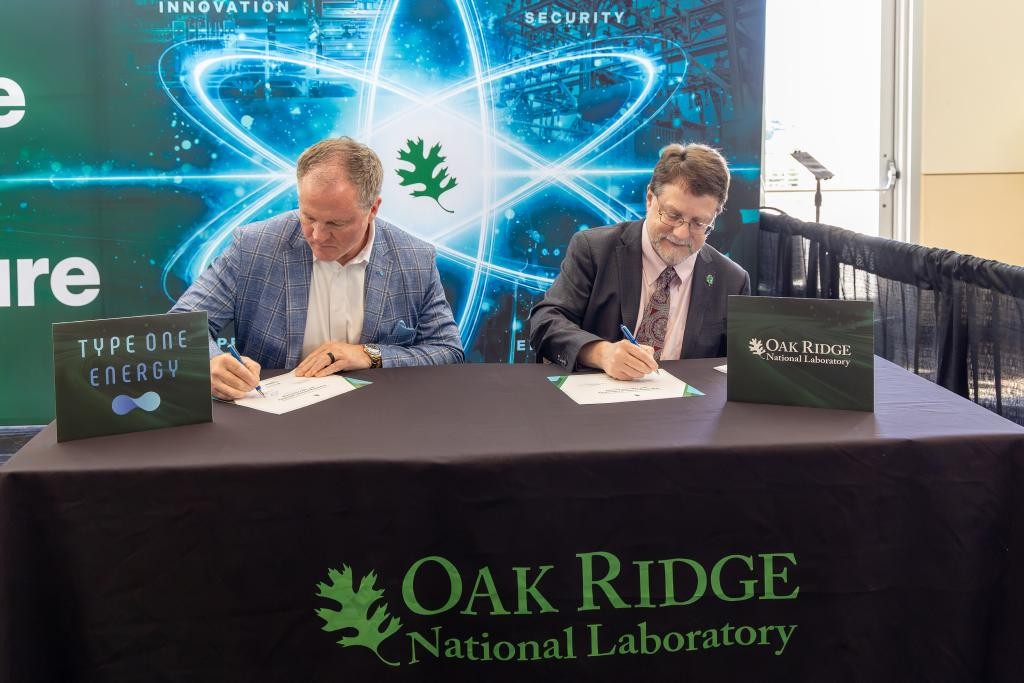
The license covers four ORNL inventions, primarily related to the design and operation of cryogenic fuel pellet injection systems. The technology forms solid hydrogen isotope fuel pellets at cryogenic temperatures near absolute zero and injects them into fusion plasma at high speeds. Compared with methods such as gas injection, pellet injection is more effective at delivering fuel into the core region of the plasma, thereby improving fuel replenishment efficiency and plasma performance.
Type One Energy, headquartered in Oak Ridge, is developing next-generation stellarator fusion technology. The company has previously collaborated with ORNL on multiple initiatives, including the construction of a high heat flux testing facility and joint projects under the Innovation Network for Fusion Energy (INFUSE) program.
ORNL Director Stephen Streiffer stated that Type One Energy is an important partner in advancing fusion energy research at the laboratory, and that this license moves relevant fuel research further from the laboratory stage toward application. John Canik, Chief Science and Engineering Officer at Type One Energy, stated that a stable, reliable, and highly repeatable fuel supply is one of the key technologies for achieving sustained fusion energy output.
Fusion reactors using deuterium-tritium fuel require continuous replenishment of ions consumed by reactions as well as ions lost from the confinement region. Deuterium is relatively abundant and can be handled with conventional equipment; tritium, however, is scarce and radioactive, imposing higher requirements on fuel reprocessing, containment, and recycling. ORNL stated that no current fuel pellet injector can fully meet the pellet production rate required for reactor operations.
The licensed technologies include a tritium-compatible cryogenic fuel pellet gas gun, a tritium-compatible cryogenic screw extruder for plasma fueling, a cryogenic fusion fuel pressure relief device, and a single-phase-change-based cryogenic extrusion recirculation solids transport system. These technologies address pellet size control, continuous production, overpressure protection, and closed-loop fuel circulation, respectively, with the goal of improving system reliability, safety, and fuel utilization efficiency under reactor conditions.
Troy Carter, Director of ORNL's Fusion Energy Division, stated that fuel pellet injectors are an important component of fusion device fuel supply systems, and that multiple existing fusion experimental devices have adopted related fueling methods. He believes that technology transfer is an important step in moving fusion technology from the laboratory toward commercial application.
Type One Energy is advancing its fusion project at the Bull Run Energy Complex in Clinton, Tennessee, owned by the Tennessee Valley Authority. The company plans to first build a prototype device, Infinity One, to provide design validation for the subsequent power generation device, Infinity Two. The company has previously stated that Infinity Two aims to deliver approximately 300 to 350 megawatts of electricity to the grid.
Matt Miles, Senior Vice President of External Affairs at Type One Energy, stated that the licensing agreement enables the company to incorporate ORNL-developed technologies into its projects and continue engineering development. Shaun Gleason, ORNL Partnerships Directorate, stated that the laboratory hopes to accelerate the commercialization of key technologies for future fusion energy through collaboration with industry.
Disclaimer: Information republished from partner media, institutions or other websites is provided for reference and communication purposes only. It does not imply endorsement of its views or verification of its accuracy. Please contact us if any content infringes rights or requires correction.