
Search Results
Keyword:stellarator

Lower Saxony, Germany Plans to Build Europe's First Large-Scale Fusion-Grade High-Temperature Superconducting Tape Plant
Proxima Fusion and the Lower Saxony state government of Germany signed a memorandum of understanding in Hanover on September 9, planning to build Europe's first large-scale fusion-grade high-temperature superconducting tape production facility in the state, laying the foundation for large-scale industrial production of high-temperature superconducting (HTS) tape. According to the plan, the first two phases of the project involve an investment of approximately 140 million euros, with public funds and private capital each covering about half. Of this, Lower Saxony plans to contribute 21 million euros, accounting for nearly 30% of the public funding portion. The first two phases of construction are expected to be completed by the end of 2029. High-temperature superconducting tape is a type of metal tape that exhibits superconducting properties at relatively higher temperatures. In the superconducting state, it can transmit current with nearly zero resistive loss and is used to manufacture high-power, compact electromagnets. For stellarator fusion devices, magnets made from high-temperature superconducting tape can generate the magnetic fields needed to confine and control high-temperature plasma, making them an important foundational material for achieving compact fusion devices and future fusion power plants.
2026-09-12

Yanchaojuneng Completes VPI of Stainless Steel-Jacketed Superconducting Prototype Coil for Stellarator
Recently, Yanchaojuneng (Shanghai) Technology Co., Ltd. completed vacuum pressure impregnation (VPI) of a next-generation stellarator stainless steel-jacketed three-dimensional shaped superconducting prototype coil. Previously, the prototype coil had completed two core processes: three-dimensional precision winding and ground insulation wrapping. The completion of VPI signifies that the company has established an autonomous process chain from coil winding and forming, insulation wrapping, to integrated insulation curing. The stellarator is an important device type for steady-state operation in the field of controlled nuclear fusion, capable of reducing the risk of major plasma disruptions. Three-dimensional shaped superconducting coils are the core components for building the magnetic field that confines plasma in a stellarator. Public information shows that Germany's W7-X stellarator uses aluminum alloy jackets...
2026-09-10
US-based Thea Energy Unveils Helios Stellarator Fusion Power Plant Design
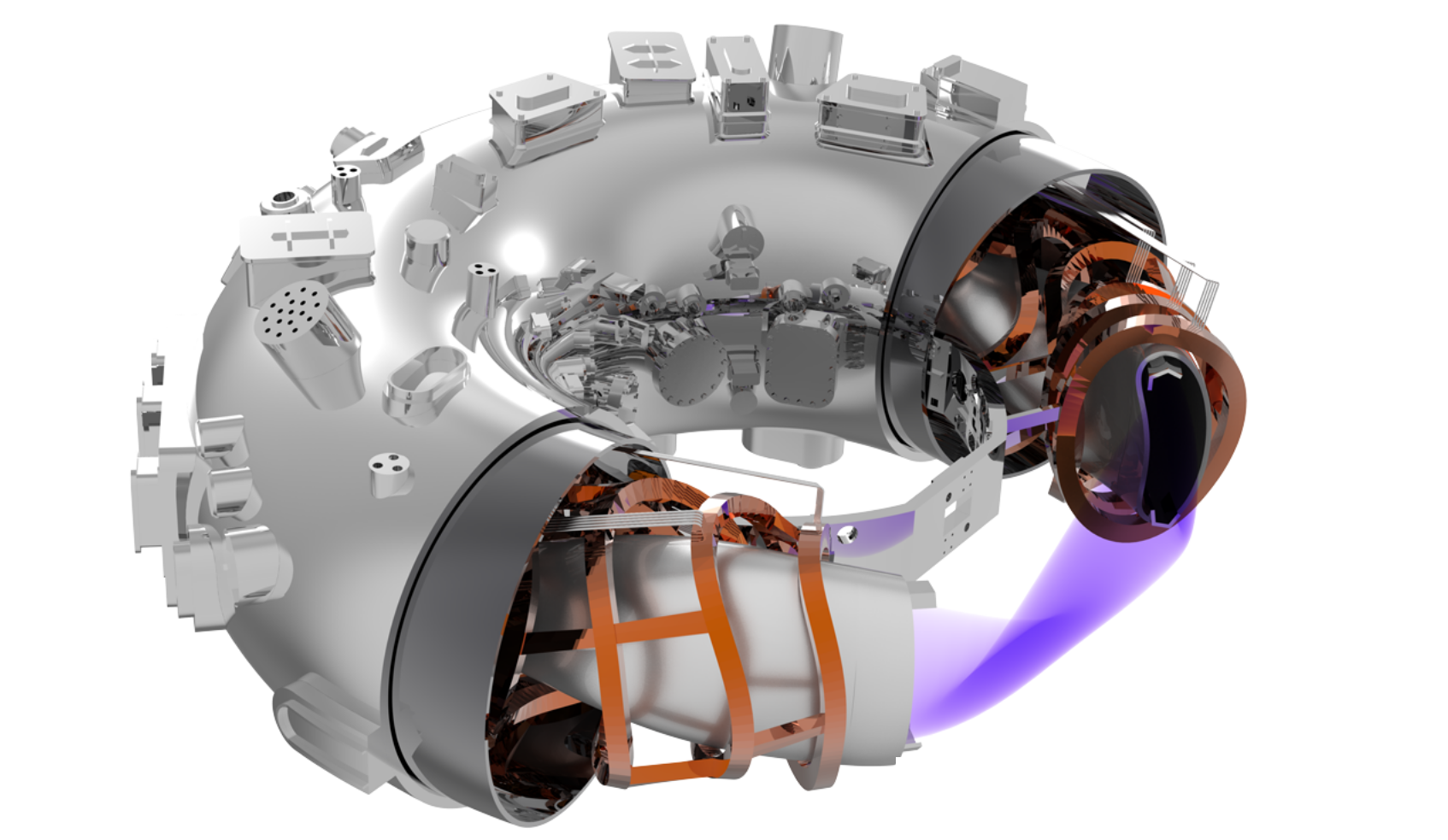
On September 9, 2026, Thea Energy, Inc., a fusion energy company based in Kearny, New Jersey, announced that 16 peer-reviewed papers on its Helios fusion power plant design had been published in a special issue of Fusion Engineering and Design (FED). The special issue, titled "Thea Energy's Helios Stellarator Power Plant Design," presents the Helios architecture and its key engineering solutions. According to Thea Energy, Helios is a stellarator fusion power plant architecture oriented toward commercial deployment requirements, integrating magnet coils that can be controlled by software to adapt to actual operating conditions, a stellarator divertor exhaust system for continuous fusion power generation operations, and a sectorized maintenance scheme supporting long-term operation...
2026-09-10
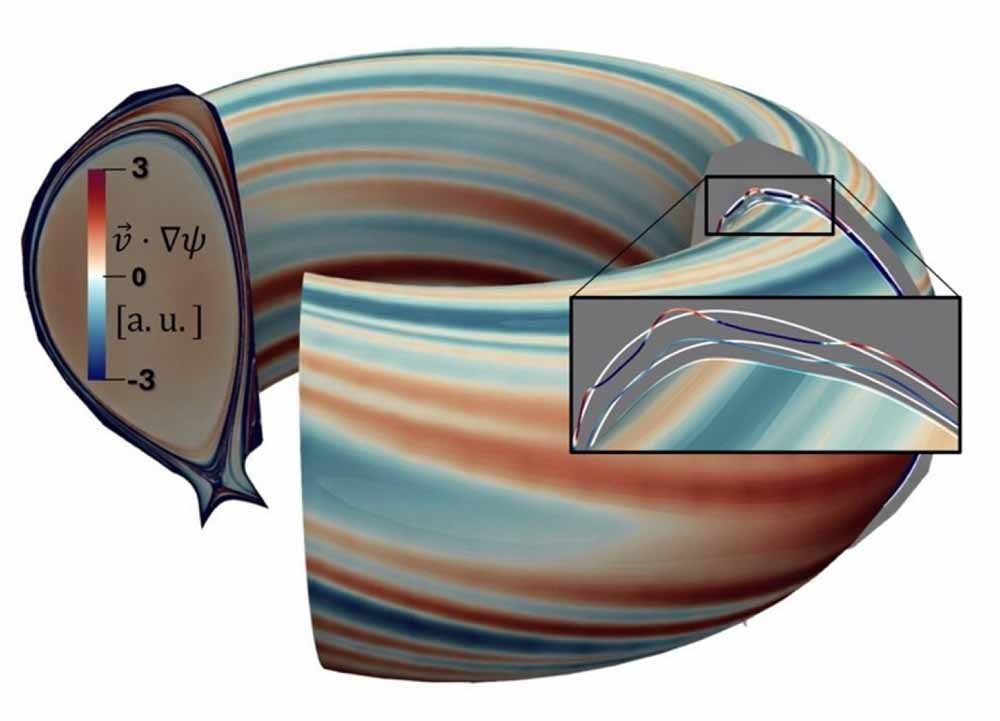
Digital twins are becoming an important R&D pathway in fusion research
Recently, a new paper reviewed the progress of digital twin technology in fusion research over the past five years and noted that several key gaps remain before a complete digital twin model of a fusion power plant can be achieved. Simulating the movement of tungsten in the plasma core. Copyright: (F. Jenko et al., 2026, *Nuclear Fusion* 66 116014) Digital twins are a class of virtual models that reflect the structure, environment, and behavior of physical systems, and can be used to predict future system states and inform real-world decision-making. In fusion research, as issues in plasma physics, device engineering, and material interactions grow increasingly complex, digital twins are considered promising...
2026-09-07
Rock Fusion AI Platform Streamlines the Entire Stellarator Design Workflow
Recently, the AI agent collaboration platform for stellarator design independently developed by Rock Fusion has achieved full coverage of the entire design workflow, encompassing key stages such as zero-dimensional parameter design, plasma configuration optimization and performance analysis, as well as coil engineering feasibility assessment. The company stated that the platform can search over a thousand initial configurations and hundreds of thousands of coil schemes, reducing the typical design iteration cycle from several weeks to several days. Rock Fusion stellarator concept image. Leveraging this platform, Rock Fusion has completed the full-machine physics design of a medium-sized superconducting stellarator with a major radius of 2 meters and a central magnetic field of 3 tesla. Design work for the company's other devices under development is also being advanced on the same platform. Stellarators rely on external three-dimensional coils to directly generate helical magnetic fields, eliminating the need to sustain magnetic confinement through plasma current. This mechanism inherently reduces the risk of major disruptions faced by tokamaks and offers the potential for long-pulse steady-state operation. In 2025, Germany's Wendelstein 7-X (W7-X) stellarator achieved significant progress in the "triple product" metric during long-duration discharges, drawing greater attention to the stellarator route.
2026-09-02
Japan's Helical Fusion Technology Selected as Candidate for METI's Fusion Demonstration Program
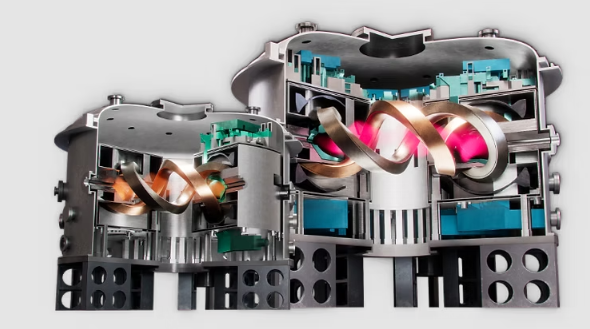
Helical Fusion Co., Ltd. has recently been selected as a final candidate for the fusion power demonstration project support program by Japan's Ministry of Economy, Trade and Industry (METI). The program aims to align with Japan's national fusion strategy, advancing fusion energy into the demonstration phase by the 2030s and building the technical foundation for subsequent commercialization. The left image shows Helix HARUKA, Helical Fusion's integrated demonstration device; the right image shows Helix KANATA, Helical Fusion's fusion test plant. Under the current arrangement, the program will provide approximately 60 billion yen in government funding over three years through 2028, supporting private-sector R&D across multiple fusion technology...
2026-09-01

Tennessee Issues First-Ever Commercial Fusion-Specific Permit in the U.S. to Type One Energy
The Tennessee Department of Environment and Conservation (TDEC) has issued Type One Energy the state's first permit specifically for a fusion energy facility, allowing the company to advance fusion-related projects at the Tennessee Valley Authority's (TVA) Bull Run Energy Complex in Clinton. Tennessee officials stated this is the first permit of its kind in the United States issued under a new state-level fusion regulatory framework. Tennessee Governor Bill Lee, alongside fusion energy partners, presented the first U.S. permit specifically for a commercial fusion facility on Monday at the Organization of American States (OAS) annual meeting in Nashville. (LR) TVA Interim...
2026-09-01
Rock Fusion Completes Key Processes for Stellarator 3D Non-Planar Superconducting Prototype Coil
Recently, the stellarator high-strength stainless steel armored 3D non-planar superconducting prototype coil developed by Rock Fusion (Shanghai) Technology Co., Ltd. has completed two key processes: 3D precision winding and ground insulation wrapping. The overall 3D geometric error of the coil is consistently controlled at the millimeter level, indicating that the company has preliminarily established key manufacturing processes including material adaptation, 3D precision forming, and insulation wrapping for high-field steady-state stellarator superconducting magnets. The stellarator is an important device for steady-state controlled nuclear fusion research, and 3D superconducting coils are used to generate the complex magnetic fields required to confine plasma. Unlike conventional planar coils, stellarator coils typically feature non-planar spatial structures with continuously varying curvature...
2026-08-25

Thea Energy Completes Series B Extension to Advance Stellarator Fusion Plant Deployment
Thea Energy, Inc. announced on August 18 that it has completed an extension of its Series B financing round, with new investors including Brevan Howard Macro Venture, Aloniq, ALJ Investments, Beyond Earth Ventures, and other global strategic investors. The company stated that the new funds will be used to advance the engineering and commercial deployment of its stellarator fusion technology. Thea Energy had previously announced the completion of a $100 million Series B round, led by the U.S. Innovative Technology Fund (USIT) under Thomas Tull. The funds are primarily intended to expand magnet manufacturing capacity and build a second facility in northern New Jersey.
2026-08-19
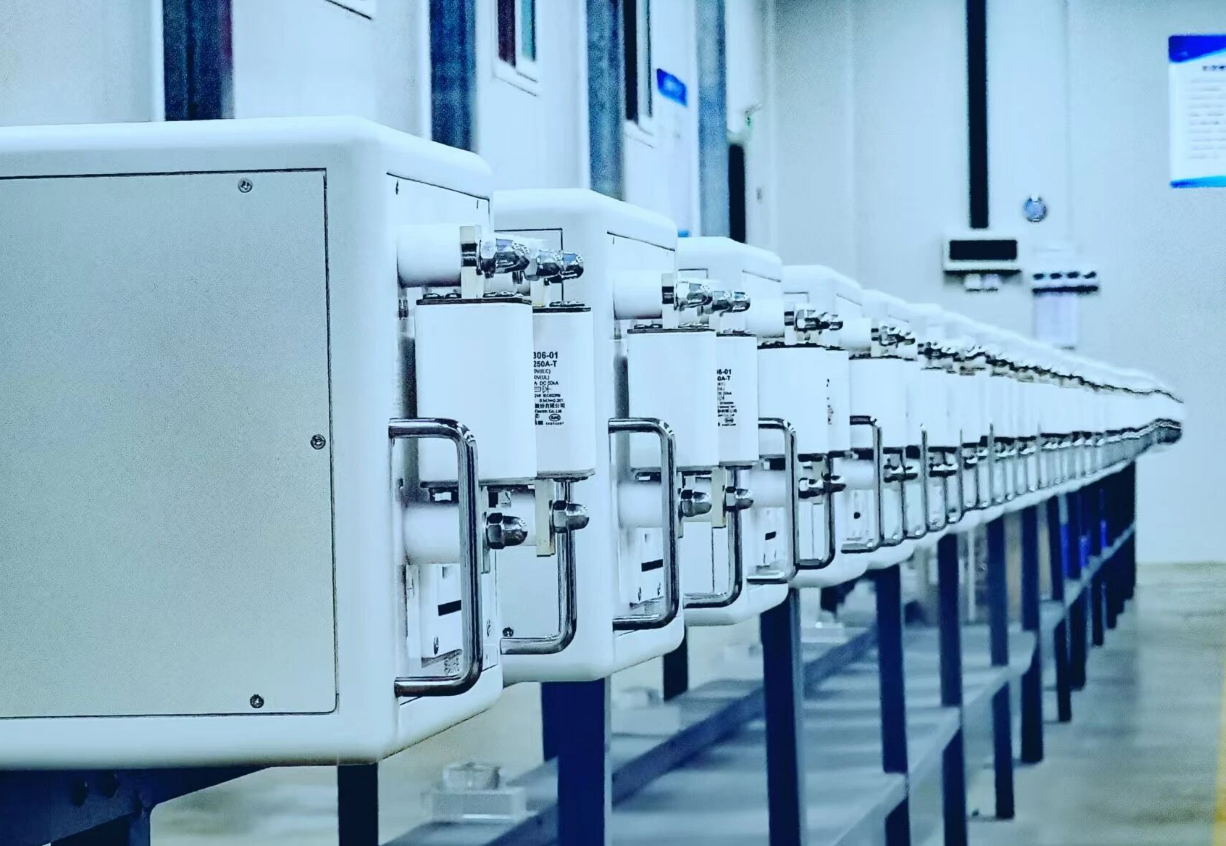
Cathode High-Voltage Power Supply for CFQS Device ECRH System Manufactured by CNNC Tongchuang Successfully Shipped
On August 3, the cathode high-voltage power supply for the Electron Cyclotron Resonance Heating (ECRH) system of China's first Quasi-Axisymmetric Stellarator (CFQS) device, manufactured by CNNC Tongchuang (Chengdu) Technology Co., Ltd., successfully passed factory acceptance and was officially shipped. The CFQS device is a major scientific and technological infrastructure project of Sichuan Province. The device adopts an advanced quasi-axisymmetric magnetic field configuration, combining the advantages of high confinement performance and steady-state operation. Under low-parameter operating conditions, the CFQS test platform confirmed that the quasi-axisymmetric magnetic field configuration can effectively reduce neoclassical transport losses in plasma and improve plasma confinement, marking the first international experimental verification of the superiority of the quasi-axisymmetric magnetic field configuration. Next, the CFQS stellarator...
2026-08-10
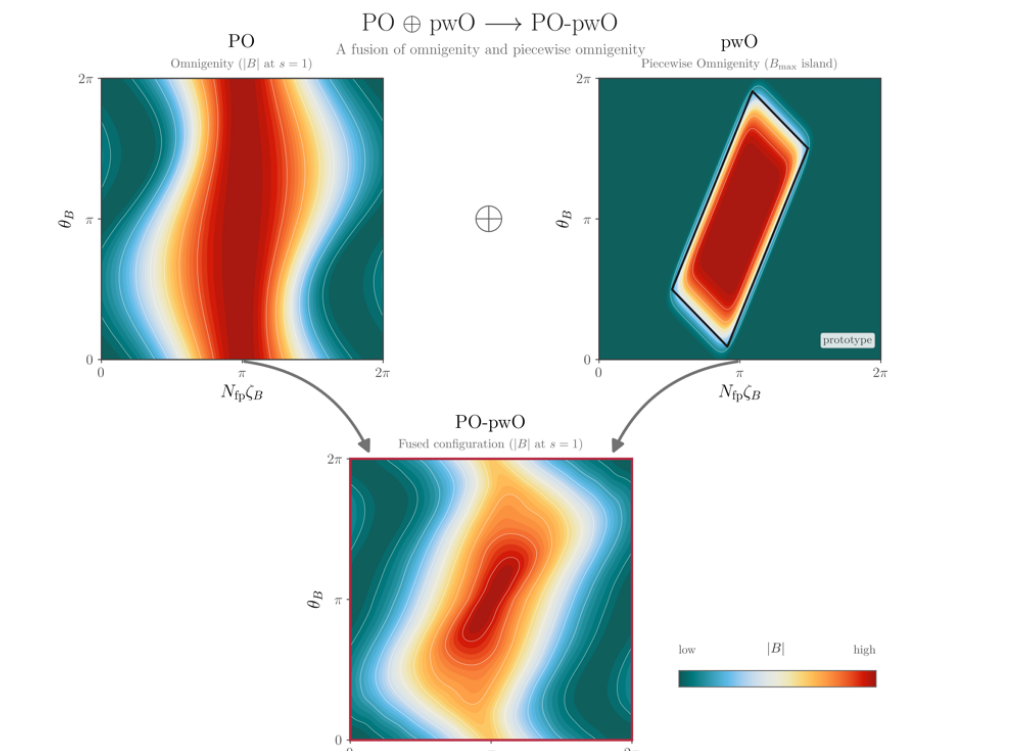
Department of Plasma Physics and Fusion Engineering at the University of Science and Technology of China Proposes New Three-Dimensional Magnetic Field Configuration for Stellarators
Stellarators confine high-temperature plasma using three-dimensional magnetic fields generated by external coils, enabling steady-state operation without relying on plasma current and avoiding instabilities such as disruptions, making them the fastest-growing technological route globally. However, if the three-dimensional magnetic field is not carefully optimized, trapped particles can experience significant radial drift, leading to a substantial increase in neoclassical transport losses. To suppress this drift, the magnetic field must satisfy the "omnigenity" condition, meaning that the time-averaged radial drift of all trapped particle orbits is zero. The most widely applied class of omnigenous magnetic fields is poloidal omnigenity (PO), and such configurations are also commonly referred to as quasi-isodynamic (QI) configurations...
2026-08-06
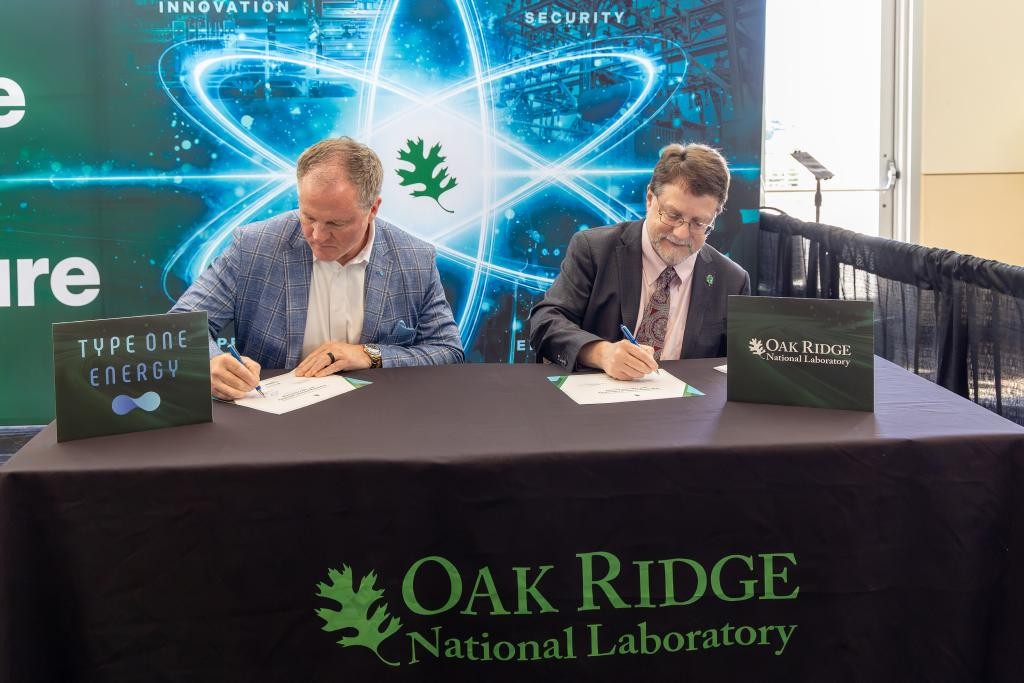
Oak Ridge National Laboratory Licenses Cryogenic Fuel Pellet Technology to Type One Energy
The U.S. Department of Energy's Oak Ridge National Laboratory (ORNL) has licensed a suite of cryogenic fuel pellet injection technologies to Type One Energy to advance fuel supply capabilities needed for high-performance fusion plasma operations. The two parties signed the licensing agreement on August 5 in Knoxville, Tennessee, USA. The license covers four ORNL inventions, primarily related to the design and operation of cryogenic fuel pellet injection systems. The technology forms solid hydrogen isotope fuel pellets at cryogenic temperatures near absolute zero and injects them into fusion plasma at high speeds. Compared with methods such as gas injection, pellet injection is more effective at delivering fuel deeper into the plasma...
2026-08-06
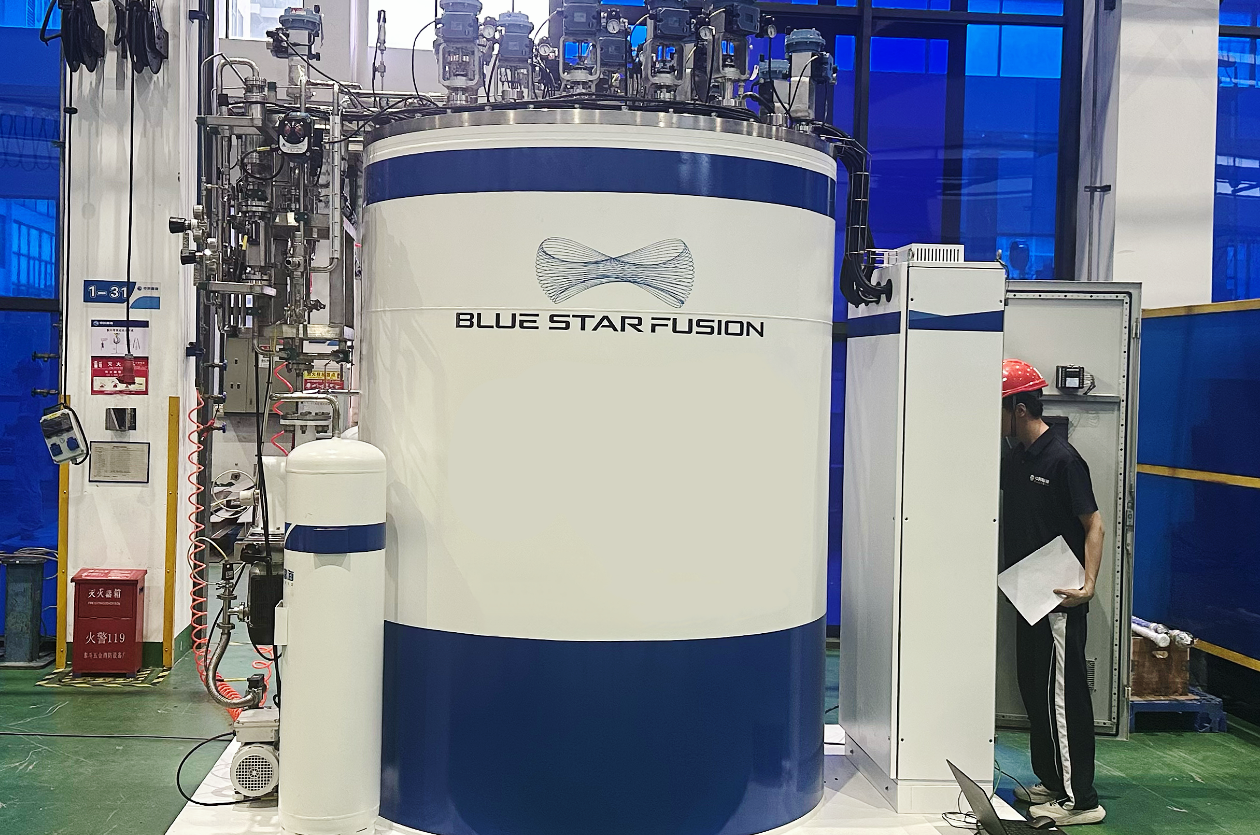
BlueStar Fusion Completes "Angel+" Round Financing, High-Temperature Superconducting Stellarator Project Moves to Engineering Implementation Phase
Recently, Hefei BlueStar Fusion Technology Co., Ltd. (BlueStar Fusion, hereinafter referred to as "BlueStar Fusion") completed an Angel+ round of financing on the scale of several hundred million RMB, with a post-investment valuation exceeding 3 billion RMB. Following the completion of this financing round, the company will continue to advance the verification of key components, engineering manufacturing, and full-system integration of the high-temperature superconducting stellarator, with the goal of initiating the construction of the Phase I high-temperature superconducting stellarator system by 2027. BlueStar Fusion was established in August 2025 and is primarily engaged in the R&D and engineering of high-temperature superconducting stellarator technology. The company has assembled a professional team of nearly 100 members, covering fusion physics, superconducting magnets, structures and precision manufacturing, cryogenic engineering, artificial intelligence, and other disciplines. Ex...
2026-08-04
IAEA Launches New Project to Advance Research Network on Small and Medium-Sized Fusion Devices
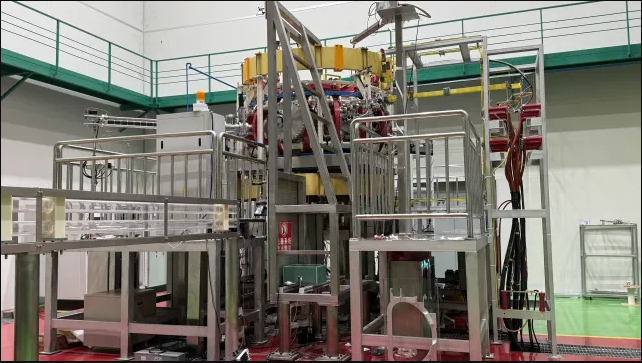
The International Atomic Energy Agency recently launched a new Coordinated Research Project, aiming to further strengthen the global network of small and medium-sized fusion devices, supporting multinational coordinated experiments, diagnostic technology development, and personnel training, providing a platform for cultivating the next generation of fusion researchers. The Tokamak TT-1 device at the Thailand Institute of Nuclear Technology (TINT) has long participated in the IAEA Coordinated Research Project on the network of small and medium-sized fusion devices, contributing to international cooperation, research, and capacity building. (Photo: JP Cayol/IAEA) This project builds upon a previous five-year collaborative research program. The previous project was named Small and Medium-Sized Magnetic Confinement...
2026-07-30