
South Korea Plans to Upgrade National Radiation Monitoring System to Address Impacts of Overseas Nuclear Facility Accidents
 Scan to share
South Korea's Nuclear Safety and Security Commission is pushing to strengthen the national radiation monitoring system, bringing radioactive contamination of the domestic environment caused by potential overseas nuclear facility accidents into institutionalized regulatory scope. According to partial amendments to the Enforcement Decree and Enforcement Rules of the Atomic Energy Safety Act pre-announced on August 7, South Korea will incorporate radioactive contamination surveys into existing radiation environment surveys and environmental radioactivity monitoring and evaluation operations, entrusting the Korea Institute of Nuclear Safety with the execution of related survey work.
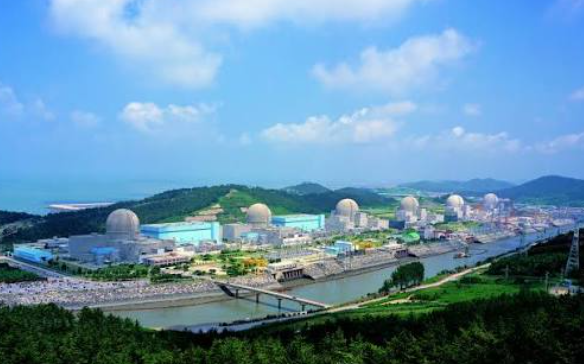
This institutional adjustment is a supporting measure following South Korea's revision of the Atomic Energy Safety Act in February this year, with the relevant law set to take effect on February 20, 2027. The core of the amendment lies in that when an overseas nuclear facility accident poses a clear risk of radioactive contamination to the domestic environment of South Korea, the Nuclear Safety and Security Commission may directly conduct contamination surveys in accordance with the law. In the past, South Korea's radiation environment monitoring was primarily centered on domestic nuclear power plants and radiation utilization facilities. However, following the Fukushima nuclear accident, the possibility of radioactive materials transboundary dispersion through the atmosphere and ocean currents has drawn greater attention, and establishing an independent and routine response mechanism for overseas accidents has become a practical necessity.
At the implementation level, the Korea Institute of Nuclear Safety will assume more systematic survey responsibilities, including designating survey areas and specific sampling points, selecting representative radionuclides, determining analysis methods, arranging survey cycles, managing survey data, and establishing collaborative mechanisms with relevant agencies. The newly added provisions also require that survey plans comprehensively consider the characteristics of overseas nuclear facilities, the properties of radionuclides, and the environmental media in areas within South Korea that may be affected. In emergency situations, the implementing agency may take necessary measures first and then supplement and refine the survey plan; if the survey process requires adding or excluding representative nuclides or extending the survey duration, the plan may also be adjusted in accordance with the law.
The amendment also renames the existing "Central Radiation Measurement Laboratory" to the "National Radiation Monitoring Center," aiming to highlight its function as a national-level radiation monitoring hub. This change is not merely a name adjustment but rather a further integration of functions such as environmental radioactivity monitoring, contamination surveys, abnormal signal identification, and information dissemination, which will help enhance early detection, data analysis, and public communication capabilities when risks of overseas nuclear accidents or abnormal inflows of radioactive materials arise.
With survey procedures, representative nuclides, environmental media, and data management methods incorporated into institutional norms, South Korea's future environmental radioactivity surveys targeting overseas nuclear power plant accidents will be more standardized and verifiable. This mechanism may also strengthen information sharing and cooperation with international monitoring systems such as the International Atomic Energy Agency, providing clearer legal and technical support for transboundary nuclear safety risk management against the backdrop of intertwined climate change, natural disasters, and geopolitical risks.
Disclaimer: Information republished from partner media, institutions or other websites is provided for reference and communication purposes only. It does not imply endorsement of its views or verification of its accuracy. Please contact us if any content infringes rights or requires correction.