
Chernobyl Black Fungi Draw Attention: Potential Value in Ionizing Radiation Tolerance and Shielding Research
 Scan to share
Nearly four decades after the explosion of Unit 4 at the Chernobyl Nuclear Power Plant, the areas surrounding the damaged reactor remain heavily contaminated with radiation. In this high-radiation environment, researchers have discovered that a type of black fungus is not only capable of surviving but may also exhibit strong environmental adaptability, drawing continued scientific interest in its radiation tolerance mechanisms.
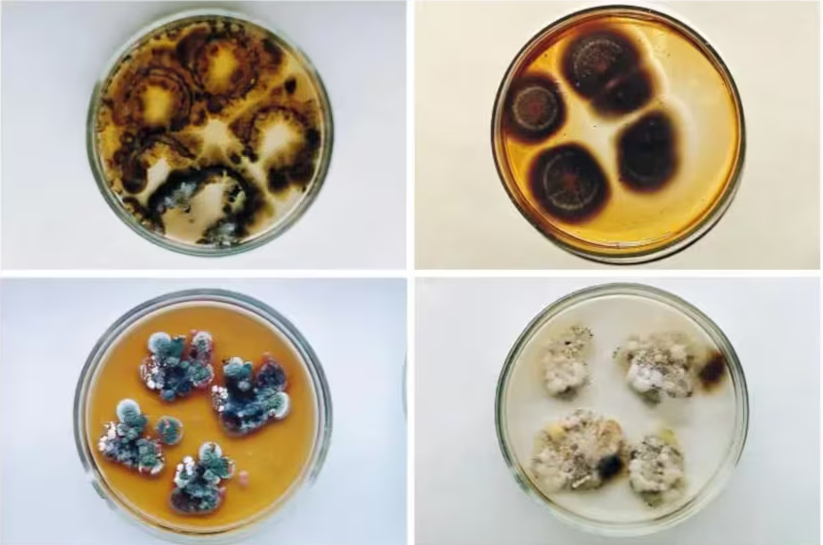
According to available data, this fungus, scientifically known as Cladosporium sphaerospermum, has been found on the interior walls of buildings associated with the contaminated reactor at Chernobyl. Researchers point out that its deep black appearance is linked to the large amounts of melanin accumulated within its cells. Compared with ordinary organisms, this type of fungus exhibits exceptional tolerance in high-ionizing-radiation environments, and in some experimental observations has even shown enhanced growth under radiation conditions.
Systematic scientific attention to the Chernobyl fungi began in the late 1990s. A research team from the National Academy of Sciences of Ukraine recorded 37 species of fungi in the shelter surrounding the damaged reactor, many of which were dark-colored and rich in melanin, with Cladosporium sphaerospermum being a representative species. Subsequently, researchers at the Albert Einstein College of Medicine further analyzed the changes in this type of fungus after exposure to ionizing radiation.
In 2008, researchers proposed a hypothesis known as "radiosynthesis": melanin in fungi may function similarly to pigments in plant photosynthesis, absorbing ionizing radiation such as gamma rays and converting it into chemical energy that supports growth. At the same time, melanin may also serve, to some extent, as a radiation shielding barrier.
However, this mechanism remains a scientific hypothesis and has not yet been fully confirmed. In 2022, a team at Stanford University noted that true radiosynthesis and the process of utilizing radiation to generate energy still require more experimental evidence.
In recent years, Cladosporium sphaerospermum has also been used in research related to space radiation protection. In one experiment, the fungus was carried to the exterior of the International Space Station, where samples were exposed to cosmic radiation. Sensor recordings from the experiment showed that when fungal samples were present, the radiation dose passing through beneath the samples was lower than in the control group without fungi. The focus of that study was not to demonstrate radiosynthesis, but rather to assess the fungus's potential value as a natural radiation shielding material.
At present, many mechanistic questions regarding the Chernobyl black fungi remain to be answered. Nevertheless, the ability of these organisms to survive in high-radiation environments provides a new subject of observation for radiation biology, mechanisms of adaptation to nuclear environments, and future research on space radiation protection.
Disclaimer: Information republished from partner media, institutions or other websites is provided for reference and communication purposes only. It does not imply endorsement of its views or verification of its accuracy. Please contact us if any content infringes rights or requires correction.