
Search Results
Keyword:ionizing radiation

U.S. Research Team Discovers Strong Ultrafast Optical Response Induced by Ionizing Radiation, Potentially Advancing Medical Imaging and Sensing Technologies
September 3 news, Stanford University and the U.S. Department of Energy's SLAC National Accelerator Laboratory research team used ultrafast electron and laser pulses to observe a strong ultrafast optical response triggered by ionization processes in semiconductor materials. The related research has been published in Nature Photonics. The researchers believe this discovery could provide new insights for radiography and sensing technologies, and also offer experimental evidence for understanding the fundamental behavior of materials under high-energy particle interactions. Radiation detection is a key technology in particle accelerators, scientific instruments, medical imaging, and security screening equipment. Existing detectors typically face a trade-off between signal strength and response speed: processes with stronger signals tend to be slower, while those with faster response may produce weaker signals...
2026-09-08
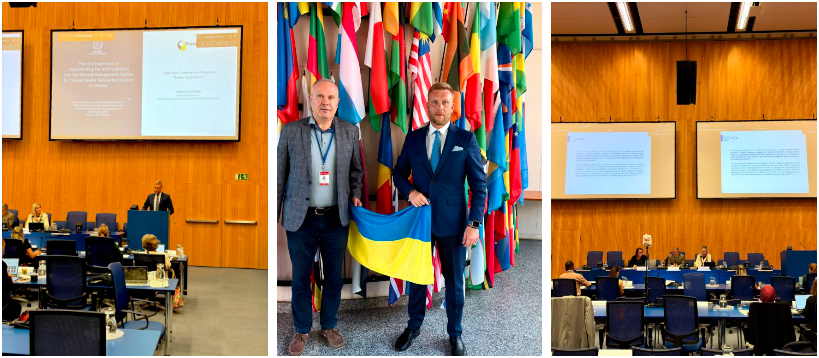
IAEA Technical Meeting on Indicators for the Management of Disused Ionizing Radiation Sources
From 24 to 28 August 2026, a technical meeting was held at the IAEA headquarters, focusing on indicators for the status of disused ionizing radiation sources and their application in sustainable management. The meeting emphasized how these indicators can serve as measurement tools to support countries in the long-term, safe, and traceable management of disused radiation sources. The Ukrainian delegation participated in the meeting, including Oleksii Zhyvotenko, Head of the Department for Production and Technical Issues and Radioactive Material Management at the "Radon" Association of the National Academy of Sciences of Ukraine, as well as representatives of the central nuclear power plant management. During the meeting, the Ukrainian side delivered a presentation on the practical experience of integrating key IAEA indicators into Ukraine's national management system for disused ionizing radiation sources.
2026-08-28

Russian Far Eastern Federal University Develops Ultrafast Ceramic Scintillators for Rapid Ionizing Radiation Detection
On August 21, 2026, scientists at the Russian Far Eastern Federal University, with support from the Russian Science Foundation, are developing ceramic materials for ultrafast detection of ionizing radiation. The results could be used in the future for medical diagnostics, baggage and cargo security screening, radiation monitoring, and scientific equipment requiring fast, precise radiation detection. The project, titled "Ultrafast Ceramic Scintillators for Ionizing Radiation Detection," is led by Anastasia Vonovskikh, a researcher at the Research and Education Center for Advanced Ceramic Materials, Department of Industrial Safety, Polytechnic Institute, Far Eastern Federal University. Scintillators are a class of materials that emit light when exposed to ionizing radiation. Detectors record these light signals to determine radiation intensity and energy. Currently, most related equipment uses single-crystal scintillators, but their production typically requires significant energy and resource inputs. The Far Eastern Federal University team proposes special ceramic materials as an alternative, aiming to improve detection speed and efficiency, making them more suitable for detecting trace amounts of radiation.
2026-08-25
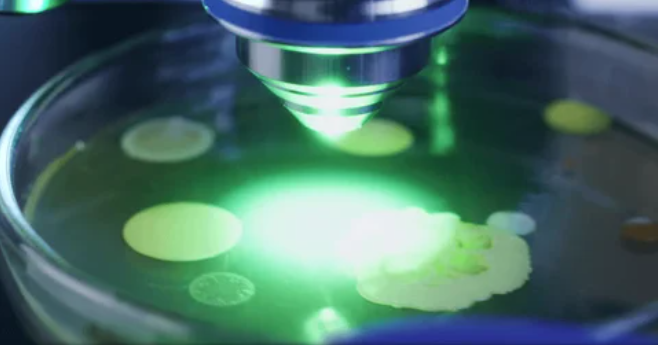
Russian Scientists Develop Bioluminescent Bacterial Bioassay for Screening Safe Low-Dose Radiation Levels in Animals
Russian researchers have developed a rapid bioassay method based on bioluminescent bacteria that can be used to assess safe dose ranges of ionizing radiation for animals, providing an early screening tool for low-dose radiation applications in livestock farming. The study involved researchers from the Institute of Biophysics of the Siberian Branch of the Russian Academy of Sciences, Siberian Federal University, and Krasnoyarsk State Agrarian University. The research team noted that low-dose ionizing radiation ranging from tens to hundreds of milligrays (mGy) may activate a series of physiological processes in animals, including metabolism, growth, and biomass accumulation; however, if the dose exceeds the safe range, it may cause physiological...
2026-08-14

US Valion Bio Initiates Safety Study of Entolimod for Radiation-Induced Gastrointestinal Injury
US biotechnology company Valion Bio announced on August 12 that the safety study of its investigational therapeutic candidate Entolimod for radiation-induced gastrointestinal injury is scheduled to commence this week. The study is being advanced by the Armed Forces Radiobiology Research Institute (AFRRI) under a contract with the National Institute of Allergy and Infectious Diseases (NIAID), as part of a government-funded research program. According to the company's disclosure, Entolimod has been delivered to AFRRI, the study has received approval from the Institutional Animal Care and Use Committee (IACUC), and the experimental animals are currently in the pre-dosing acclimation phase. The safety study will confirm the tolerability of Entolimod in the animal strain used by AFRRI...
2026-08-13
Russian Scholars Discuss Prospects and Limitations of Low-Dose Ionizing Radiation in Agriculture
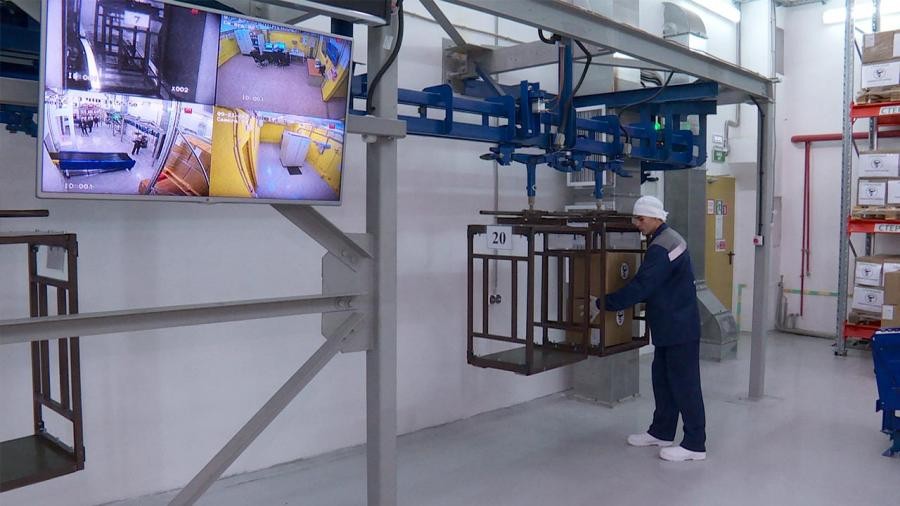
Russian researchers have recently proposed a rapid bacterial detection method for determining optimal doses of ionizing radiation for animals. Related studies suggest that low-dose radiation in the range of tens to hundreds of milligrays (mGy) may activate physiological processes such as metabolism, growth, and biomass accumulation, offering new technical approaches for livestock farming, veterinary medicine, and related fields. The ionizing radiation food processing center at the L.Ya. Karpov Institute of Physical Chemistry in Obninsk. Photo: Kaluga Region State Television and Radio Broadcasting Company. In response to this direction, the National Research Nuclear University MEPhI (Moscow Engineering Physics Institute)...
2026-08-13
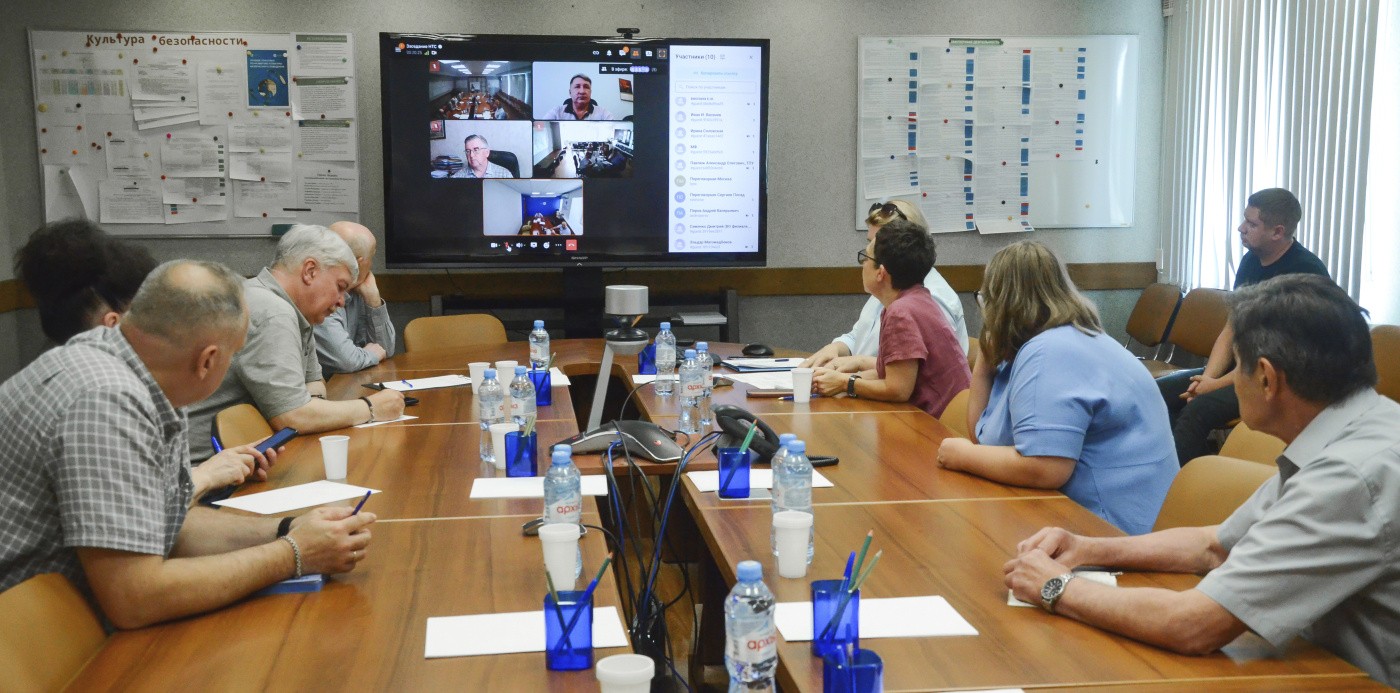
Russian RADON Discusses Technical Solutions for Recovering Disused Sealed Radiation Sources
The Federal State Unitary Enterprise RADON recently held a meeting of its Scientific and Technical Council to discuss technical solutions for recovering disused sealed ionizing radiation sources (DSIRS) from container-free storage facilities. The meeting was chaired by Artyom Ivanov, Deputy Director General for Science and Development, Doctor of Economics, and was attended by company experts as well as representatives from the National Research Nuclear University MEPhI, Russian State Agrarian University, and ODC UGR Joint-Stock Company. The meeting focused on reviewing a project proposal submitted by RADON's Volgograd branch in the southern region. The project was presented by Dmitry Semenko, General Director of the Volgograd branch, and aims to dismantle the...
2026-08-11
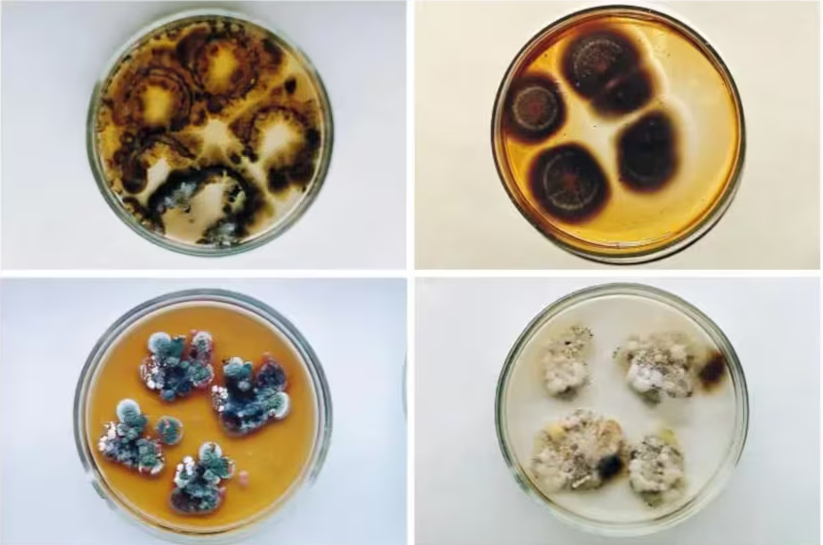
Chernobyl Black Fungi Draw Attention: Potential Value in Ionizing Radiation Tolerance and Shielding Research
Nearly four decades after the explosion of Unit 4 at the Chernobyl Nuclear Power Plant, the areas surrounding the damaged reactor remain heavily contaminated with radiation. In this high-radiation environment, researchers have discovered that a type of black fungus is not only capable of surviving but may also exhibit strong environmental adaptability, drawing continued scientific interest in its radiation tolerance mechanisms. According to available data, this fungus, scientifically known as Cladosporium sphaerospermum, has been found on the interior walls of buildings associated with the contaminated reactor at Chernobyl. Researchers point out that its deep black appearance is linked to the large amounts of melanin accumulated within its cells. Compared with ordinary organisms, this type of fungus exhibits exceptional tolerance in high...
2026-08-10
Uzbekistan Updates Licensing Rules for Nuclear Energy and Ionizing Radiation Sources
The Uzbek government recently approved new licensing procedures for nuclear energy utilization and activities involving ionizing radiation sources, establishing updated safety, radiation monitoring, personnel qualification, and technical requirements as the country advances its nuclear energy industry. According to a resolution adopted by the Cabinet of Ministers of Uzbekistan on July 30, the regulations apply to licensing of nuclear energy utilization activities and matters related to the handling of ionizing radiation sources. The framework was developed pursuant to a presidential decree issued on January 9, 2024, with the aim of reducing mandatory requirements on enterprises and simplifying licensing and approval processes. The new rules will take effect on January 1, 2027. Existing license holders must...
2026-08-03