
Russian Scientists Develop Bioluminescent Bacterial Bioassay for Screening Safe Low-Dose Radiation Levels in Animals
 Scan to share
Russian researchers have developed a rapid bioassay method based on bioluminescent bacteria that can be used to assess safe dose ranges of ionizing radiation for animals, providing an early screening tool for low-dose radiation applications in livestock farming.
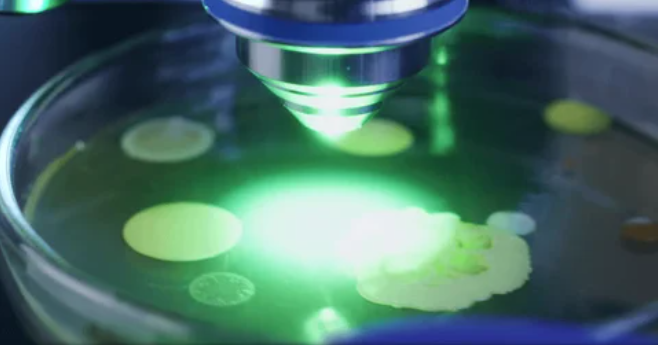
The study involved researchers from the Institute of Biophysics of the Siberian Branch of the Russian Academy of Sciences, Siberian Federal University, and Krasnoyarsk State Agrarian University. The research team explained that low-dose ionizing radiation ranging from tens to hundreds of milligrays (mGy) may activate a series of physiological processes in animals, including metabolism, growth, and biomass accumulation; however, if the dose exceeds the safe range, it may lead to physiological dysfunction. Therefore, rapidly and accurately determining the appropriate dose is a problem that must be solved before the technology can be applied in practice.
The core of this method lies in the sensitive response of marine bioluminescent bacteria to radiation. The researchers found that the luminescence intensity of bacteria changes significantly with varying radiation doses, which can serve as an indicator for assessing radiation effects. In the experiments, the researchers used tritiated water as a radiation source and compared the responses of bioluminescent bacteria and rabbit blood cells to radiation.
The results showed that changes in animal leukocyte activity followed patterns similar to those of bacterial luminescence intensity: under low-dose radiation, leukocyte activity increased; as the radiation dose increased, cell activity was inhibited. The researchers believe this indicates that bacteria and higher organisms share common response patterns in related cellular processes, and bioluminescent bacterial testing has the potential to serve as an early indicator for risk assessment.
The research team stated that this technology could in the future be used for rapidly screening radiation doses that are safe and potentially stimulatory for farm animals, as well as for environmental monitoring and studies on the consequences of radiation accidents. However, experts also cautioned that bacteria and mammals differ in metabolism, DNA repair mechanisms, and other aspects, and that luminescence intensity can be affected by factors such as temperature, pH, and culture conditions. Therefore, this method is currently more suitable as a preliminary screening tool, and the dose ranges determined still need further validation through animal cell studies and subsequent experiments.
Disclaimer: Information republished from partner media, institutions or other websites is provided for reference and communication purposes only. It does not imply endorsement of its views or verification of its accuracy. Please contact us if any content infringes rights or requires correction.