
Russian Scholars Discuss Prospects and Limitations of Low-Dose Ionizing Radiation in Agriculture
 Scan to share
Russian researchers have recently proposed a rapid bacterial detection method for determining optimal doses of ionizing radiation for animals. Related studies suggest that low-dose radiation in the range of tens to hundreds of milligrays (mGy) may activate physiological processes such as metabolism, growth, and biomass accumulation, offering new technical approaches for livestock farming, veterinary medicine, and related fields.
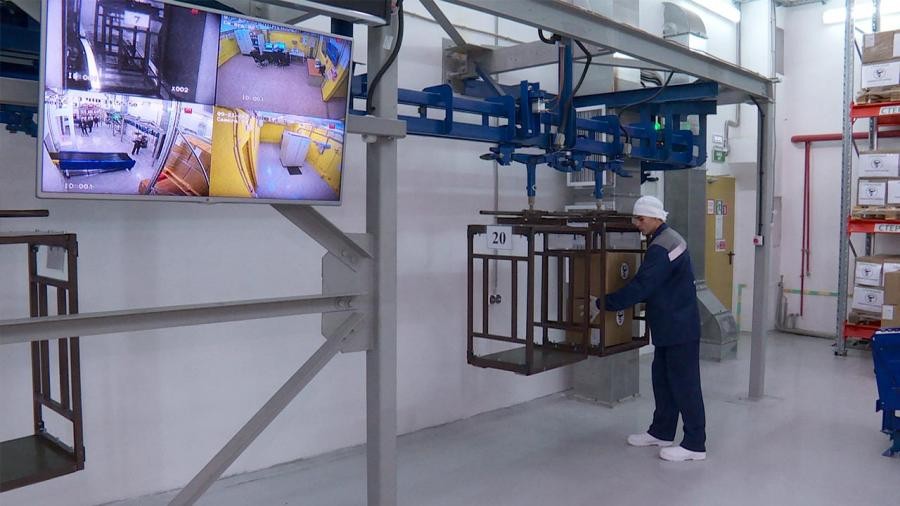
The ionizing radiation food processing center at the L.Ya. Karpov Institute of Physical Chemistry in Obninsk. Photo: Kaluga Region State Television and Radio Broadcasting Company
Addressing this direction, Lyudmila Komarova, Doctor of Biological Sciences and Head of the Biology Department at the Obninsk Institute for Nuclear Power Engineering, part of the National Research Nuclear University MEPhI, stated that the phenomenon of stimulatory effects induced by low-dose radiation is commonly referred to as "radiation hormesis." Related research shows that under specific conditions, radiation does not necessarily act as an inhibitory factor; it may also promote seed germination, enhance the reproductive capacity of certain insects, or strengthen immune responses in animals.
Komarova noted that there is already a substantial body of experimental data on the effects of low- and moderate-dose ionizing radiation on the growth, survival, and immune responses of plants, bacteria, insects, and mammals. Relevant laboratories in Obninsk have conducted studies on the hormetic effects of radiation on seeds of agricultural crops and other plants; the Biology Department at the Obninsk Institute for Nuclear Power Engineering, MEPhI, has also been conducting research on barley seeds. In June of this year, a doctoral dissertation defense discussed the effects of different ionizing radiation conditions on the morphological, biochemical, and genetic parameters of germinating barley seeds, with stimulatory effects on barley seed germination observed at specific doses.
However, Komarova also pointed out that such technologies still face multiple challenges before stable application. Radiation stimulatory effects are not always pronounced and are difficult to predict, as they may be influenced by factors such as seed physiological state, moisture content, variety, batch, environmental temperature and humidity, and post-irradiation storage time. In some experiments, the promoting effects were observed primarily in early growth stages, such as accelerated germination, but by the harvest stage, these effects could be diminished or even offset by environmental conditions.
From a practical application perspective, even when positive effects are achieved, their magnitude is typically around 10% to 15%, and their economic viability compared to more established yield-enhancing methods such as breeding and fertilization still requires further assessment. At the same time, the dose control window for achieving stimulatory rather than inhibitory effects is narrow; different species and even different varieties may require re-determination of optimal doses. The scientific community has not yet fully elucidated the biochemical mechanisms by which low-dose radiation triggers growth-promoting responses, which adds difficulty to developing reliable experimental protocols.
At the regulatory and public perception levels, any technological application involving ionizing radiation requires strict management. Komarova stated that regulatory authorities need sufficient evidence of safety and efficacy, and the construction, maintenance, and staffing of irradiation facilities also impose cost pressures.
Regarding food safety concerns raised by the public, she emphasized that radiation treatment does not make food itself radioactive and leaves no chemical residues. Routine radiation treatment of food or animals does not convert stable elements into radioactive elements. She believes that to promote the application of such technologies, comprehensive and clear science communication is needed to reduce public misunderstanding of the term "radiation."
Disclaimer: Information republished from partner media, institutions or other websites is provided for reference and communication purposes only. It does not imply endorsement of its views or verification of its accuracy. Please contact us if any content infringes rights or requires correction.