
South Korea's semiconductor cluster adds about 21 GW of new power demand; government to study whether to build new nuclear units
 Scan to share
South Korea's Minister of Climate, Energy and Environment, Kim Sung-hwan, said on the 10th that the new electricity demand from the Yongin—Hoseon semiconductor industry cluster is approximately 21 GW, equivalent to the power supply capacity of about 15 nuclear units based on an estimate of 1.4 GW per unit. The Ministry of Climate, Energy and Environment plans to seek expert and public opinions before announcing the 12th Basic Plan for Electricity Supply and Demand in October, and will decide accordingly whether to push for the construction of new nuclear units.
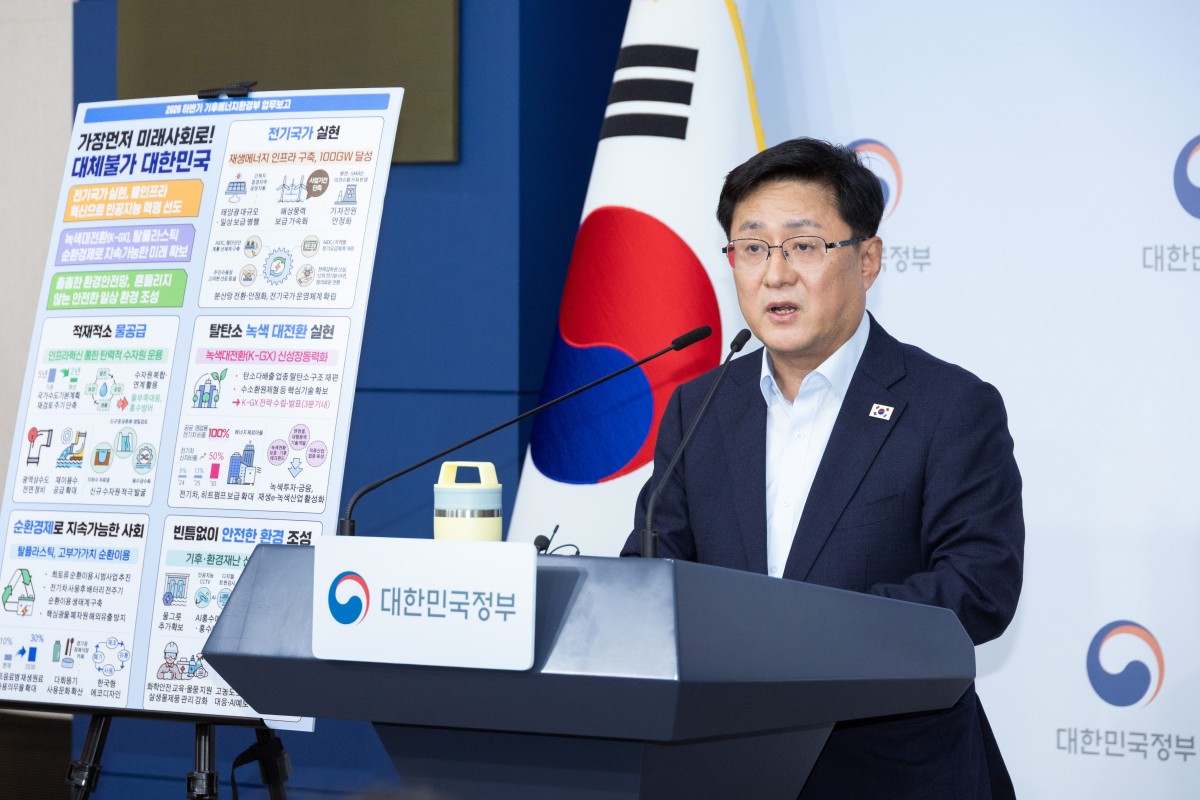
Kim Sung-hwan stated that the electricity demand of the semiconductor industry has increased significantly compared to the past. The South Korean government has decided to raise renewable energy capacity from 78 GW to 100 GW by 2030, but whether the increase in renewable energy alone can meet the new demand still requires further assessment.
Regarding whether additional nuclear units are needed, Kim Sung-hwan said the government will fully hear expert and public opinions before formulating the 12th Basic Plan for Electricity Supply and Demand, and will make a judgment before the plan is announced in October. He noted that social views on nuclear power are divided, and related decisions need to be made on the basis of sufficient communication.
Kim Sung-hwan also mentioned that the Yeonggwang area, where the Hanbit Nuclear Power Plant is located, currently has 6 units in operation, with land available for the construction of 2 additional units; the Ulju area also has site conditions for 2 more units. He said that if the electricity supply and demand situation is indeed urgent, it may also be necessary to designate new construction sites, but the existing sites have good foundational conditions, which theoretically helps shorten the construction period.
Regarding grid construction, Kim Sung-hwan said the government plans to expand the undergrounding of transmission lines near residential areas to reduce potential public opposition during grid expansion. He also noted that by converting existing transmission towers into double-circuit structures, the need for new towers could be reduced by about 40%.
Disclaimer: Information republished from partner media, institutions or other websites is provided for reference and communication purposes only. It does not imply endorsement of its views or verification of its accuracy. Please contact us if any content infringes rights or requires correction.