
Argentina Advances Private Capital Introduction in Nuclear Sector, Plans Life Extension for Atucha I Nuclear Power Plant
 Scan to share
The Argentine government is pushing forward a new round of adjustments in the nuclear energy industry, with the core measure being the allowance of private capital into the state-owned nuclear power operator Nucleoeléctrica Argentina. Under the new regulatory framework, the state will retain 51% of shares and maintain control over strategic decisions, while up to 44% of equity can be offered to investors through public tenders, aiming to attract capital into this key industry of energy sovereignty significance.
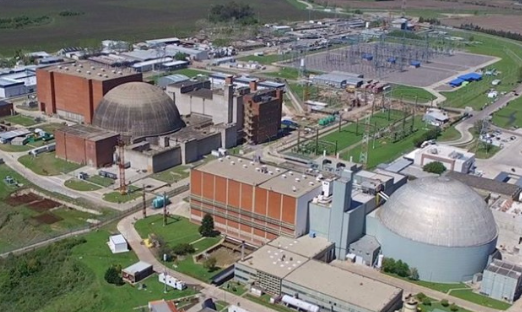
Government officials stated that proceeds from the partial equity sale will be directed toward projects considered energy infrastructure priorities, including the life extension project for Atucha I Nuclear Power Plant and the expansion of the fuel storage system at Atucha II Nuclear Power Plant. Currently, the engineering design progress for the Atucha I life extension project has exceeded 50%, indicating the government's intention to accelerate the modernization of existing nuclear assets through capital infusion.
This policy also signals a notable shift in Argentina's nuclear development trajectory. Previously, Argentina had reached cooperation arrangements with China National Nuclear Corporation for the construction of a fourth nuclear power plant, but those agreements have now lapsed. The new direction leans toward attracting Western private consortiums, particularly companies with development capabilities in light water reactor and enriched uranium technology routes, to align with the global resurgence of the nuclear energy industry.
From a global perspective, demand for stable, low-carbon electricity is rising, and nuclear power is regaining attention. Some U.S. technology companies, to secure power supply for data centers, have begun supporting the restart or life extension of nuclear plants; China is also continuously expanding its nuclear reactor fleet as part of its long-term energy strategy. Argentina possesses a nuclear technology foundation accumulated since the establishment of the National Atomic Energy Commission in 1950, with an industry chain encompassing public institutions, companies such as INVAP, and the operational capabilities of Nucleoeléctrica Argentina.
Currently, the three nuclear power plants—Atucha I, Atucha II, and Embalse—contribute approximately 7% to 8% of Argentina's national electricity consumption. Compared to intermittent renewable sources such as wind and solar, nuclear power offers the advantage of continuous and stable generation, providing baseload support to the power system. The success of the new model will depend on the attractiveness of public tenders to investors and whether Argentina can introduce sufficient capital and technology to upgrade the nuclear industry while retaining state control.
Disclaimer: Information republished from partner media, institutions or other websites is provided for reference and communication purposes only. It does not imply endorsement of its views or verification of its accuracy. Please contact us if any content infringes rights or requires correction.