
Nano Nuclear Signs Engineering Agreement with Argentina's IMPSA to Advance Manufacturability Assessment of Key Components for Kronos Microreactor
 Scan to share
U.S. advanced reactor developer Nano Nuclear Energy announced on October 23 that it has signed a three-year engineering technical services agreement with the U.S. subsidiary of Argentine metal-mechanical manufacturing giant IMPSA. The two parties will jointly conduct engineering design and manufacturing feasibility assessments for core components of Nano Nuclear's independently developed “Kronos” microreactor, aiming to accelerate the microreactor's transition from physical concept drawings to the industrial manufacturing stage.
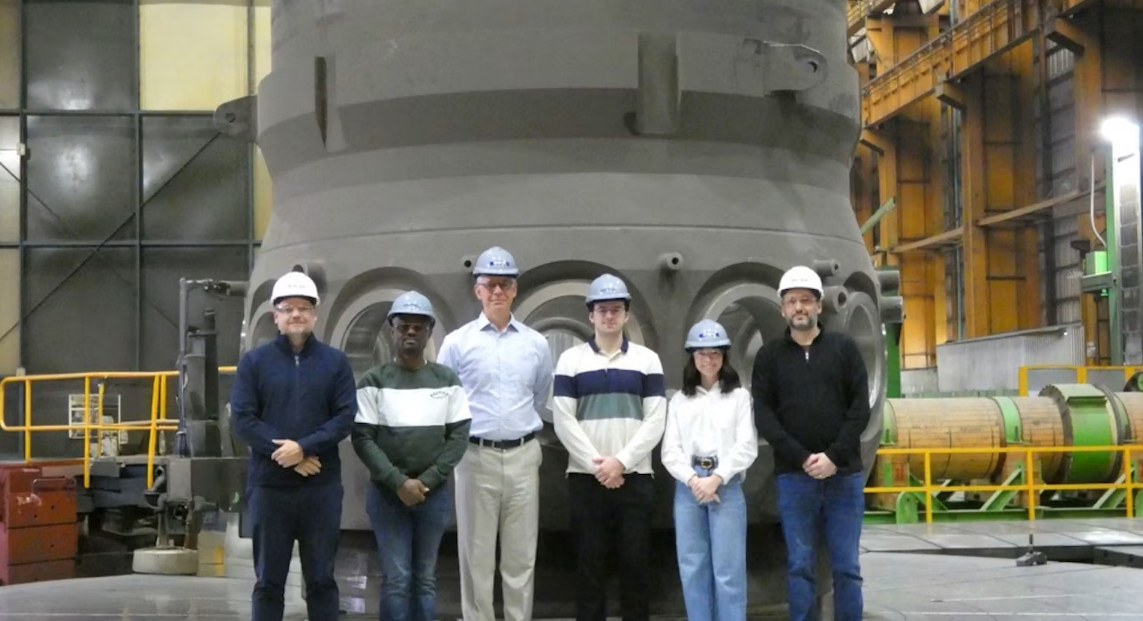
According to the work plan disclosed in the official statement, the initial priority is an approximately six-month design review and manufacturing feasibility study, with the Reactor Pressure Vessel (RPV) identified as the core critical equipment for focused assessment. Under the terms of the agreement, IMPSA will rigorously verify the pressure vessel's compliance requirements in dimensions including material selection, manufacturing tolerances, and welding processes, item by item, in strict accordance with the demanding specifications of Section III of the American Society of Mechanical Engineers (ASME) Boiler and Pressure Vessel Code for nuclear-grade pressure-retaining components.
Nano Nuclear stated that this joint upfront study aims to identify process manufacturing bottlenecks, non-destructive examination inspection challenges, and potential supply chain disruption risks early, before the full manufacturing process is initiated, so that the engineering team can feed relevant process constraints back into and integrate them into the reactor's underlying structural design as early as possible. Nano Nuclear CEO James Walker emphasized that advanced reactors must move beyond drawing-based verification and laboratory theoretical derivation to become physical components with high repeatable manufacturability, ease of non-destructive testing, ease of qualification, and the ability to achieve rapid modular assembly.
The “Kronos” Micro-Modular Reactor system (Kronos MMR) being developed by Nano Nuclear is a 15-megawatt electric (MWe) High-Temperature Gas-Cooled Reactor (HTGR) featuring factory prefabrication and phased flexible deployment. In its physical design, the reactor uses helium as the primary coolant, with ceramic-matrix-encapsulated Tri-Structural Isotropic (TRISO) coated particle fuel as the nuclear fuel, and the reactor's heat output will be seamlessly coupled to a molten salt thermal energy storage system to achieve cascade energy utilization and peak shaving and valley filling.
To seize the window of surging demand for clean baseload energy, Nano Nuclear has recently taken frequent actions: it not only signed a strategic agreement with Tillman Global Holdings to plan the deployment of up to 2 gigawatts (GW) of microreactor installed capacity by the mid-2030s, specifically to provide zero-carbon power support for the rapidly expanding artificial intelligence (AI) super data centers across the United States; it has also formally submitted a construction permit application to the U.S. Nuclear Regulatory Commission (NRC) for building the first Kronos microreactor at the University of Illinois Urbana-Champaign.
Disclaimer: Information republished from partner media, institutions or other websites is provided for reference and communication purposes only. It does not imply endorsement of its views or verification of its accuracy. Please contact us if any content infringes rights or requires correction.