
UK's Materials Detritiation Facility at Culham Resumes Operations to Support JET Fusion Decommissioning Materials Research
 Scan to share
The UK Atomic Energy Authority recently announced that the Materials Detritiation Facility (MDF) at Culham has resumed operations following a 12-month engineering shutdown and upgrade. Experimental data produced by the facility has already been used to support research related to the removal of materials from the Joint European Torus (JET) device, providing a basis for waste management strategies under the JET Decommissioning and Repurposing (JDR) project.
Over three years of plasma operations, deuterium-tritium (DT) experiments conducted at JET have left residual amounts of tritium in the tokamak's walls and internal components. This phenomenon is associated with tritium's tendency to enter materials under high-power fusion operating conditions. For JET decommissioning work, accurately determining the amount of tritium retained in materials, as well as the proportion that can be removed through thermal treatment, is an important foundation for developing waste classification, processing, packaging, and disposal pathways.
According to reports, materials removed from the JET device, including tungsten, beryllium, Inconel alloys, steel, copper, and carbon fiber composites, are initially classified as intermediate-level radioactive waste. Through detritiation treatment, these materials are expected to be reclassified as low-level radioactive waste, thereby significantly reducing disposal costs—by up to a factor of ten—and creating conditions for their future recycling in fusion or fission devices.
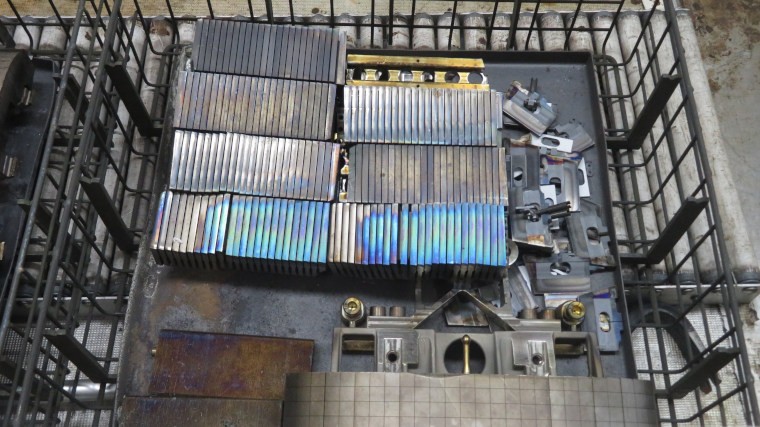
Following the MDF upgrade, processing capacity has been enhanced. Experiments conducted at the end of 2024 showed that tiles and components dismantled from JET can be processed without prior disassembly; additionally, mixed material streams can be processed simultaneously, more closely resembling the actual operating mode of industrial-scale processing facilities.
During the detritiation process, materials are placed in the MDF furnace and heated to high temperatures under strictly controlled conditions to minimize oxidation. The tritium released by heating is carried out of the furnace with the process gas stream and converted into tritiated water via a catalyst, enabling capture. After the furnace cools, the treated materials are removed and subjected to further analysis through destructive sampling. In addition to thermal treatment, researchers also test gram-scale samples from JET to determine concentrations of other radionuclides and quantify the residual tritium content in the treated materials.
Xavier Lefebvre, Waste Processing Lead for the JET Decommissioning and Repurposing division, stated that the completion of sample processing work has provided the JDR project with evidence that was previously difficult to obtain, contributing to a deeper understanding of JET material properties and their long-term management challenges. The research results will provide a more robust basis for waste processing, packaging, disposal pathways, and decommissioning planning.
The UK Atomic Energy Authority stated that the MDF not only serves its existing waste processing needs but can also support enterprises and institutions conducting cutting-edge waste and materials management research. By reducing residual tritium in materials and decreasing the volume of high-activity waste requiring specialized on-site management, the facility will continue to serve safety, environmental protection, and long-term stewardship responsibilities in fusion decommissioning.
Disclaimer: Information republished from partner media, institutions or other websites is provided for reference and communication purposes only. It does not imply endorsement of its views or verification of its accuracy. Please contact us if any content infringes rights or requires correction.