
Climate change impact assessment to be conducted for new nuclear power plant in Yeongdeok, South Korea
 Scan to share
South Korea's Ministry of Climate, Energy and Environment announced on August 12 that the proposed Yeongdeok nuclear power plant will undergo a climate change impact assessment in parallel with the strategic environmental impact assessment procedure. The assessment will be conducted in accordance with the Framework Act on Carbon Neutrality and the Environmental Impact Assessment Act, focusing on reviewing the project's alignment with higher-level plans such as the Nationally Determined Contributions (NDC), and evaluating greenhouse gas emissions and mitigation measures during the construction and operation phases.
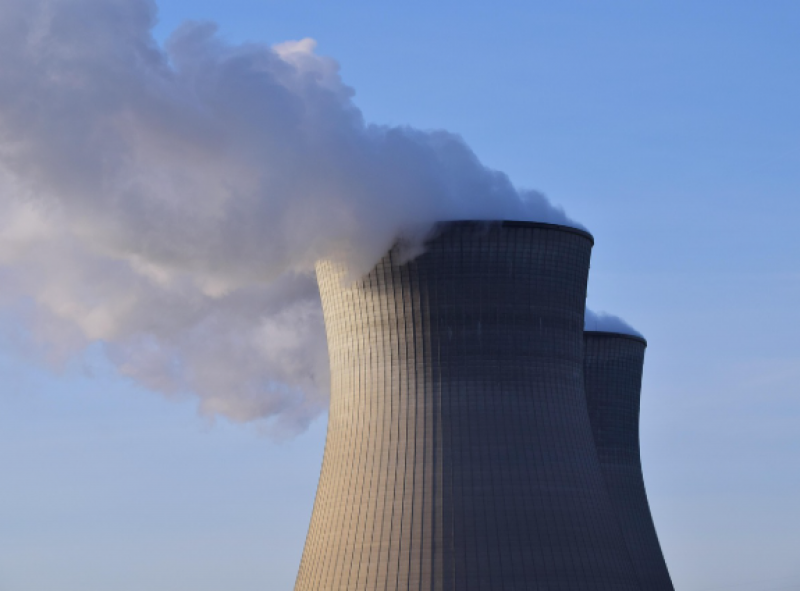
The assessment will cover the entire lifecycle of the nuclear power plant, from construction to operation. While the nuclear power generation process itself emits almost no greenhouse gases, emissions will still arise from large-scale civil engineering works, operation of construction equipment, and the production and transportation of building materials. The South Korean government plans to calculate the greenhouse gas emissions during the construction and operation of the Yeongdeok nuclear power plant and develop mitigation measures accordingly.
The assessment will also analyze the impacts of climate change on the safe and stable operation of the nuclear power plant, including rising seawater temperatures due to heatwaves, changes in cooling water intake conditions caused by drought, and the potential effects of extreme weather events such as heavy rainfall and floods on construction and operation activities. Based on this analysis, the government will study adaptation measures for the nuclear power plant to address the climate crisis.
The Yeongdeok project differs from the conventional practice of adding new units at existing nuclear power plant sites. The project requires the development of a new site and the designation of the relevant area as a planned power development zone, which necessitates conducting a climate change impact assessment alongside the strategic environmental impact assessment. Under the current system, once areas designated for planned power development projects are incorporated into the basic development plan, they are all subject to such assessments; large-scale renewable energy projects designated as planned power development zones are also subject to the same requirements.
The Yeongdeok nuclear power plant is proposed to be built in the Yeongdeok-eup and Jukmyeon area of Yeongdeok County, South Korea, with a planned site area of approximately 3.2423 million square meters. The plan includes the construction of two reactors with a unit capacity of 1.4 gigawatts each, for a total installed capacity of 2.8 gigawatts. Korea Hydro & Nuclear Power (KHNP) plans to submit the draft strategic environmental impact assessment (SEIA) in September this year and the final report in December.
The South Korean government will also review the impacts of the nuclear power plant construction on ecosystems and the marine environment through the strategic environmental impact assessment. As the planned area includes natural environment conservation zones, the relevant authorities will separately seek expert opinions. Regarding the marine environment, the survey scope will cover waters within 20 kilometers of the planned area, with a focus on assessing the dispersion of thermal discharge from the plant's operation and its impact on marine ecosystems.
Disclaimer: Information republished from partner media, institutions or other websites is provided for reference and communication purposes only. It does not imply endorsement of its views or verification of its accuracy. Please contact us if any content infringes rights or requires correction.