
Rising River Water Temperatures in Europe Constrain Nuclear Power Operations, Poland's First Nuclear Power Plant Turns to Baltic Sea for Cooling Water
 Scan to share
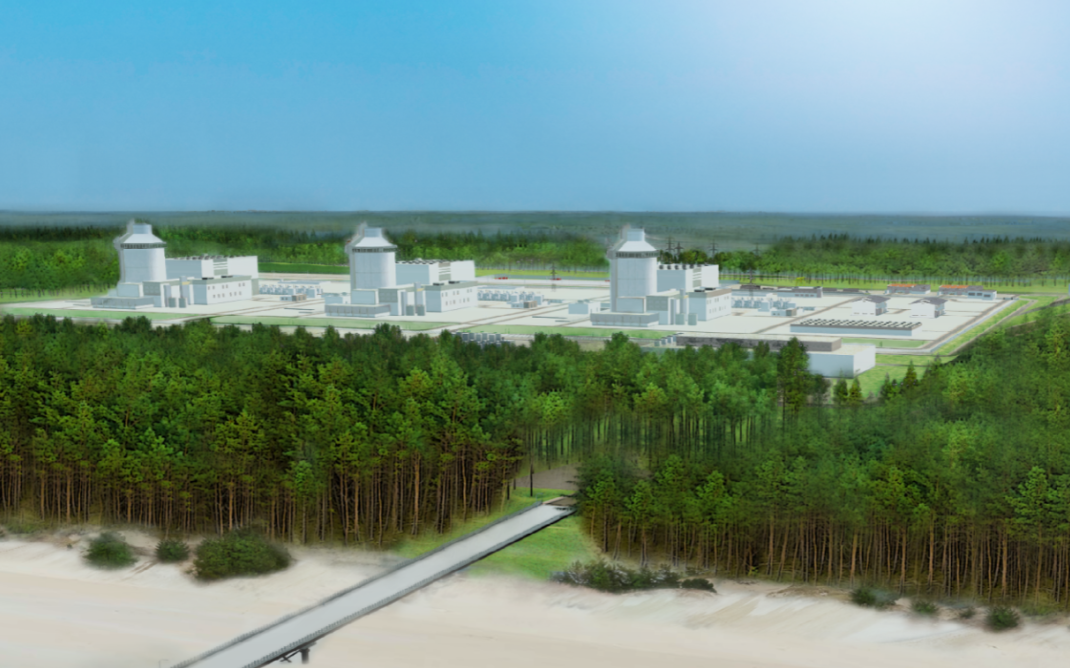 Persistent high temperatures, droughts, and low river water levels across Europe are turning nuclear power plant cooling issues from a purely engineering topic into a real risk affecting the stability of electricity supply. Experience in countries such as France and Switzerland shows that when river water temperatures are too high or flow rates are insufficient, nuclear power plants—even with generating capacity available—may be forced to reduce output or temporarily shut down due to environmental restrictions. In 2022, France's nuclear power generation fell by 22% year-on-year, and during recent summer heatwaves, rising water temperatures in rivers such as the Seine and the Rhône have repeatedly led to restrictions on related units.
The core of this issue is not just "whether there is enough water," but also "whether the water is cold enough." Traditional river-dependent cooling systems face reduced flow during droughts and higher intake water temperatures during heatwaves. Cooling water discharged from nuclear power plants must meet environmental temperature limits to avoid further raising river water temperatures and impacting ecosystems. As a result, the vulnerability of river-based cooling models is being amplified against the backdrop of increasingly frequent extreme weather events.
Against this backdrop, Poland's first nuclear power plant has chosen to use the Baltic Sea as its cooling water source, a decision with clear climate adaptation significance. The proposed nuclear project at Lubiatowo-Kopalino will adopt an open-loop seawater cooling system rather than relying on the water level and temperature of a single river. The intake is planned to be located approximately 5.5 kilometers offshore at a depth of about 24 meters, while the discharge point will be approximately 4 kilometers from the coast at a depth of about 20 meters, with related facilities positioned away from beaches and bathing areas.
The project design also emphasizes the isolation of the seawater cooling loop from the reactor loop. Baltic Sea water is used only to cool the condensers and does not come into contact with the water in the reactor loop. Therefore, what is discharged back into the sea is not reactor water, but seawater whose temperature has been raised after passing through the cooling system. According to Polskie Elektrownie Jądrowe, the water temperature at the discharge point will not exceed 10 degrees Celsius above the intake temperature. After mixing through diffusers, the temperature difference between the sea surface near the discharge point and the surrounding seawater is expected to be no more than 2 degrees Celsius, with the impact zone largely confined to the immediate vicinity of the discharge point.
In light of the climate pressures facing nuclear power operations in Europe, Poland's approach does not eliminate the need for nuclear cooling but rather reduces dependence on river hydrological conditions. Poland's first nuclear power plant is planned to feature three Westinghouse AP1000 reactors, with all three units expected to be fully operational by 2038. As extreme weather events intensify their impact on energy systems, cooling water sources, discharge temperature control, and marine environmental assessments are becoming increasingly critical variables in nuclear project planning.
Disclaimer: Information republished from partner media, institutions or other websites is provided for reference and communication purposes only. It does not imply endorsement of its views or verification of its accuracy. Please contact us if any content infringes rights or requires correction.