
Phu Tho Province, Vietnam Advances Improvement of Radiation and Nuclear Accident Emergency Response Plan
 Scan to share
On the morning of August 13, the Department of Science and Technology of Phu Tho Province, in coordination with the Vietnam Union of Science and Technology Associations and the Institute for Technology and Radiation Application, held a scientific seminar to solicit opinions on the draft of the "Radiation and Nuclear Accident Emergency Response Plan of Phu Tho Province." Experts, scientists, and representatives from relevant provincial and municipal departments were invited to attend, aiming to ensure the plan's feasibility, alignment with local conditions, and compliance with national requirements for atomic energy management and radiation safety.
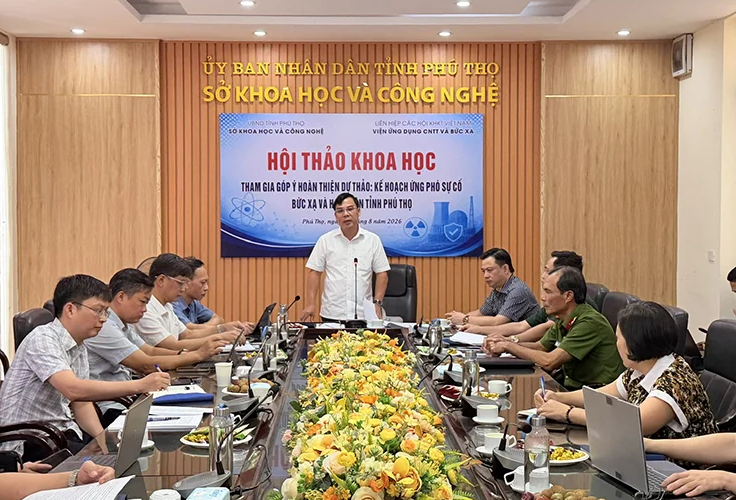
The core purpose of this seminar was to improve the emergency response plan through multi-party input, making it more suitable for local realities and meeting the requirements of atomic energy application, radiation safety, and nuclear safety management.
From the local perspective, the application of radiation technology in Phu Tho Province has already reached a certain scale. Currently, the province has more than 270 institutions using radiation, equipped with over 417 X-ray machines, 2 linear accelerators, more than 500 radiation devices, and 45 radioactive sources, widely applied in fields such as medicine, industry, technical inspection, and scientific research. These technologies have played an active role in enhancing diagnostic and treatment capabilities, improving labor productivity, upgrading product quality, and serving economic and social development.
With the increase in the number of relevant institutions and equipment, the potential risks posed by radioactive sources and radiation devices have also risen correspondingly. Data shows that in the event of an accident, if it cannot be detected and handled in a timely manner, it may impact human health, the ecological environment, and property safety. Therefore, Phu Tho Province needs to further strengthen its supervision, monitoring, and safety assurance mechanisms, and establish clear and executable emergency procedures in advance.
During the seminar, participating representatives focused on providing opinions on multiple aspects, including assessing the current status of local radioactive sources, identifying possible accident types and risk scenarios, formulating response plans at different levels, clarifying coordination mechanisms among parties, and improving information dissemination, early warning, personnel deployment, and equipment support. Some opinions also suggested further detailing the responsibilities of relevant agencies and units before, during, and after an accident, ensuring a unified and efficient joint response capability in emergency situations.
The opinions collected at this seminar will be studied and incorporated by the drafting unit to supplement and improve the Radiation and Nuclear Accident Emergency Response Plan of Phu Tho Province. The advancement of this plan will help enhance the local capacity for prevention, detection, and response to radiation and nuclear safety risks, and will also provide an institutional foundation for relevant units to prepare resources in advance, formulate action plans, and mitigate the impact of accidents.
Disclaimer: Information republished from partner media, institutions or other websites is provided for reference and communication purposes only. It does not imply endorsement of its views or verification of its accuracy. Please contact us if any content infringes rights or requires correction.