
Research reactors provide critical support for global medical, scientific, and industrial innovation
 Scan to share
The International Atomic Energy Agency recently reported that research reactors continue to play a vital role in medical, scientific, industrial innovation, and nuclear workforce development, serving as key infrastructure for many countries to build their nuclear science and technology capabilities. Currently, 228 research reactors are in operation across 54 countries worldwide, with another 23 under construction or in the planning stage.
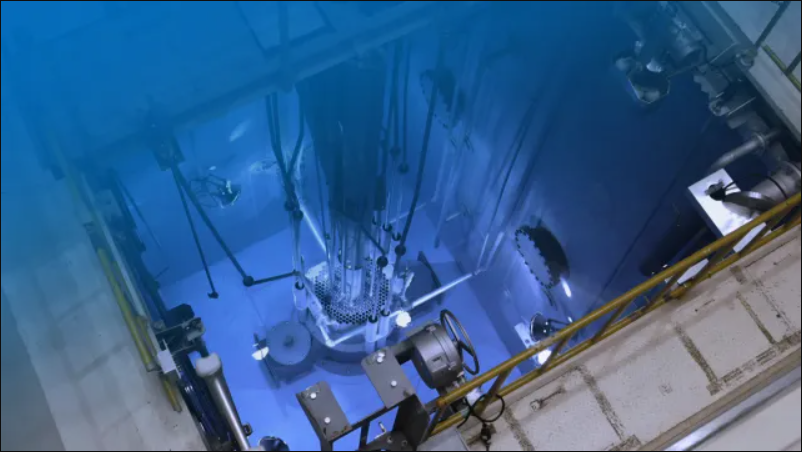
Unlike nuclear power reactors used for electricity generation, research reactors primarily produce neutrons for applications in medicine, industry, agriculture, geological sciences, forensics, and other fields. With capabilities such as neutron irradiation, neutron imaging, elemental analysis, and radioisotope production, research reactors have become important platforms for advancing peaceful nuclear technology applications.
In the medical field, research reactors serve as a vital source of various medical radioisotopes. Among them, technetium-99m is widely used for diagnosing cancer as well as heart, brain, and bone diseases, with approximately 50 million related medical diagnostic procedures performed globally each year, and about 85% of diagnostic procedures using this nuclide. Other radioisotopes such as iodine-131 are also used for treating cancer and thyroid diseases. A large number of patients benefit from radioisotopes produced by research reactors.
In scientific research and industrial applications, neutrons produced by research reactors can be used for materials development, structural analysis, elemental analysis, and imaging. These techniques help researchers analyze the internal structures of materials and components such as engine turbine blades, batteries, hydrogen storage devices, and electronic components, and can also be used for non-destructive examination of samples including cultural relics and paleontological remains. When neutron imaging is combined with computed tomography technology, three-dimensional images can be generated, providing more intuitive evidence for complex materials analysis.
Research reactors can also irradiate target materials with neutrons, helping scientists study how materials react and degrade under neutron irradiation. Such research contributes to the development of safer and more efficient nuclear fuels, as well as more durable materials and components, and supports research and development related to next-generation low-carbon nuclear energy systems, including salt-cooled or liquid metal-cooled reactors, fast breeder reactors, fusion reactors, and micro-reactors for space applications.
The International Atomic Energy Agency stated that it is supporting multiple countries in enhancing their capabilities in research reactor planning, construction, operation, and utilization. During the construction of Jordan's first multipurpose research reactor, the Agency provided technical guidance, expert reviews, and training support. This research reactor can be used for elemental analysis, radioisotope production, education and training, and has helped Jordan develop programs in neutron transmutation doping of silicon and materials research.
Research reactors also serve the function of nuclear workforce development. Students and professionals in nuclear engineering can gain hands-on experience in reactor operation, safety procedures, radiation protection, and nuclear physics through research reactors. In Morocco, the International Atomic Energy Agency supports the enhancement of local research reactor safety, operator training, and regulatory oversight; in Ghana, review teams assessed the applications of the country's research reactor in education and training, neutron activation analysis, neutron beam research, and radioisotope production for research and development.
Through regional technical cooperation projects in Africa, the International Atomic Energy Agency also provides support to countries operating research reactors, including Algeria, the Democratic Republic of the Congo, Egypt, Ghana, Libya, Morocco, Nigeria, and South Africa, including assistance in conducting periodic safety reviews and developing and implementing research reactor refurbishment and modernization plans. The Agency also provides technical expertise to countries launching research reactor programs, such as Kenya, Rwanda, and Uganda.
In the area of research reactor lifecycle management, the International Atomic Energy Agency also provides support to relevant countries. For example, in Uzbekistan, the Agency assisted in the safe decommissioning of the country's first research reactor while helping to strengthen local nuclear science and technology capabilities. The International Atomic Energy Agency stated that many research reactors have been operating safely for decades and are improving their performance and safety levels through modernization upgrades to meet future scientific research and industrial needs.
Disclaimer: Information republished from partner media, institutions or other websites is provided for reference and communication purposes only. It does not imply endorsement of its views or verification of its accuracy. Please contact us if any content infringes rights or requires correction.