
Blueprint for Proton Therapy Center in Southeastern Busan, South Korea Unveiled to Address Regional Gap in Cancer Treatment Resources
 Scan to share
The blueprint for the proton therapy center at the Southeastern Regional Nuclear Medicine Center in Gijang-gun, Busan, South Korea, was recently unveiled. The project is expected to help bridge the gap in cancer treatment resources between the Seoul metropolitan area and non-capital regions, and to promote the application of proton accelerators in high-tech industries.
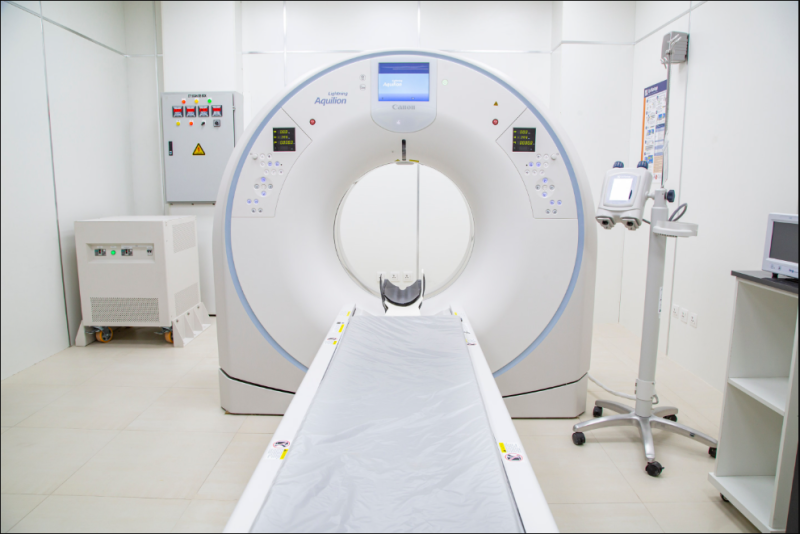
According to information from Gijang-gun, Busan, and the Southeastern Regional Institute of Radiation Medicine on August 29, the Busan Institute of Science and Technology Higher Education recently published a service report titled "Establishment of Promotion Strategy and Implementation Plan for the Southeastern Proton Therapy Center," which includes the construction blueprint and feasibility analysis of the center. The Southeastern Regional Institute of Radiation Medicine is advancing related preparatory work in response to the research and development review by the Ministry of Science and ICT in the second half of this year.
The concept for the center dates back to November of last year, when Gijang-gun, Busan, the Busan Institute for Science and Technology Promotion, and the Southeastern Regional Nuclear Medicine Center signed a business agreement for its construction.
Proton therapy, along with heavy-ion therapy, is an advanced form of radiation treatment. Compared with conventional radiotherapy, proton beams can target tumors more precisely, minimizing damage to surrounding normal tissue while killing cancer cells. This technology is particularly suitable for pediatric cancer treatment where normal tissue protection is critical, and can also be used for most solid tumors such as brain cancer, head and neck cancer, lung cancer, liver cancer, and prostate cancer, but is not applicable to hematologic malignancies.
The report notes that the two existing proton therapy centers in South Korea are located at the National Cancer Center in Goyang, Gyeonggi Province, and at Samsung Seoul Hospital in Seoul, both concentrated in the capital region. From 2015 to 2024, the number of cancer patients from non-capital regions traveling to the capital region for treatment increased from 67,242 to 99,833, a rise of approximately 48.5%, indicating that cancer treatment resources are becoming further concentrated in the capital area.
Meanwhile, the number of registered severe cancer patients in the southeastern region—namely Busan, Ulsan, and South Gyeongsang Province—also increased from 259,000 in 2015 to 479,000 in 2024, making it the region with the second-largest cancer treatment demand in South Korea after the capital area. The report argues that building a proton therapy center in the southeastern region would help address the imbalance in regional medical resources.
Beyond medical applications, proton accelerators can also serve industrial and research purposes. The report proposes that the platform could be used for radiation reliability assessment in fields such as aerospace and semiconductors, including testing needs for power semiconductor companies in the Gijang area and aerospace-related enterprises in Sacheon and Changwon, South Gyeongsang Province.
However, project cost remains a major obstacle. The report estimates that the total cost of the Southeastern Proton Therapy Center project amounts to approximately 520 billion KRW. A Busan city official stated that consultations with central government ministries will continue, emphasizing the necessity of the project in alleviating medical resource disparities, reducing the concentration pressure of cancer patients in the capital region, and supporting the technology industry cluster in the southeastern region.
The Southeastern Regional Institute of Radiation Medicine stated that it has been conducting research on the localization of accelerator equipment. If the proton therapy center is established, it is expected to create synergies with the nearby heavy-ion accelerator treatment center in both medical services and research and development.
Disclaimer: Information republished from partner media, institutions or other websites is provided for reference and communication purposes only. It does not imply endorsement of its views or verification of its accuracy. Please contact us if any content infringes rights or requires correction.