
Symposium on Frontier Progress and Key Engineering Issues of Controlled Nuclear Fusion Held in Beijing
 Scan to share
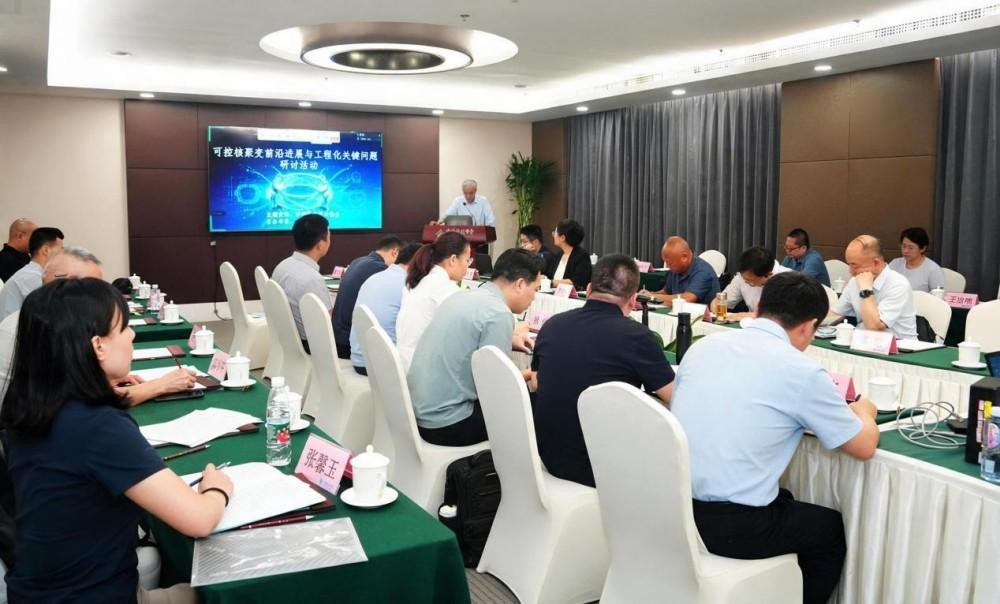
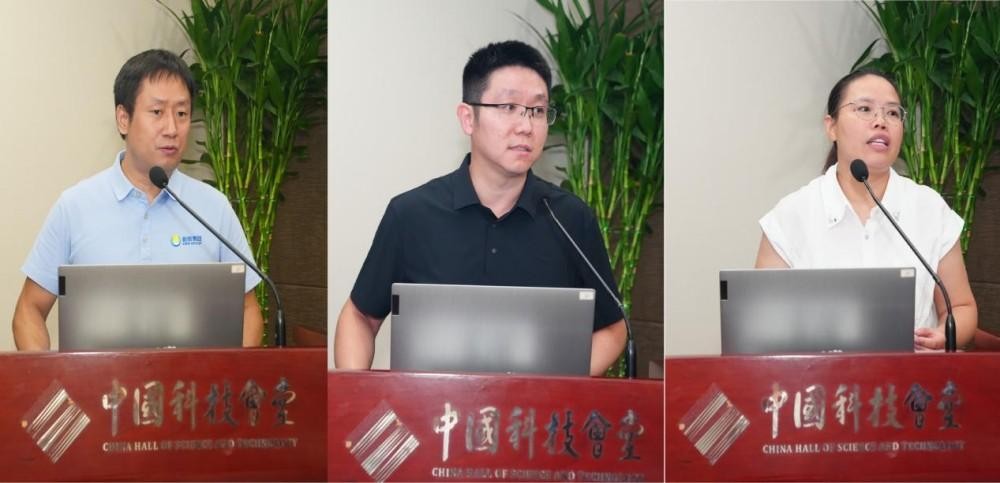
The symposium featured three keynote reports. Yang Yuanming, deputy chief engineer of the ENN Energy Research Institute Alliance, delivered a report titled “Research Progress on ENN Spherical Torus Hydrogen-Boron Fusion Technology,” pointing out that magnetic confinement fusion is currently the fusion technology route with the greatest commercialization prospects. As a mainstream configuration of magnetic confinement fusion, the spherical torus, with its high beta and high confinement characteristics, is most conducive to unlocking the potential of hydrogen-boron fusion and is a key path to driving breakthroughs in fusion commercialization. Liu Shichang focused on key issues in fusion reactor neutronics and radiation field calculations, sharing a complete computational system covering transport methods, geometric modeling, variance reduction acceleration, shutdown dose, data uncertainty, and material damage, explaining the engineering feasibility of the methods in each segment, and emphasizing the important supporting role of independent software for fusion engineering. Its ultimate goal is to build high-precision, high-efficiency, and highly reliable neutronics and radiation field simulation capabilities for the full life cycle of fusion reactors. Xu Shuai, specially appointed expert of Sichuan Jinheng Fengling New Material Technology Co., Ltd., took as his topic “Ultrapure Iron Model Material: Impurity Limit Control and Clean Benchmark Construction for Irradiation Damage Mechanism Research,” deeply exploring the unique value of ultrapure iron as a “controllable impurity platform” in irradiation damage mechanism research and analyzing in detail its limitations and bottlenecks.
During the free exchange session, participating experts fully exchanged views and engaged in in-depth deliberation on topics such as basic scientific research breakthroughs, overcoming engineering bottlenecks, industry-university-research achievement transformation, interdisciplinary innovation, and coordinated upgrading of the energy system. Among them, Researcher Li Jinfeng of the China Institute of Atomic Energy emphasized the need to build a full life-cycle safety management and control system for radioactive waste suited to China’s nuclear industry development scenarios, and to promote the large-scale industrial implementation of relevant technological achievements under the premise of ensuring nuclear environmental safety. Professor Wang Boyu of Xi’an Polytechnic University proposed deepening research on key nuclear weapon components and radiation effects, making local universities an important vital force in China’s nuclear research, and emphasized that the development of nuclear protective textile engineering and related textiles requires long-term planning. Li Jinying, president of the Applied Technology Research Institute of the Chinese Nuclear Society, proposed opening up the full-chain pathway from basic scientific research in the nuclear field to pilot-scale transformation and industrial implementation, accelerating the large-scale civilian promotion of nuclear technology in multiple livelihood scenarios, and supporting China’s energy transition under the “dual carbon” goals. Experts also conducted in-depth discussions on non-consensus issues such as the engineering value of self-sustaining burning experiments, the path to domestic production of high-end materials, the implementation boundaries of artificial intelligence-enabled fusion, and the commercial feasibility of the tritium fuel cycle.
Participating experts unanimously agreed that, as the global energy landscape undergoes deep restructuring and intermittent new energy sources such as wind and solar power face practical bottlenecks including output fluctuations and high peak-shaving costs, controlled nuclear fusion, as an important clean energy source, has already moved from purely basic research into a transitional period of device iteration and commercial capital entry. First, the layout of a core technology research system for controlled nuclear fusion should be accelerated, concentrating superior forces to break through key links such as plasma control and first wall materials. Second, a collaborative platform for industry-university-research-application should be built relying on existing major scientific and technological facilities, opening up the transformation channel from basic research to engineering demonstration. Third, the construction of a fusion industry standards system should be laid out in advance, guiding commercial capital to participate in industrial chain supporting facilities in an orderly manner and seizing the early-mover high ground in global fusion energy competition. Fourth, planning for connection with the existing new energy system should be done well, laying a solid foundation for the subsequent construction of a new zero-carbon energy system with fusion at its core. Fifth, interdisciplinary talent cultivation should be strengthened, promoting the cross-integration of disciplines such as fusion, new energy, and computer science, and guiding young talent to go deep into the front lines to solve key issues in engineering implementation.
Disclaimer: Information republished from partner media, institutions or other websites is provided for reference and communication purposes only. It does not imply endorsement of its views or verification of its accuracy. Please contact us if any content infringes rights or requires correction.