
Italian Parliament Votes to Approve Meloni Government's Nuclear Power Restart Plan
 Scan to share
Italy's upper parliamentary chamber, the Senate (Senato della Repubblica), formally voted on Wednesday to approve the government's statutory plan to restart nuclear power generation, marking a substantive step back toward the nuclear energy camp nearly four decades after the country shut down all nuclear reactors within its borders in 1987 following an anti-nuclear referendum (Referendum) triggered by the Chernobyl accident.
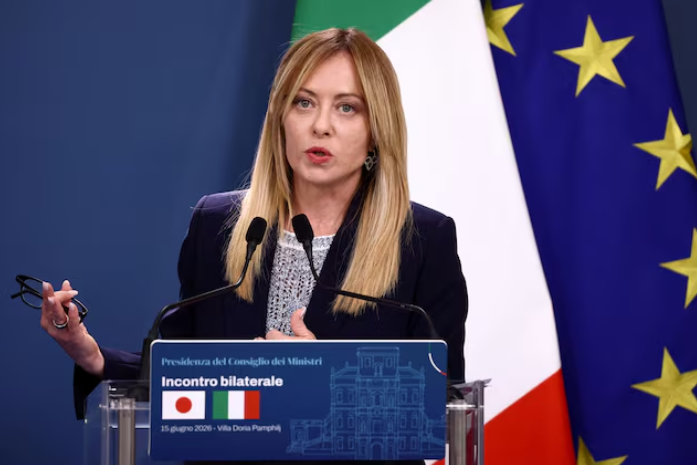
The government of Italian Prime Minister Giorgia Meloni is vigorously promoting the deployment of Advanced Modular Reactors (AMRs), aiming to break the historical ban through technological upgrades and a substantial increase in safety margins, provide stable clean energy for deep decarbonization of energy-intensive industries, and at the same time build a solid defense line for national energy security.
Frequent geopolitical conflicts have caused violent fluctuations in international energy prices, forcing all sectors in Italy to re-examine the fragility of its external energy dependence. Italy has long been highly dependent on energy imports, even continuously purchasing baseload electricity across borders from nuclear power plants in neighboring France. After the bill's passage, Italian Minister of the Environment and Energy Security Gilberto Pichetto Fratin emphasized that deeply integrating sustainable nuclear power with renewable energy will build a safe, autonomous, and competitive comprehensive energy system for Italy.
Although a poll in June this year by the polling agency Demopolis showed that 51% of respondents supported restarting nuclear power, the NIMBY (NIMBY) effect regarding the siting of power plants remains significant, with most respondents opposing the construction of nuclear reactors near their residences. The opposition camp and anti-nuclear groups have also raised doubts, arguing that the high construction costs, lengthy engineering construction cycles, and potential safety hazards of nuclear reactors will dilute the expected comprehensive benefits of this decision.
On long-term economic and climate goals, the Italian government's estimates indicate that if nuclear power accounts for at least 11% of the country's energy mix (Energy Mix) by 2050, it will save society approximately 17 billion euros (about 19 billion US dollars) in decarbonization costs; and the National Energy and Climate Plan (National Energy and Climate Plan, PNIEC) further proposes that the long-term nuclear share is expected to gradually increase to 22%.
This law, which received final parliamentary approval, grants the central government a 12-month authorized transition period to issue the Implementing Decrees (Implementing Decrees) needed to launch nuclear power production, and simultaneously covers procedures for the disposal of legacy decommissioned old nuclear facilities, as well as the legal and institutional arrangements for establishing an Independent Regulator (Independent Regulator) for nuclear safety.
Disclaimer: Information republished from partner media, institutions or other websites is provided for reference and communication purposes only. It does not imply endorsement of its views or verification of its accuracy. Please contact us if any content infringes rights or requires correction.