
Hangyang Share and Hangzhou Turbine Technology Jointly Invest in Startorus Fusion to Accelerate the Commercialization of Multi-Stroke Magnetic Reconnection Fusion
 Scan to share
Two domestic high-end manufacturing listed companies, Hangyang Share (002430.SZ) and Hangzhou Turbine Technology (300277.SZ), have issued a joint investment announcement, declaring their joint capital contribution to acquire equity in commercial nuclear fusion innovation enterprise Shanghai Startorus Fusion Technology Co., Ltd. (Startorus Fusion). According to the investment agreement, Hangyang Share and Hangzhou Turbine Technology will each contribute RMB 50 million, each acquiring a 0.66% equity stake in Startorus Fusion; the remaining investors will jointly contribute RMB 720 million, collectively subscribing to a 9.45% equity stake. This capital injection further boosts capital attention on the domestic commercial controlled nuclear fusion industry.
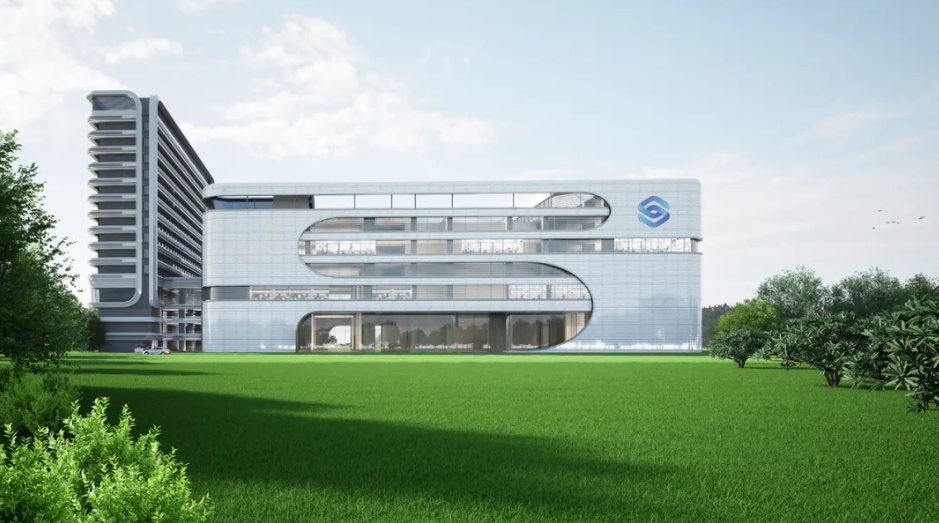
Startorus Fusion was established in October 2021, originating from the commercialization of scientific research achievements by the Department of Engineering Physics, Tsinghua University. Its core technical team has been deeply engaged in the Spherical Tokamak field for over 20 years. In terms of technical approach, the company adopts a globally proprietary solution——based on a High-Temperature Superconducting (HTS) strong magnetic field Spherical Tokamak configuration, integrating multi-stroke repetitive operation with plasma self-generated magnetic field Magnetic Reconnection Heating mechanisms, committed to developing a compact repetitive reconnection controlled fusion system.
On the capital operations front, Startorus Fusion had just completed an A++ round of financing totaling RMB 880 million in August, with investors including Shenzhen Investment Holdings Capital, Shenzhen Guarantee Venture Capital, Agricultural Bank of China Capital, and funds under Shanghai Science and Technology Innovation Group, among other professional institutions. The funds raised in this round and previous rounds will be focused on the construction of the Shanghai Jiading experimental base, the manufacturing, assembly, and commissioning of the Negative Triangularity Spherical Tokamak (NTST), and the iterative design of the "Startorus-1" (CTRFR-1) experimental reactor, while continuously tackling key core engineering challenges such as reactor-grade high-temperature superconducting magnet manufacturing and AI-based real-time plasma confinement control.
In terms of engineering R&D and advancement pace, Startorus Fusion currently adopts a parallel advancement matrix of "operating one generation, building one generation, developing one generation." The existing SUNIST-2 device has successfully completed physical principle verification of multi-stroke reconnection heating and continues to push toward higher physical parameters. According to the company's published commercialization roadmap, the main construction of the device chamber at the Shanghai Jiading base will be completed in the second half of 2026, and the NTST device is planned to be fully assembled and in place within the year and reach operational capacity in 2027; the next-generation engineering experimental reactor CTRFR-1 is expected to complete assembly and engineering verification around 2028, striving to achieve a major performance breakthrough of fusion energy gain factor equivalent to $Q > 1$ between 2029 and 2030, and to formally build a commercial fusion demonstration reactor with net electrical output capability in the early 2030s.
Disclaimer: Information republished from partner media, institutions or other websites is provided for reference and communication purposes only. It does not imply endorsement of its views or verification of its accuracy. Please contact us if any content infringes rights or requires correction.