
U.S. Senate Holds Hearing to Review the NLIC Full Lifecycle Innovation Campus Plan
 Scan to share
On September 23, the U.S. Senate Committee on Environment & Public Works (EPW) held a special hearing titled “Updating America’s Nuclear Waste Management Policy,” systematically examining the major engineering, legal, and political challenges facing the “Nuclear Lifecycle Innovation Campuses” (NLIC) plan proposed by the U.S. Department of Energy (DOE), and thoroughly assessing the legislative urgency for Congress to amend the 1982 Nuclear Waste Policy Act (NWPA). Committee Chairman, West Virginia Republican Senator Shelley Moore Capito, stated bluntly in her opening remarks that the current act, after decades of practice, “has failed to achieve its stated goals.”
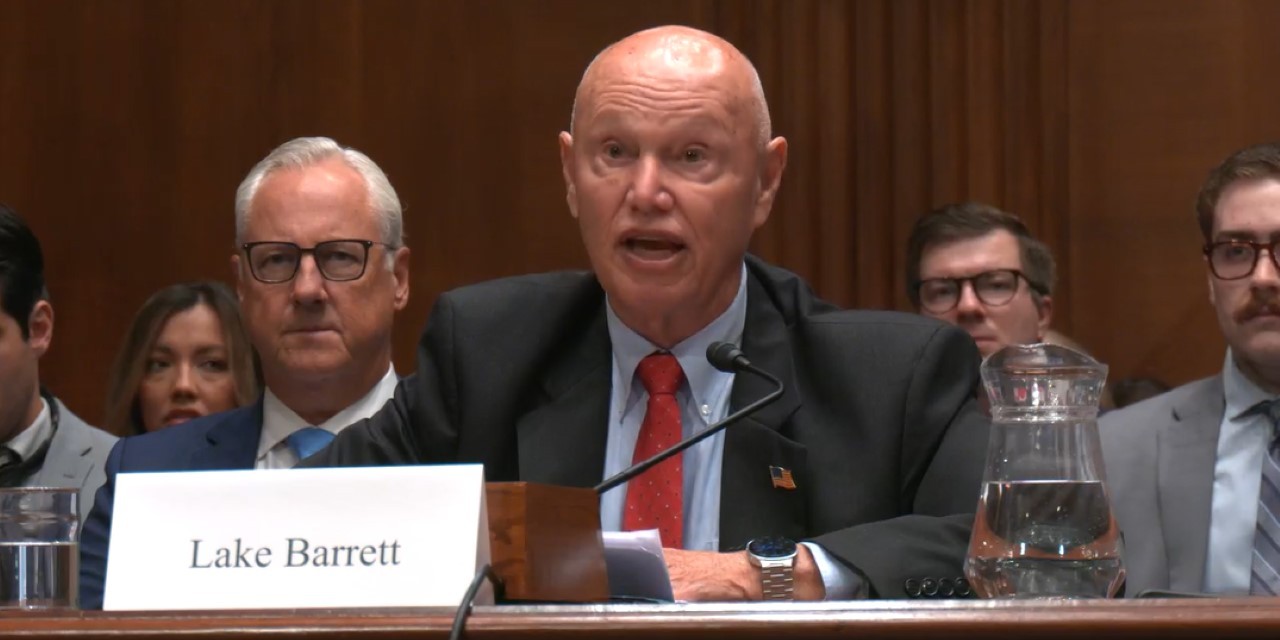
Bipartisan members of the committee expressed a high degree of consensus on seeking a permanent deep geological disposal solution for the more than 90,000 metric tons of spent fuel stored at dispersed locations across the United States. Maryland Democratic Senator Angela Alsobrooks emphasized that achieving a permanent back-end disposal solution is crucial to maintaining public credibility for future large-scale deployment of nuclear power. Three senior industry experts testified: Lake Barrett, Chairman of the Nuclear Waste Policy Working Group of the American Nuclear Society (ANS); Katrina McMurrian, Executive Director of the Nuclear Waste Strategy Coalition (NWSC); and Professor Kathryn Huff, Chair of the Department of Nuclear Engineering and Engineering Physics at the University of Wisconsin-Madison.
Regarding funding and performance mechanisms, the hearing focused on the control and legislative safeguards of the Nuclear Waste Fund (NWF). Capito pointed out that although electricity utility ratepayers have contributed more than $50 billion to the fund cumulatively, Congress has long failed to appropriate sufficient dedicated funds, resulting in the permanent repository's license application, regulatory review, and preliminary engineering never having been fully funded. McMurrian added that, by law, the Department of Energy should have taken full responsibility for commercial nuclear waste by January 31, 1998, but due to the government's breach of contract, ratepayers are still bearing high costs for dispersed temporary storage at plant sites. The three witnesses unanimously called on Congress to establish a statutory mechanism to ensure that the Department of Energy can stably and predictably access NWF funds to fulfill its statutory disposal obligations.
Regarding public trust and the siting mechanism, the hearing reflected on the lessons of the stalled Yucca Mountain project in Nevada. Massachusetts Democratic Senator Ed Markey pointed out that the root cause of Yucca Mountain's failure was the inability to obtain informed consent from the local Nevada community. Huff emphasized that a nuclear waste system lacking solid endorsement at the community, state, or federal level can never be risk-resilient, and Congress must provide adequate resources to host communities to support their independent oversight; Barrett, comparing deep geological disposal progress in countries such as France and Finland, noted that the core of their success lies in adopting “consent-based siting,” whereas the past Yucca Mountain project focused almost entirely on engineering technology while neglecting sociopolitical acceptability, and future NLIC campuses will struggle without solid sociopolitical feasibility support.
Regarding spent fuel reprocessing and recycling, several senators and witnesses explored its prospects as a volume reduction measure. Huff recommended that the federal government actively advance the validation of advanced recycling technologies, noting that spent fuel contains recoverable high-value fissile nuclear energy and scarce medical and industrial isotopes; McMurrian cautiously reminded that nuclear waste reprocessing should be regarded as a “supplementary measure” to final disposal rather than a “replacement,” and its commercial economics as well as the secondary radioactive liquid waste streams derived from the process still require thorough demonstration.
Regarding regulatory authorization and the division of responsibilities, Barrett pointed out that under the NLIC campus framework, the Department of Energy serves as the project sponsor, the U.S. Nuclear Regulatory Commission (NRC) will act as the independent highest safety regulator by law, and interested host states and private enterprises will safeguard their rights and interests and ensure informed transparency through legally binding contractual agreements; Huff emphasized that in addition to the NRC, cross-agency regulatory coordination with the Department of Transportation (DOT) and the Environmental Protection Agency (EPA) is equally indispensable. The witnesses concluded that the United States is currently at a turning point to break a sixteen-year policy stalemate, and establishing a new partner-based nuclear waste governance mechanism with multi-party collaboration among the federal government, state governments, and private capital is the only way to overcome obstacles to closing the loop of the entire U.S. nuclear energy industry chain.
Disclaimer: Information republished from partner media, institutions or other websites is provided for reference and communication purposes only. It does not imply endorsement of its views or verification of its accuracy. Please contact us if any content infringes rights or requires correction.