
Bruce Unit 4 Refurbishment Sets Record, Schedule Significantly Ahead of Unit 3
 Scan to share
Recently, Bruce Power of Canada announced that the Major Component Replacement (MCR) project at Bruce Unit 4 has reached a key milestone. The installation efficiency of the unit's 480 calandria tubes set a new record, with overall progress further accelerated compared to the previous Unit 3.
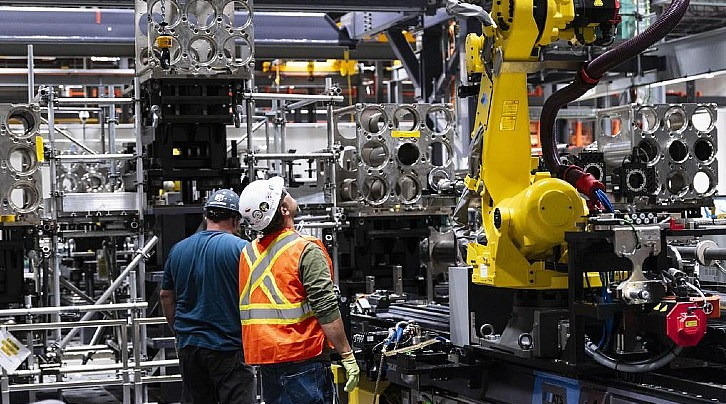
As a core life extension project for the CANDU heavy water pressure tube reactor, the MCR project encompasses the systematic removal and replacement of key core components, representing a major infrastructure undertaking spanning multiple years and aimed at extending the reactor's operational life by 30 to 35 years. During this construction phase, a six-axis robotic tooling system jointly developed by Bruce Power, Shoreline Power Group, ATS Automation, and Calian Engineering played a key role. Through automated precision rolling and micron-level measurement technology, the system efficiently completed the precision seal installation of the outer calandria tubes and inner pressure tubes.
Leveraging process optimization and accumulated experience from prior work, the calandria tube installation at Unit 4 was completed 25 days ahead of Unit 3, and the project has now fully entered the fuel channel installation phase. Stephen Lecce, Ontario's Minister of Energy and Mines, stated that Ontario's nuclear industry has once again demonstrated its world-leading position, steadily advancing large-scale refurbishment projects within budget and laying a solid foundation for ensuring future electricity supply.
It is reported that Bruce Unit 4 began its outage for major overhaul in February 2025, marking the midpoint of the Bruce Nuclear Generating Station life extension program (covering Units 3 through 8) with a total investment of CAD 13 billion (approximately USD 9 billion). With the successful completion of Unit 6 and Unit 3, and the MCR of Unit 5 scheduled to commence in November, this largest infrastructure refurbishment project in Canada is progressing steadily as planned, with the full series of units expected to return to commercial operation by 2033.
Disclaimer: Information republished from partner media, institutions or other websites is provided for reference and communication purposes only. It does not imply endorsement of its views or verification of its accuracy. Please contact us if any content infringes rights or requires correction.