
Search Results
Keyword:Cold Functional Test

Huaneng Hainan Changjiang Nuclear Power Unit 4 Completes Cold Functional Test
At 12:50 on September 6, the cold functional test of Unit 4 at Huaneng Hainan Changjiang Nuclear Power was successfully completed, marking the unit's official full entry into the commissioning phase and laying the foundation for subsequent high-quality power generation and grid connection. This project is the first large-scale pressurized water reactor nuclear power project constructed under majority ownership by China Huaneng Group Co., Ltd., and also the first Hualong One nuclear power project in Hainan Province. The cold functional test, also known as the cold hydrostatic test of the primary circuit in a nuclear power plant, is an important milestone in nuclear power engineering construction. It is primarily used to comprehensively verify the integrity and leak-tightness of pressure boundaries, including primary circuit pipeline welds, equipment, and high-pressure sections of connected systems, ensuring the safety and stability of the primary circuit during subsequent operation...
2026-09-08
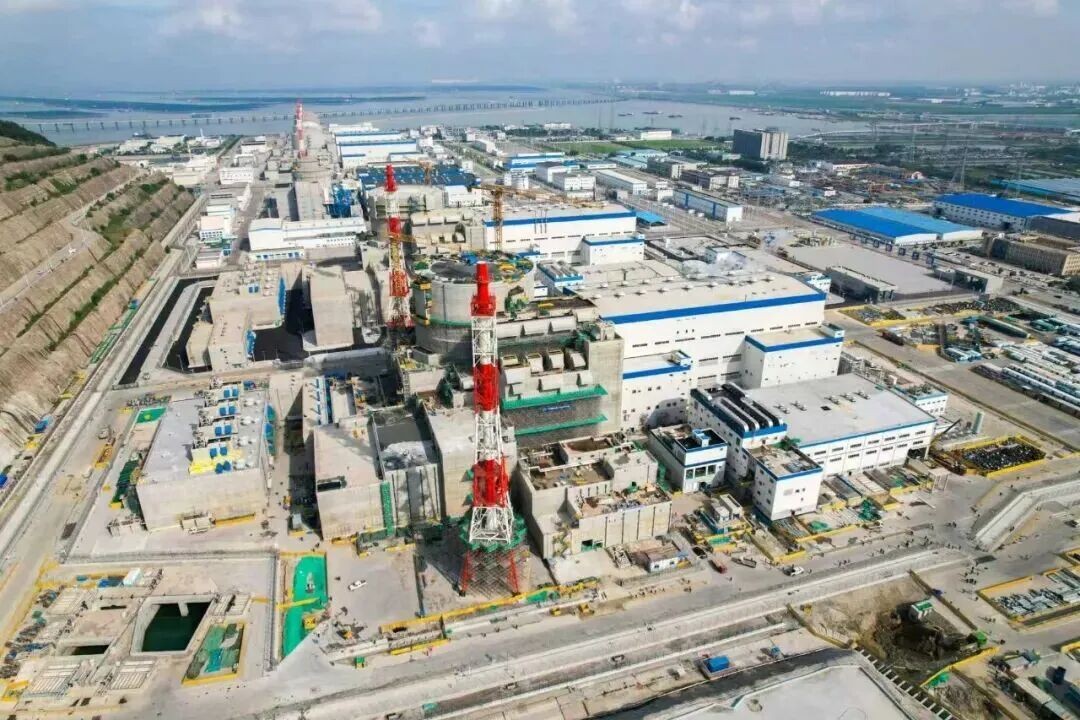
Cold Functional Test of Tianwan Nuclear Power Plant Unit 8 Successfully Completed
On August 3, the cold functional test (hereinafter referred to as the "cold test") of Tianwan Nuclear Power Plant Unit 8, constructed by China Nuclear Industry 23 Construction Co., Ltd. (CNI23), was successfully completed, marking the official transition of the unit from the engineering installation phase to the system commissioning and testing phase, laying a solid foundation for subsequent hot functional test, reactor fuel loading, and grid connection. The cold test is the first comprehensive commissioning test after a nuclear power unit enters the system commissioning phase and is one of the important milestone nodes in nuclear power plant engineering construction. Its main purpose is to verify the integrity and leak-tightness of the pressure boundary, including primary loop pipeline welds, equipment, and high-pressure sections of connected systems, comprehensively inspect on-site installation quality, and precisely identify potential hazards. It serves as the first comprehensive and systematic "physical examination" of the reactor before its operation.
2026-08-05