
Search Results
Keyword:Hungarian nuclear power
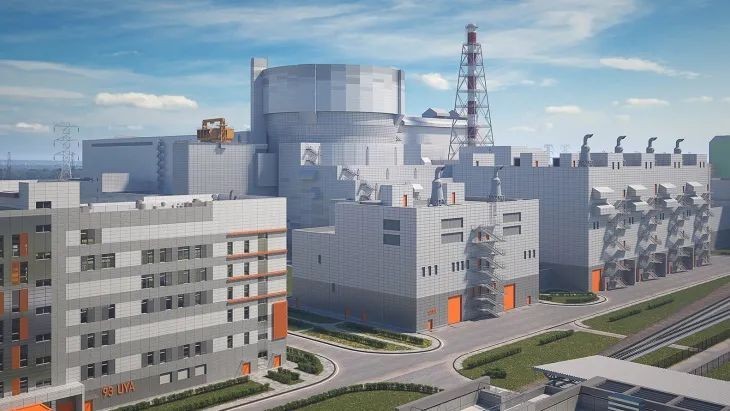
Hungary's Paks II Nuclear Project May Require Major Adjustments
According to sources familiar with Hungary's nuclear industry and discussions on the Paks II nuclear project, the new Hungarian government led by Peter Magyar believes that the Paks II project, based on Russia's Rosatom design, can only proceed if major adjustments are made. Sources said that due to factors such as ethics, technology, sanctions restrictions, licensing procedures, and existing contract terms, the Paks II project is difficult to continue under its original arrangement. However, industry insiders also believe that it would not be appropriate to abandon the project outright due to short-term sentiment or temporary setbacks. If more participants could be brought in,...
2026-09-04
Russia says it has not yet received an invitation for negotiations on Hungary's Paks II nuclear power plant
On September 2, Alexey Likhachev, CEO of Russia's State Atomic Energy Corporation (Rosatom), said during the Eastern Economic Forum in Vladivostok that Rosatom has not yet received an invitation from the Hungarian government for negotiations on the construction project of the Paks II nuclear power plant. Likhachev stated that Rosatom has expressed its willingness to participate in discussions on project parameters in any civilized manner. He noted that the company has always placed the interests of its partners and clients in a position of priority and is prepared to provide explanations and justifications regarding the effectiveness of the project's technical solutions as well as related financial and economic impacts...
2026-09-03
Hungary Plans Additional ~EUR 300 Million in Funding for Paks II Nuclear Power Plant
The Hungarian government plans to allocate an additional HUF 111.6 billion, equivalent to approximately EUR 305.5 million, to the Paks II nuclear power plant project. The funds have been included in the draft amendment to the 2026 budget, which is expected to be submitted to the Hungarian Parliament for review. According to the budget document, financial support for the Paks II project through the end of 2026 will increase from HUF 95 billion to HUF 206.6 billion, approximately EUR 565.5 million. Based on relevant calculations, over the past 12 years, the Hungarian government has directly allocated HUF 628.7 billion, exceeding EUR 1.7 billion, to the project; with the inclusion of this budget arrangement, cumulative financial support will exceed EUR 2.2 billion. The Paks II nuclear power plant involves the participation of Russia's State Atomic Energy Corporation (Rosatom)...
2026-08-31
Hungary's Paks Nuclear Power Plant Resumes Full-Capacity Operation
Hungary's Paks Nuclear Power Plant has resumed full-capacity operation. Hungarian authorities announced that the plant, which had previously reduced output due to falling water levels in the Danube River, now has all four reactor units and eight turbines operating normally, with electricity generation restored to maximum levels. Located on the banks of the Danube approximately 100 kilometers south of Budapest, the Paks Nuclear Power Plant is Hungary's only nuclear power station. Previously affected by low water levels in the Danube, the plant's water intake conditions for system cooling were constrained, and three units were temporarily impacted with reduced power output. To improve water intake conditions, dike construction was initiated on the riverbed near the plant, with Hungarian experts using thousands of tons of rock and gravel to advance the work, which was completed ahead of schedule.
2026-08-27
Three units at Hungary's Paks Nuclear Power Plant return to full-capacity operation
Of the four units at Hungary's Paks Nuclear Power Plant, three have returned to full-capacity operation, and grid connection work for Unit 4 is also progressing as planned. Hungarian authorities stated that all eight pumping systems at the plant are now in operation, with total generating capacity expected to approach 2,000 megawatts within two days. Previously, three units at the Paks plant were temporarily shut down due to declining water levels in the Danube River, which serves as a vital water source for the plant's cooling system. To improve water intake conditions, Hungary constructed a temporary weir in the river section near the Paks plant, using thousands of tons of rock and crushed stone during construction, with military engineering units also participating in the operations. The Paks Nuclear Power Plant is located approximately 100 kilometers south of Budapest on the banks of the Danube...
2026-08-25
Half of Turbines at Hungary's Paks Nuclear Power Plant Back in Operation
Hungarian Prime Minister Péter Magyar stated that the Paks Nuclear Power Plant has restored approximately half of its generating capacity, with full restoration expected to be completed earlier than originally planned. Four of the plant's eight turbines are currently in operation, and restoration efforts are ongoing. Magyar said on social media that operating conditions at the plant have improved as construction work near the Paks site progresses and the Danube River water level recovers. Based on the current pace, the Paks plant is expected to regain a generating capacity of 2,000 megawatts by Wednesday, which could meet about 35% of Hungary's electricity demand. Earlier, Unit 3 of the Paks plant was announced to resume power generation ahead of schedule on Saturday evening. Magyar noted that the unit's resumption of power generation is linked to on-site engineering measures and changes in the Danube water level.
2026-08-24
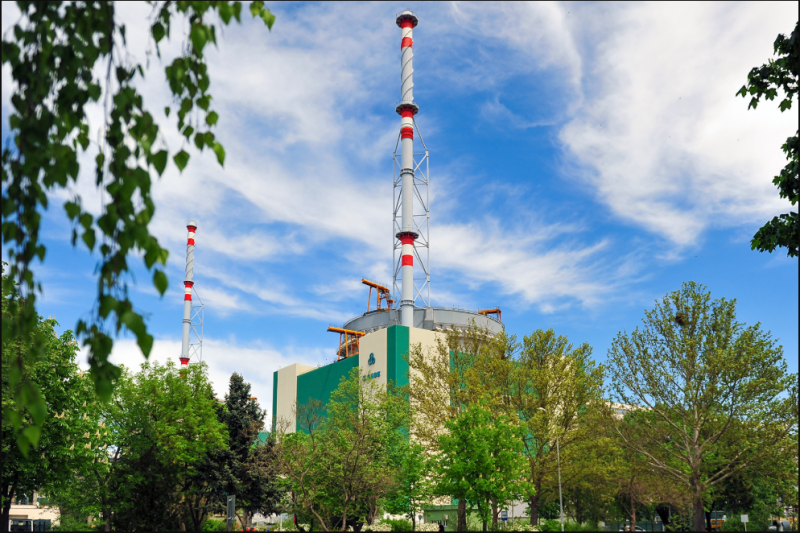
Danube Water Levels Recover, Paks Nuclear Power Plant Expected to Resume Full-Capacity Operation
According to Hungarian sources on August 19, Peter Magyar stated that due to the recovery of Danube water levels, the Paks Nuclear Power Plant is expected to resume full-capacity operation by next weekend. Magyar noted that starting from Friday, August 28, the Paks Nuclear Power Plant will be ready for full-capacity operation. The recent rise of 15 to 20 centimeters in Danube water levels has created conditions for the plant to restore its output and has also eliminated the need for operators to shut down turbines again. Relevant experts plan to restart the turbines that have not yet resumed operation as soon as possible. Previously, due to historically low Danube water levels, the operation of the Paks Nuclear Power Plant, which relies on river water for cooling, was affected, and the plant's output once dropped to approximately 10% of full capacity.
2026-08-20
Hungary's Paks Nuclear Power Plant expected to resume full generating capacity from August 23
Hungarian Prime Minister Magyar stated that as the Danube water level is expected to recover, the remaining 6 turbines at Hungary's Paks Nuclear Power Plant are planned to restart from August 23, which is expected to fully restore the plant's original generating capacity. Due to recent high temperatures and Danube water levels, the Paks Nuclear Power Plant had previously been unable to maintain full-load operation as originally planned. On the evening of August 10, the second of the plant's 8 turbines was started, and the current generating power is approximately 480 megawatts, lower than the originally planned 2,000 megawatts. Magyar stated that once the relevant water-retention facilities are completed and the river water level rises as expected, the nuclear power plant will have the conditions to restart the remaining turbines...
2026-08-19
Danube Water Levels Continue to Drop, Hungary's Paks Nuclear Power Plant May Reduce Output Again
Hungary's Paks Nuclear Power Plant may reduce its power generation output again early next week due to the continued decline in Danube water levels. Péter Magyar stated on social platform X that Tuesday and Wednesday will be critical periods, with the Danube water level expected to drop by another 14 to 15 centimeters, while the current level is only 9 centimeters away from the threshold that would force the shutdown of the second-to-last turbine at the Paks plant. Magyar noted that this critical phase is expected to end on August 20, when the water level in the Hungarian section of the Danube is expected to recover, influenced by inflows from the Austrian catchment area. Previously, on August 12, Magyar stated that the Hungarian government had decided to build temporary water-retention structures near the Paks Nuclear Power Plant and sink two barges to raise local water levels and ensure the plant's water intake conditions.
2026-08-17
Hungary Plans to Sink Two Barges Near Paks Nuclear Power Plant to Raise Danube Water Level
Hungarian authorities plan to conduct controlled sinking of two giant barges, each about 80 meters long, in the river section near the Paks Nuclear Power Plant on August 14, aiming to raise the local water level of the Danube and ensure cooling water supply for the nuclear power units. According to European sources, after the two barges are sunk, the water level in the relevant river section is expected to rise by about 20 centimeters. Recently, persistent high temperatures across many parts of Europe have driven the Danube's water level to a low point, putting pressure on water intake and power generation along the river. The Paks Nuclear Power Plant is the only operating nuclear power plant in Hungary. Due to the low water level of the Danube, the plant's power output has dropped to about 25% of its installed capacity. Earlier this week, Hungarian authorities also announced plans to build a riverbed weir on the Danube. Under current expectations, the project could raise the water level in the relevant river section by about 1 meter.
2026-08-15
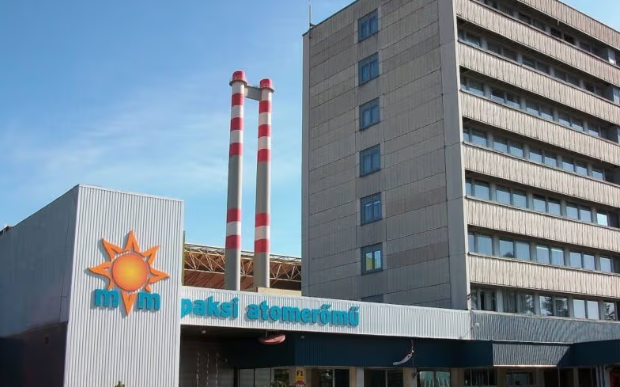
Rosatom Says Paks Nuclear Power Plant Expansion Project Progressing as Planned
Alexey Likhachev, Director General of Rosatom, stated that the construction of the Paks nuclear power plant expansion project in Hungary, with Russian participation, is progressing well, and Rosatom is carrying out related work in accordance with the plan agreed upon with the Hungarian owner. Likhachev noted that Russia is fully organizing equipment production for the two new units at the Paks nuclear power plant. Currently, enterprises under Rosatom have initiated manufacturing work related to the reactors for both units. Among these, the forging blanks for the reactor of Unit 5 at the Paks nuclear power plant have been completed, and the shell assembly stage will begin shortly. He also stated that the casting of the reactor blank for Unit 6 at the Paks nuclear power plant is progressing as planned.
2026-08-14
Danube Water Level Drop May Affect Operation of Paks Nuclear Power Plant
Hungarian Prime Minister Magyar stated after inspecting the Paks Nuclear Power Plant that the Danube water level has dropped again, which may lead to a further reduction in the plant's power output next week, or even pose a risk of shutdown. At a press conference, Magyar said that about a week ago, heavy rainfall occurred in the Austrian catchment area, temporarily alleviating the low water level of the Danube, but the positive effects of the rainfall have since diminished. According to forecasts, the Danube water level may drop to -132 cm on August 16 or 17, a level approaching the critical operating conditions of the Paks Nuclear Power Plant. If this level is reached, one of the two currently operating turbines may need to be shut down again. He noted that existing forecasts cover the next 6 to 7 days,...
2026-08-14
Hungary Plans to Build Bottom Sills on the Danube to Ensure Cooling Water for Paks Nuclear Power Plant
Hungarian authorities stated that the government has decided to construct bottom sills in the Danube section near the Paks Nuclear Power Plant to raise local water levels and ensure water intake conditions for reactor cooling. In a video address, Péter Magyar said that the relevant works will commence immediately, with bottom sills to be built between the two banks of the Danube. He noted that if the Paks Nuclear Power Plant were to suspend operations, Hungary would incur costs of approximately 137 million euros per month; in contrast, the measures to raise water levels involve a one-time investment, with an estimated cost of 16.5 million euros. The Paks Nuclear Power Plant is a key source of electricity for Hungary. According to currently disclosed information, among the plant's 8 turbines, the second one was started on the evening of August 10, with current power generation at 480 MWh, compared to a planned output of 2000 MWh...
2026-08-13
Budapest Launches Feasibility Study for Long-Distance Heat Supply from Paks Nuclear Power Plant
On August 11, 2026, Budapest Public Services Company (BKM), in partnership with the Budapest University of Technology and Economics, launched a feasibility study to explore the delivery of thermal energy from the Paks Nuclear Power Plant to the city's district heating system via a hot-water pipeline of approximately 125 kilometers. The study focuses on the technical, economic, and construction feasibility of the project. The Paks Nuclear Power Plant is located about 100 kilometers from the capital, and the current heat load of Budapest's district heating system is approximately 100 MWth in summer, peaking at 1,000 MWth in winter. The core significance of this concept lies not only in providing a low-carbon heat source for the city but also in improving the efficiency of waste heat utilization at the nuclear power plant. The Paks Nuclear Power Plant currently...
2026-08-12
Danube Water Levels Recover, Hungary Restarts Second Turbine at Paks Nuclear Power Plant
On August 10, as the Danube River's water levels recovered, Hungary began restarting a previously constrained turbine at the Paks Nuclear Power Plant. The Paks plant uses Danube water for cooling and normally supplies nearly half of Hungary's electricity. Due to heatwaves and persistent drought, the Danube's water levels fell to historic lows in recent weeks, reducing the plant's generating capacity to about 10%, with only one of its eight turbines remaining operational. According to available information, Hungarian Prime Minister Péter Magyar stated on the 10th that the Danube's water level had risen 19 centimeters from the low point recorded last week, and that restart work on the second turbine at the Paks plant had begun, with power generation expected to resume by Monday evening. He also previously mentioned...
2026-08-11