
Search Results
Keyword:UK

Survey of Japanese 18-year-olds: Nearly 60% support restarting or replacing nuclear reactors that meet safety standards
A survey of young people around age 18 in Japan shows that nearly 60% of respondents support restarting nuclear power plants that meet safety standards or replacing existing reactors with new units; meanwhile, over 70% of respondents have expectations or some expectations for advanced innovative reactors. The 18-year-old awareness survey conducted by the Nippon Foundation asked respondents to choose which of two statements was closer to their own view: one being that nuclear power plants meeting safety standards should be restarted or replaced with new units; the other being that nuclear power should not be relied upon due to accident risks and radioactive waste issues. The results showed that 28.5% of respondents said their view was "close" to the first statement, and 29.8...
2026-08-16

Lucideon Plans £500 Million UK CMC Manufacturing Facility to Strengthen Aerospace, Defense, and Nuclear Supply Chains
UK materials science consultancy Lucideon plans to build a manufacturing and R&D facility for ceramic matrix composites (CMCs) at Keele University Science Park, with total project investment expected to exceed £500 million over the next 7 to 10 years. The plan aims to address the UK's capability gap in high-temperature ceramics and industrial-scale CMC manufacturing, serving key industries such as aerospace, defense, and nuclear energy, while enhancing the UK's autonomy and competitiveness in the global advanced materials supply chain. Ceramic matrix composites, consisting of ceramic fibers reinforcing a ceramic matrix, can withstand ultra-high temperatures, thermal shock, and mechanical impact, while offering weight reduction advantages over metallic materials, driving growing demand in high-performance engines, thermal protection...
2026-08-16

Finnish family-owned company Halton Group secures major order for UK's Sizewell C nuclear power project
Finnish family-owned company Halton Group has secured a significant order for the UK's Sizewell C nuclear power project, and will supply related equipment or systems for the construction of this large-scale nuclear power plant. The project has an installed capacity of 3.2 gigawatts, with the order value reaching the tens of millions of euros level. For an industrial company from Finland, this is not only a major breakthrough in a single project, but also demonstrates its competitiveness in the supply chain of high-demand energy infrastructure. Sizewell C is one of the key projects advancing the UK's new generation of nuclear power construction. Against the backdrop of Europe's energy structure adjustment and rising demand for low-carbon electricity, large-scale nuclear power plants have once again become an option for multiple countries to ensure power security and meet emission reduction targets.
2026-08-14
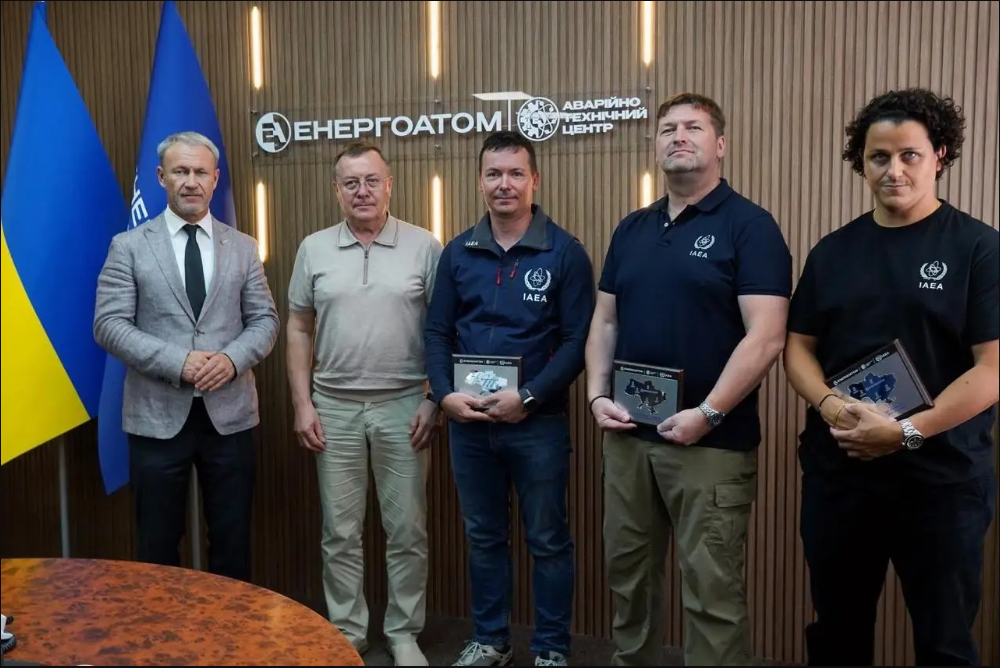
Energoatom and IAEA Strengthen Cooperation on Nuclear Power Emergency Preparedness
Acting CEO of Energoatom, Pavlo Kovtoniuk, recently held a working meeting with representatives of the International Atomic Energy Agency (IAEA) coordination and technical team at the company's subsidiary, the Emergency Technical Center. During the meeting, Kovtoniuk briefed the IAEA representatives on the operational status of Energoatom under the current circumstances and the main challenges facing Ukraine's nuclear power operator. He stated that the safe operation of nuclear power plants and emergency response preparedness remain among the company's top priorities, and enhancing the capabilities of the Emergency Technical Center is a key component of these efforts. Uk...
2026-08-13

Major Fusion Energy Appointment in the UK: MIT Professor Dennis Whyte Named CEO of UKAEA
The UK Atomic Energy Authority (UKAEA) has appointed Professor Dennis Whyte, a fusion energy expert from the Massachusetts Institute of Technology, as its new Chief Executive Officer, with his tenure officially commencing in autumn 2026. This appointment comes at a critical stage in the UK's accelerated push toward fusion energy commercialisation, signalling the country's intent to strengthen its position in the global fusion energy race by attracting international talent with combined expertise in research, engineering, and industrialisation. The UK government previously announced an investment of £2.5 billion in fusion energy research, development, and innovation over the five-year period ending in 2030. Upon taking office, Whyte will be tasked with advancing the R&D system, accelerating technology commercialisation, expanding industrial and international collaboration, and translating scientific...
2026-08-13
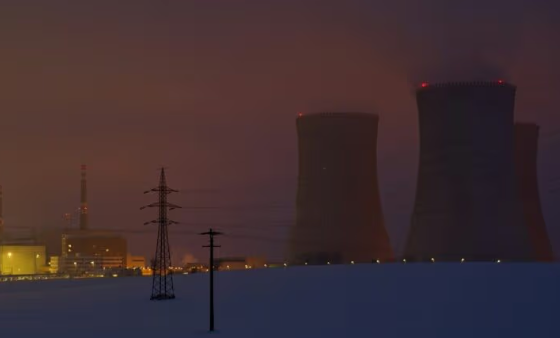
Czech Republic Proposes Amendments to Low-Carbon Act, Key Dukovany Nuclear Contracts May Exit Public Registry
The Czech Ministry of Industry and Trade recently published a draft amendment to the Low-Carbon Act, proposing adjustments to the Act on Measures for the Transition to Low-Carbon Energy and related energy laws and contract registration regulations. On the surface, this legislative change is primarily aimed at unifying the support mechanisms, contract signing procedures, and compensation settlement rules for new nuclear power projects. However, the most notable change is that certain key contracts involving the construction and financial support of nuclear power units may no longer be required to be disclosed in the public contract registration system. The draft proposes the "compensation mechanism contract" as the basic model for supporting new nuclear projects, with a nature similar to a bilateral contract for difference—providing compensation when market electricity prices fall below agreed levels, and requiring repayment or settlement when prices exceed agreed levels.
2026-08-13

UK Low-Level Waste Repository Advances Capping Project, Rail-Transported Aggregate Exceeds 285,000 Tonnes
Nuclear Waste Services (NWS) is advancing capping-related works at the Low-Level Waste Repository on the west coast of Cumbria, UK, to strengthen long-term protection of existing disposal trenches and vaults. Since the repository began operations in 1959, it has supported the safe disposal of approximately 1 million cubic metres of low-level radioactive waste, making it a key facility in the UK's radioactive waste management system. NWS, part of the Nuclear Decommissioning Authority (NDA), is primarily responsible for consolidating the UK's radioactive waste management capabilities, providing management solutions for legacy wastes from civil and defence sectors as well as wastes arising from future new-build nuclear projects...
2026-08-12

University of Tokyo and University of York Successfully Validate Positronium Ratio Imaging Principle for the First Time
A research team from the Graduate School of Engineering at the University of Tokyo and the University of York in the UK established a novel geometric imaging principle utilizing positron three-photon decay. Using a gamma-ray measurement system comprising scintillators and silicon photomultipliers (SiPMs), along with the existing PET radiopharmaceutical ^18F-FDG, they successfully visualized the positronium three-photon decay ratio for the first time, completing the proof-of-principle for Positronium Ratio Imaging (PRI). The findings were published in *Communications Physics*. Current clinical nuclear medicine PET examinations primarily utilize gamma rays generated from two-photon annihilation between positrons and electrons to visualize drug accumulation in the body. While this method provides quantitative information on metabolism or drug uptake, it offers limited insight into microenvironmental features such as tissue hypoxia, which are closely related to disease malignancy. In recent years, researchers have attempted to obtain additional tissue information through the average lifetime of positronium formed during positron annihilation, but this approach typically requires the introduction of special nuclides or agents, limiting its practical application.
2026-08-12
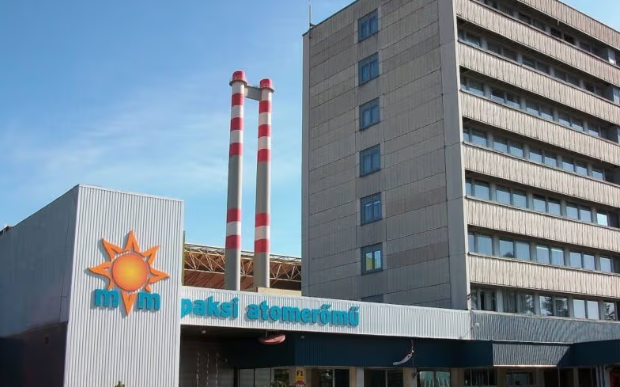
Budapest Launches Feasibility Study for Long-Distance Heat Supply from Paks Nuclear Power Plant
On August 11, 2026, Budapest Public Services Company (BKM), in partnership with the Budapest University of Technology and Economics, launched a feasibility study to explore the delivery of thermal energy from the Paks Nuclear Power Plant to the city's district heating system via a hot-water pipeline of approximately 125 kilometers. The study focuses on the technical, economic, and construction feasibility of the project. The Paks Nuclear Power Plant is located about 100 kilometers from the capital, and the current heat load of Budapest's district heating system is approximately 100 MWth in summer, peaking at 1,000 MWth in winter. The core significance of this concept lies not only in providing a low-carbon heat source for the city but also in improving the efficiency of waste heat utilization at the nuclear power plant. The Paks Nuclear Power Plant currently...
2026-08-12
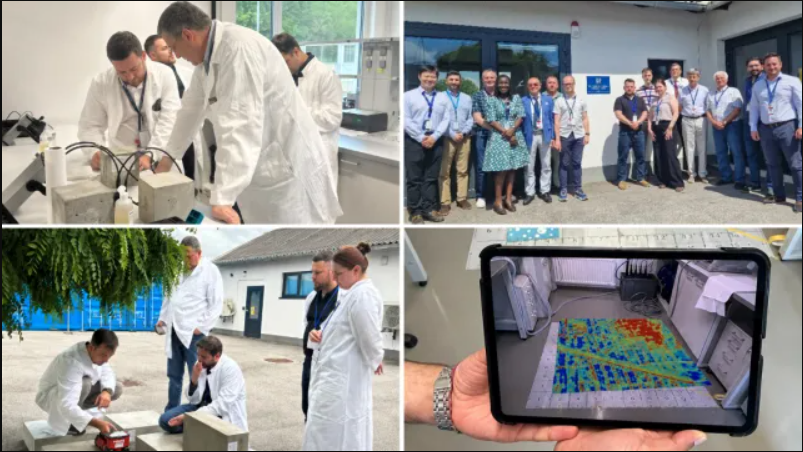
IAEA Trains Ukrainian Experts in Non-Destructive Testing Techniques to Assess Damaged Infrastructure
The International Atomic Energy Agency (IAEA) recently conducted non-destructive testing (NDT) training for Ukrainian civil engineering experts through the International Atomic Energy Agency Support and Assistance Mission to Kherson State (ISAMKO), to support infrastructure safety assessment and recovery efforts following the destruction of the Kakhovka Dam. The training was held in July 2026 at the IAEA Non-Destructive Testing Service Center in Seibersdorf, Austria, over a five-day period, with nine Ukrainian experts participating. This was also the first training program held at the center since its inauguration in 2024. The course focused on the application of NDT techniques in civil engineering for infrastructure inspection, structural diagnostics, safety assessment, and asset integrity evaluation, helping participants...
2026-08-12

Ukraine and IAEA to Strengthen Nuclear Safety Coordination
Ukrainian Energy Minister Denys Shmyhal and IAEA Director General Rafael Grossi held an online meeting, focusing on further strengthening nuclear and radiation safety cooperation amid the war. Ukraine hopes to achieve independent assessments of risks and operational status of critical energy infrastructure and develop more protective measures through closer international coordination. The talks come against the backdrop of sustained security pressures on Ukraine's energy facilities. The Ukrainian side emphasized that a stably operating power system is not only vital to public electricity supply but also directly affects the safety assurance of nuclear power plants and related facilities. The IAEA has previously conducted expert work at multiple energy facilities in Ukraine...
2026-08-12
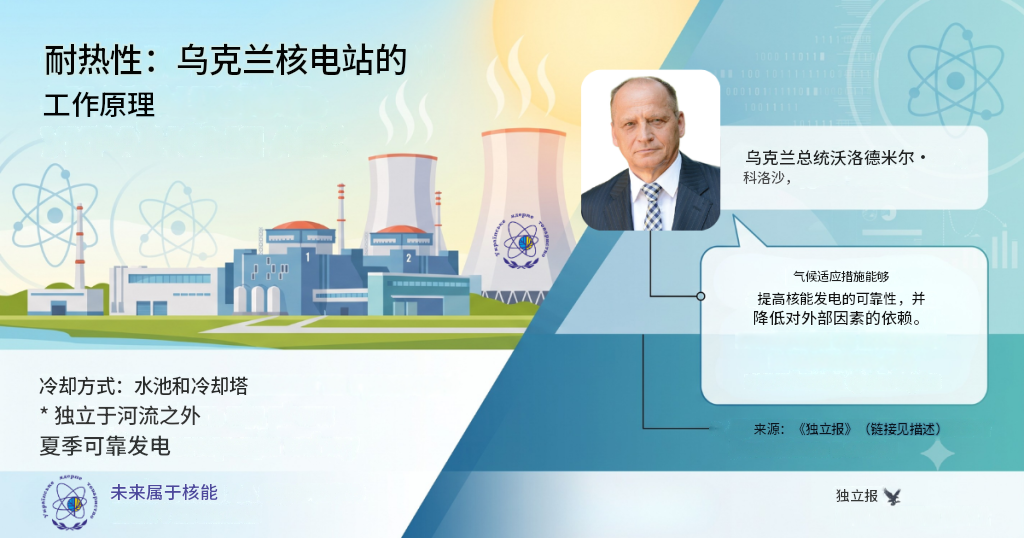
Europe's High Temperatures and Droughts Impact Nuclear Power Operations, Ukrainian Expert Says Climate Adaptation Tied to Energy Independence
Recent prolonged high temperatures, droughts, and falling river levels across Europe have put pressure on the operation of some nuclear power plants that rely on river water for cooling. Nuclear facilities in France, Hungary, Romania, and Slovenia have successively experienced power reductions or shutdowns, forcing some countries to ease supply pressure through electricity imports and adjusted consumption arrangements. Katie Huff, a professor of nuclear engineering at the University of Wisconsin-Madison, stated that the impact of climate change on nuclear power operations is mainly reflected in two aspects: first, droughts lower river levels, making it difficult for plants to obtain sufficient cooling water; second, when air and water temperatures are high, nuclear plants face stricter restrictions on discharging warm water into rivers to avoid further affecting the aquatic environment.
2026-08-11

UK PhD Students Travel to Canadian Nuclear Laboratories for Hands-On Nuclear Energy Training
On August 10, 2026, Canadian Nuclear Laboratories (CNL) welcomed its first cohort of PhD students from the United Kingdom. The visit is part of a five-year collaboration with the UK's Skills and Training Alliance for a Nuclear Renaissance Centre for Doctoral Training (SATURN CDT), marking the launch of a new long-term partnership in the international development of nuclear energy talent. SATURN CDT is funded by the UK's Engineering and Physical Sciences Research Council (EPSRC) and led by the University of Manchester, in partnership with seven UK universities. The program aims to provide the next generation of nuclear energy professionals with hands-on training beyond the classroom...
2026-08-11

UK Office for Nuclear Regulation Publishes New Safeguards Guidance
The UK Office for Nuclear Regulation (ONR) published updated guidance on 10 August to help nuclear facility operators meet new requirements under the Nuclear Safeguards (EU Exit and Fees) (Amendment) Regulations 2026. The amending regulations, which came into force in July this year, are regarded as a significant adjustment to the UK's nuclear safeguards regime. Safeguards measures are primarily used to verify whether a state complies with its international obligations, ensuring that nuclear materials in civil nuclear programmes are not diverted to non-peaceful purposes. The amendment modernises safeguards reporting requirements, with operators transitioning from the previous basic technical characteristics reports to the International Atomic Energy Agency (IAEA) standardized design information questionnaire. The new regulations also...
2026-08-11
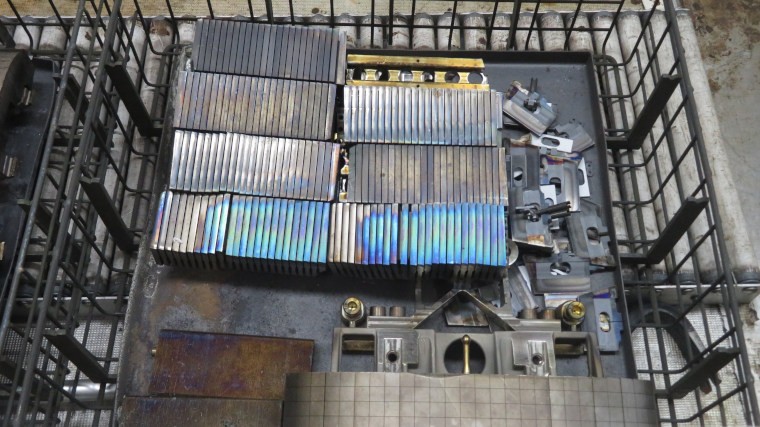
UK's Materials Detritiation Facility at Culham Resumes Operations to Support JET Fusion Decommissioning Materials Research
The UK Atomic Energy Authority recently announced that the Materials Detritiation Facility (MDF) at Culham has resumed operations following a 12-month engineering shutdown and upgrade. Experimental data produced by the facility has already been used to support research related to the removal of materials from the Joint European Torus (JET) device, providing a basis for waste management strategies under the JET Decommissioning and Repurposing (JDR) project. Over three years of plasma operations, deuterium-tritium (DT) experiments conducted at JET have left residual amounts of tritium in the tokamak's walls and internal components. This phenomenon is associated with tritium's tendency to enter materials under high-power fusion operating conditions. For JET decommissioning work, accurately determining the tritium...
2026-08-11