
Search Results
Keyword:Zhangzhou Nuclear Power Plant
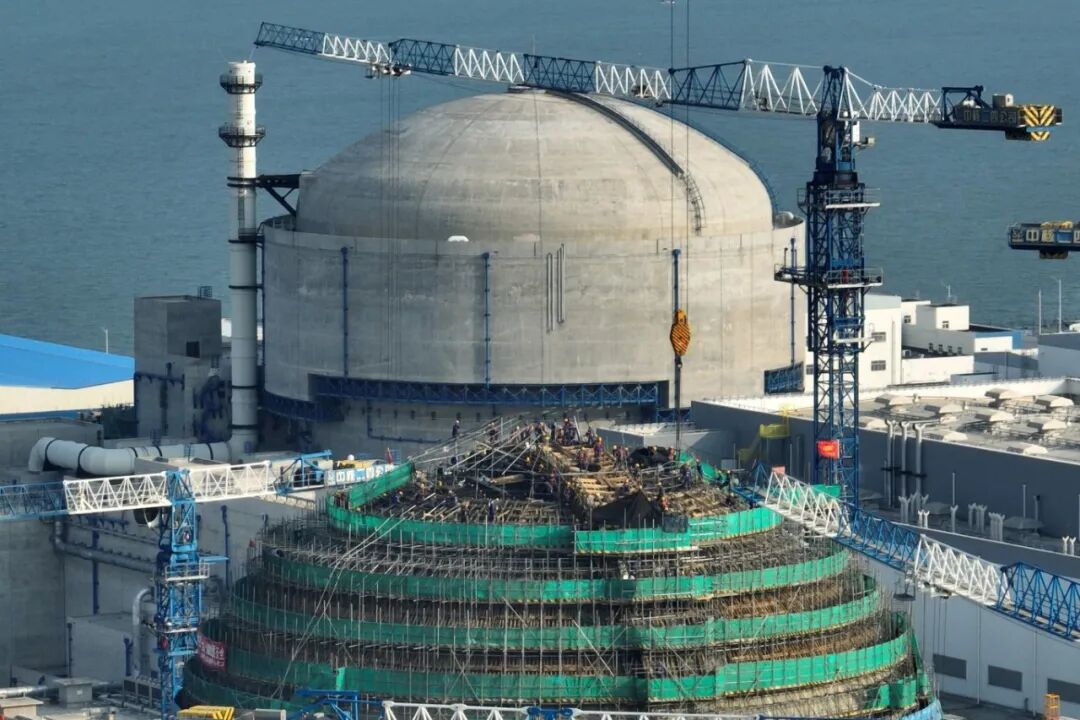
Inner Dome Concrete Pouring of Zhangzhou Nuclear Power Unit 3 Completed
On September 30, as the last batch of concrete was successfully poured into the formwork, China Nuclear Industry 24 Construction Co., Ltd. successfully completed the concrete pouring of the inner dome of the reactor building of the Hualong One Zhangzhou Nuclear Power Unit 3. The achievement of this key milestone marks the full completion of the civil construction of the inner containment for this unit, laying a solid foundation for the subsequent prestressing construction of the containment and the installation of core nuclear equipment. As an important safety barrier of the Hualong One independent third-generation nuclear power technology, the inner dome is located at the top of the nuclear island, and its core function is to ensure the integrity and absolute leak-tightness of the reactor building and prevent the leakage of radioactive substances. Faced with nuclear construction technical challenges such as the complex curved surface structure of the dome and the high difficulty of high-altitude operations, the Zhangzhou Nuclear Power Project Department...
2026-10-02
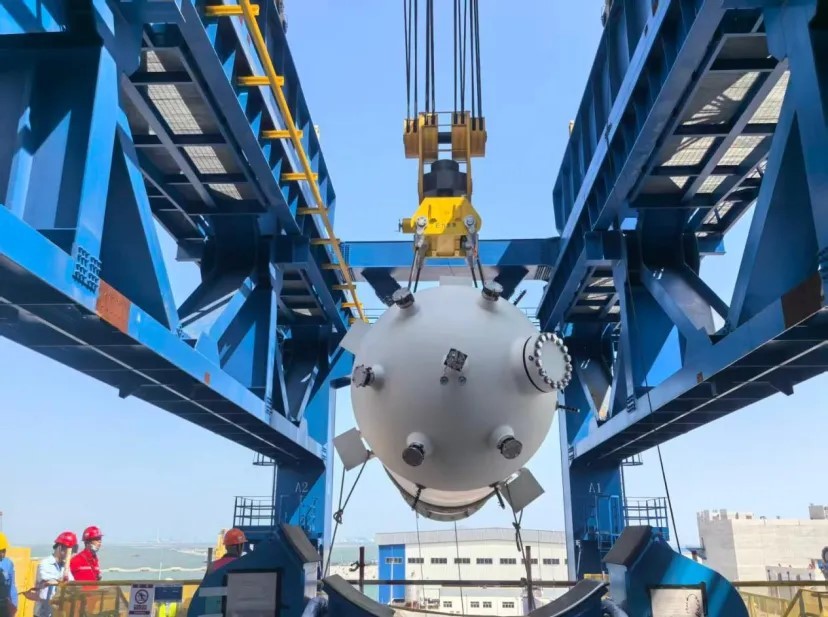
The pressurizer of Unit 3 of the Zhangzhou Nuclear Power Plant has been hoisted into place.
At 19:03 on September 20, the pressurizer of Unit 3 of the Zhangzhou Nuclear Power Plant was hoisted into place. During this pressurizer hoisting operation, the pressurizer was horizontally lifted to the +16.5m platform by a gantry crane, transported and towed by a heavy-duty vehicle into the reactor building, then turned and erected by the polar crane, and finally hoisted into place. The pressurizer is one of the core main equipment items of the nuclear island reactor coolant system, and its main function is to undertake primary loop pressure control and overpressure protection, among other duties. When the temperature and pressure inside the reactor fluctuate, the pressurizer can maintain the temperature and pressure inside the reactor within a safe range by adjusting the flow rate and temperature of the coolant water, thereby ensuring the safe and stable operation of the reactor. At the same time, the pressurizer is crucial for ensuring the power generation efficiency of the unit and maintaining stable operation, and is key equipment for the safe operation of nuclear power units.
2026-09-21
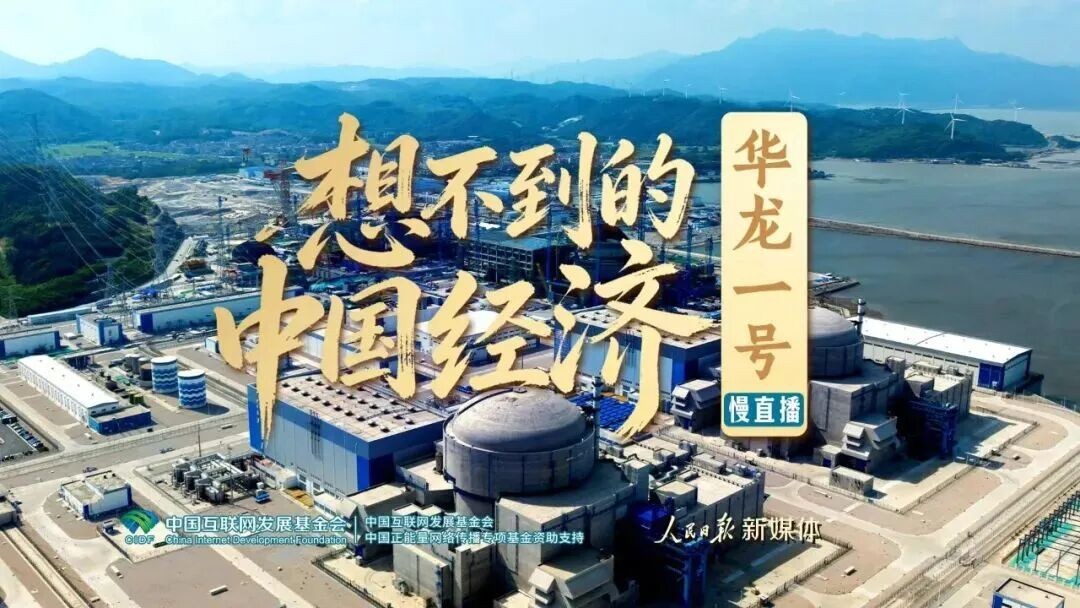
People's Daily Focuses on "Hualong One" Zhangzhou Nuclear Power
On September 8, the People's Daily client and the Vision client turned their lenses to Hualong One Zhangzhou Nuclear Power, presenting the entire process of the nuclear island polar crane bridge lifting at Unit 4 of Zhangzhou Nuclear Power in an 8-hour slow live broadcast. This was not only a visual feast of a national heavyweight project, but also a cloud-based review of Hualong One's solid strength. With over one million viewers witnessing online, it showcased Hualong One's millimeter-level engineering precision and the resolute pace of its batch construction, conveying to the world China's confidence and strength in independent innovation in nuclear power through the lens. Documentary of Unit 4 Nuclear Island Polar Crane Bridge Lifting. This slow live broadcast focused on the lifting site of the nuclear island polar crane bridge at Unit 4 of Zhangzhou Nuclear Power...
2026-09-09
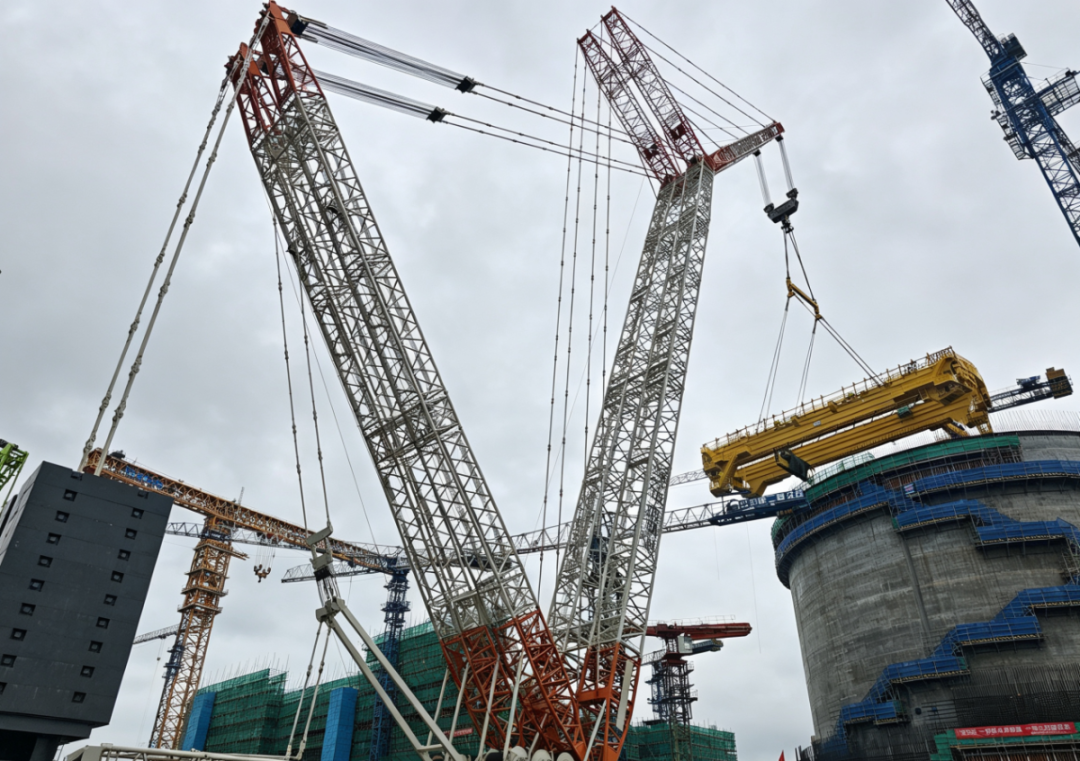
Completion of Polar Crane Bridge Lifting for Unit 4 of Zhangzhou Nuclear Power Plant
On September 1, the lifting operation of the polar crane bridge for Unit 4 of the Zhangzhou Nuclear Power Project was successfully completed. The equipment was smoothly positioned under the traction of a 3200-ton crawler crane, with the entire process lasting 2 hours and 5 minutes, creating conditions for subsequent nuclear island plant construction and equipment installation. The polar crane bridge is a core component of the polar crane, installed at the top of the nuclear island plant, and serves as an important structure of the key lifting equipment within the nuclear island plant. Once put into operation, it will provide support for various lifting operations during the installation and operation phases of the nuclear power plant. The total weight of this lifting exceeded 420 tons, with a lifting height of over 100 meters. The project team selected a 3200-ton crawler crane and used a dedicated spreader beam for the operation. In response to challenges such as wind disturbance during high-altitude slewing, limited clearance between the bridge and plant structures, and high load-bearing requirements for the large crawler crane positioning, the construction team conducted simulation rehearsals in advance, optimized lifting condition parameters, verified the stress conditions of the crane, spreader beam, and lifting points, and refined control requirements for key operations.
2026-09-02
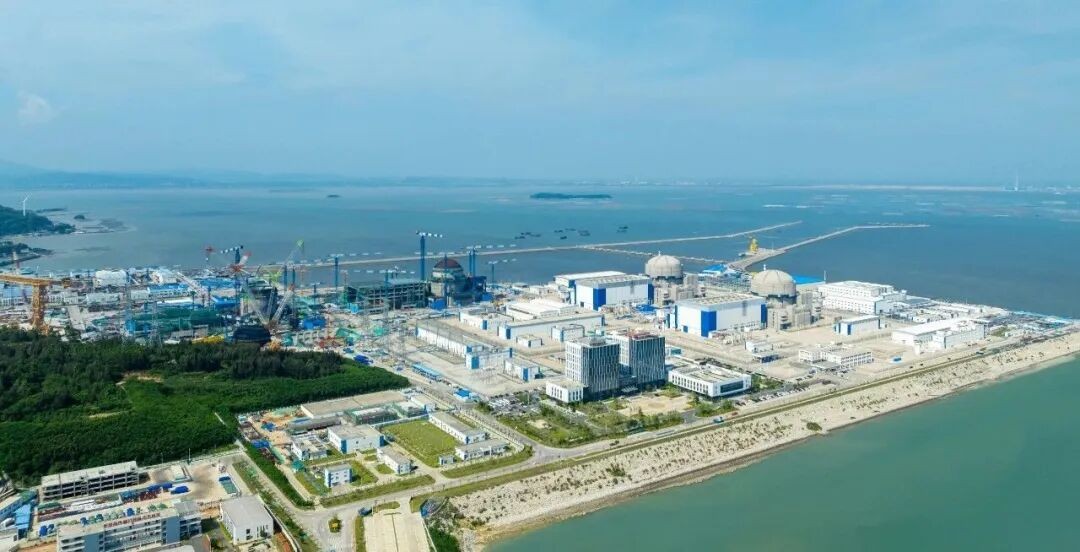
Zhangzhou Nuclear Power Units 3 and 4 Trench Civil Engineering Completes Milestone Phase
On August 27, with the final cubic meter of concrete poured into place, the B1 and B6 sections of the GS and GB trench civil engineering works for Zhangzhou Nuclear Power Units 3 and 4, undertaken by CNNC Huachen, along with the No. 4 overflow well, successfully completed their milestone phase. This phase involved multi-disciplinary cross-operations spanning civil works, installation, electrical, and piping, characterized by complex construction conditions and significant coordination challenges. Among these, Section B1, as the project's main critical path, featured narrow working areas, difficult access for large equipment, and intensive vertical and horizontal cross-operations among multiple units. Seven days before commencement, the project department established a dedicated planning team to verify site conditions, material routes, and cross-operation scopes drawing by drawing, identifying key difficulties such as foundation pouring, equipment positioning, and material supply, and conducting multiple rounds of discussions to optimize the construction plan. The construction period coincided with the rainy season, and Section B1, situated in a low-lying area, faced a high risk of rainwater backflow. The project department implemented measures including full-coverage rain shelters over the base slab, water-retaining curbs at passage openings, and round-the-clock pumping in two shifts, securing dry working areas amid accumulated water; simultaneously, discarded waterproof membranes were collected and reused to cover rebar cages and scaffolding, preventing corrosion and slippery conditions. On-site daily meetings were held, management personnel maintained 24-hour duty, and verbal confirmation with signed handovers was practiced, ensuring issues were resolved the same day, with no plan failures, rain-related stoppages, or process disconnections throughout the period. Facing the immense scheduling pressure from multi-process cross-operations, the project department established a dynamic scheduling system. In terms of manpower loading, fixed posts and personnel quotas were implemented, with zonal responsibility and flexible reinforcement; during peak periods, core work crews were consolidated and work areas were precisely delineated. For machinery, a dynamic scheduling ledger was established, with tower cranes, excavators, and lifting equipment staggered and cross-utilized. Material coordination was also optimized through advance stocking, zoned storage, dedicated management, and emergency replenishment. During the campaign, when the transport of main materials was obstructed, the project department organized management staff and labor crews to manually carry rebar, pipes, and auxiliary materials point-to-point to the working areas, effectively safeguarding project progress. Currently, the main structure construction of the GS and GB trenches by the Zhangzhou Nuclear Power Project Department has achieved phased results, with the GB trench completing 74 sections cumulatively, an 82% completion rate, and the GS trench exceeding 1,160 meters, accounting for 72% of the total length. The company will further strengthen construction organization, optimize construction logic, and continue to advance the remaining sections of the Zhangzhou Nuclear Power Project Department, fully ensuring high-quality performance of the contracted projects.
2026-08-29
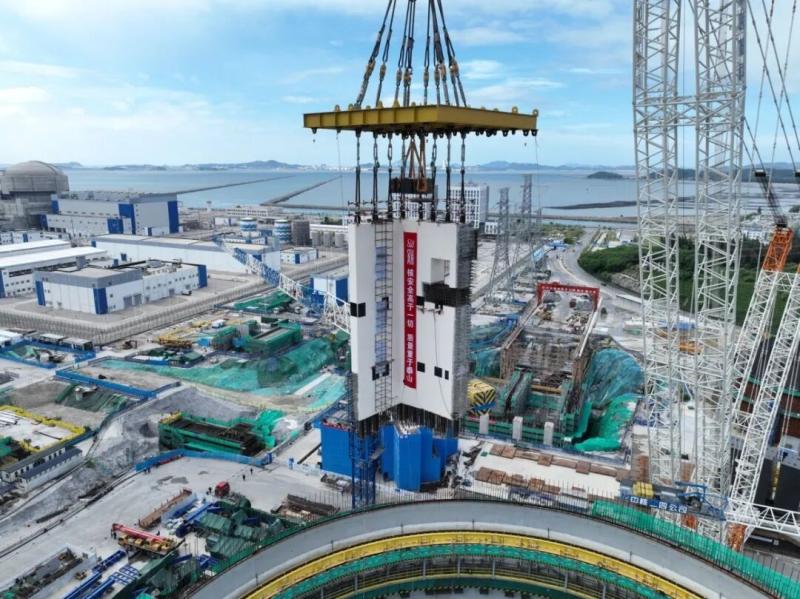
Zhangzhou Nuclear Power Unit 4 Completes Hoisting of Four Internal Structure Modules
From August 18 to 27, CNNC 24 completed the hoisting of four concrete modules for the internal structure of Zhangzhou Nuclear Power Unit 4 within 10 consecutive days, covering the evaporator compartments of Loops 3, 2, and 1 as well as the pressurizer compartment, creating conditions for subsequent loop installation and commissioning work. The evaporator and pressurizer are key equipment in the nuclear island loops. The corresponding compartment concrete modules serve both load-bearing fixation and protection functions, representing an important embodiment of the "Hualong One" defense-in-depth safety philosophy at the civil construction stage. The four modules hoisted this time are all irregularly shaped structures, all adopting the "off-site prefabrication + integral modular hoisting" process, with a total hoisting weight of approximately 2,400 tons. Compared with Unit 3, Unit 4 achieved 3...
2026-08-28
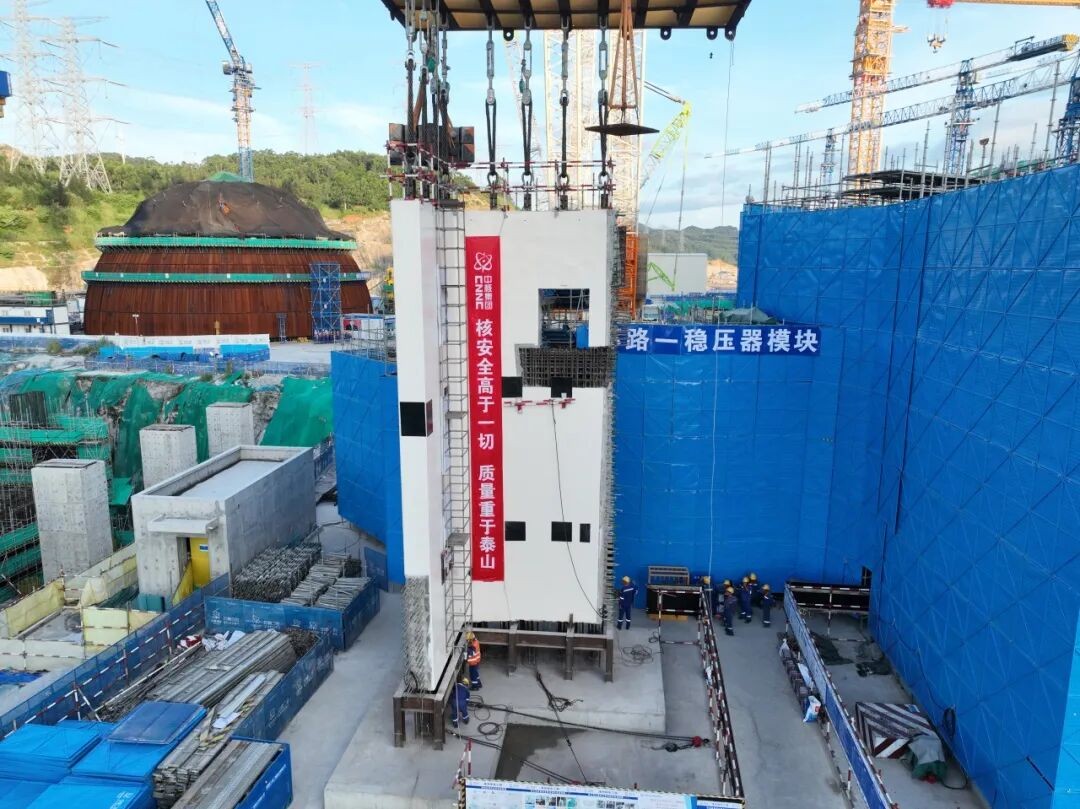
Prefabricated Module for Evaporator Compartment of Loop 3 in Internal Structure of Unit 4 at Zhangzhou Nuclear Power Plant Successfully Hoisted
At 10:18 on August 18, the prefabricated module for the evaporator compartment of Loop 3 in the internal structure of the reactor building of Unit 4 at Zhangzhou Nuclear Power Plant was hoisted into place, with safety and quality under control throughout the entire process. The structures above elevation 16.5 meters in the internal structure of the reactor building of Unit 4 at Zhangzhou Nuclear Power Plant, including the evaporator compartments, pressurizer compartment, and the roof slab of the passive reactor cavity injection tank, adopt a modular construction process featuring off-site prefabrication, integral hoisting, and precise positioning, divided into five concrete modules. The evaporator compartment module of Loop 3 hoisted this time is the first module to be lifted for Unit 4, weighing 454.289 tons, with an overall special L-shaped structure, lifted using a 3200-ton crawler crane. The hoisting operation lasted 3 hours, and Zhangzhou Nuclear Power...
2026-08-19
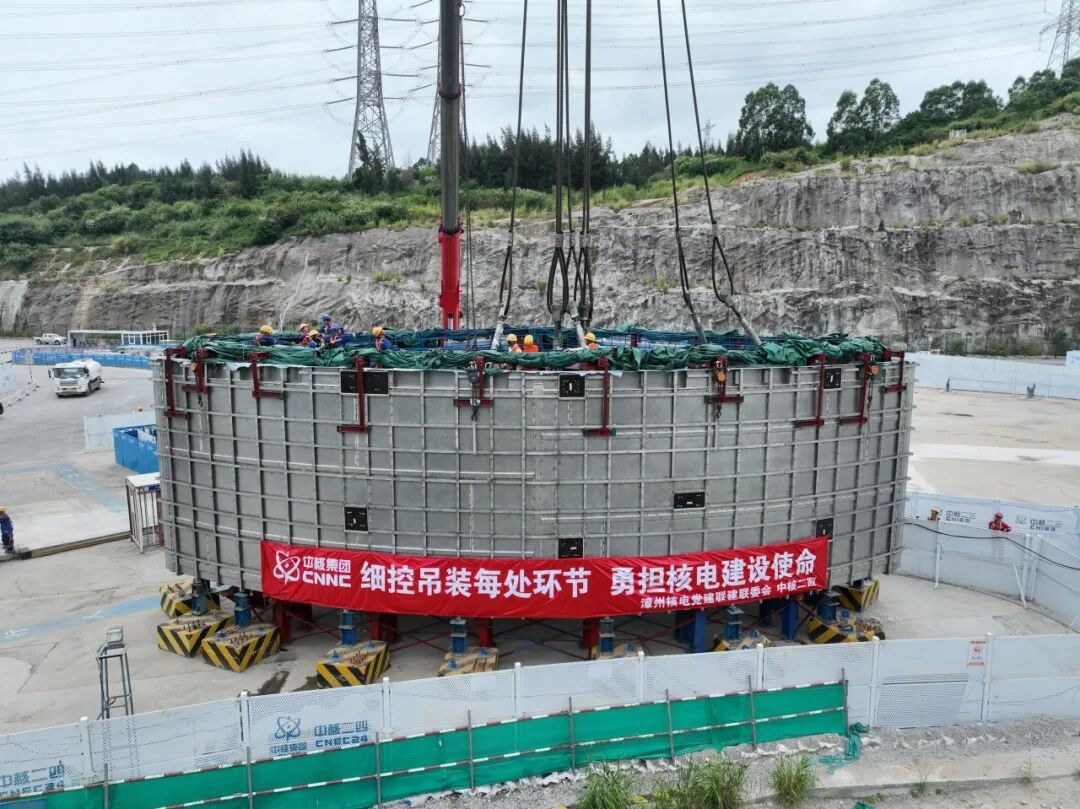
Successful Hoisting of Module 3 of the Passive Containment Cooling Water Tank for Unit 4 of Zhangzhou Nuclear Power Plant
On August 15, the hoisting of Module 3 of the passive containment cooling water tank in the reactor building of the nuclear island of Unit 4 at Zhangzhou Nuclear Power Plant was successfully completed, with the entire hoisting process being safe and quality-controlled. The passive containment cooling water tank is an important component of the passive part of the containment cooling water injection system. With a total height of 22.02 meters, it features a non-uniform cross-section in an approximately fan-shaped structure and is planned as three integral modules. Module 3, hoisted this time, had a total lifting weight of approximately 132.8 tons and a height of 5.84 meters, and was positioned using a 2000-ton-class crawler crane. As the crane slowly lifted the module, through a series of precise operations including hook lifting, boom slewing, crane traveling, and luffing, Module 3 was smoothly placed onto Module 2 of the passive containment cooling water tank, with the entire process proceeding seamlessly...
2026-08-17
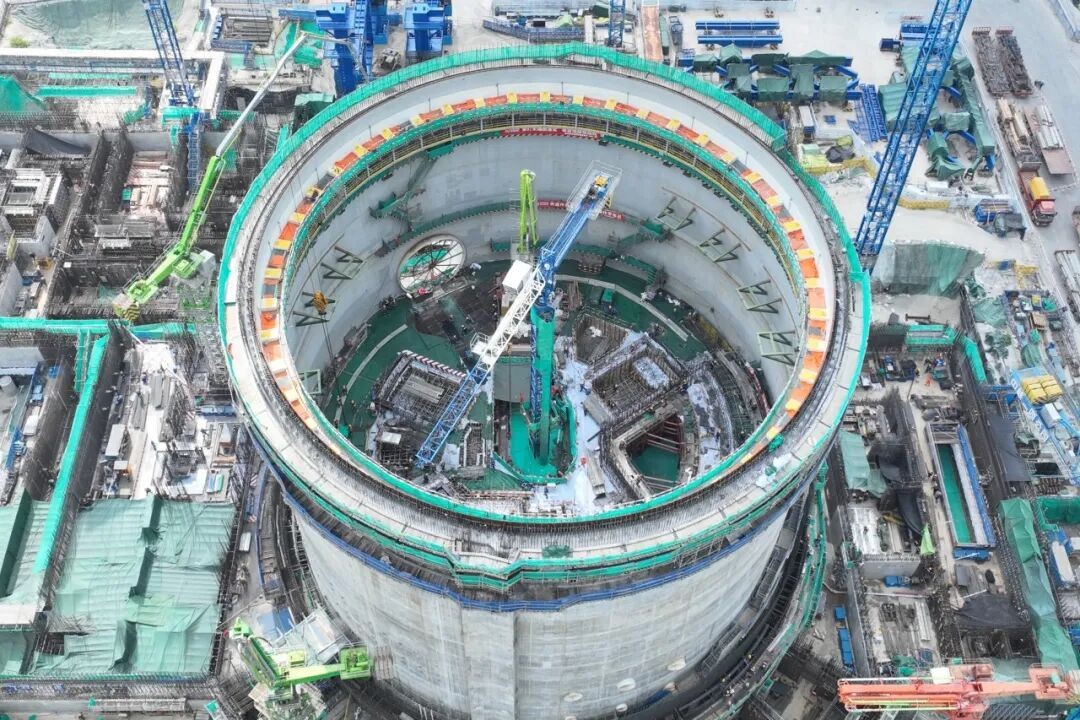
Concrete Placement of the 16.5m Slab in the Reactor Building of Unit 4 at Zhangzhou Nuclear Power Plant Successfully Completed
At 21:58 on August 13, the concrete placement of the 16.5m slab in the internal structure of the reactor building of Unit 4 at Zhangzhou Nuclear Power Plant was successfully completed, with safety and quality under control throughout the process, laying a solid foundation for subsequent key path milestones such as crane availability and inner dome lifting. As the core load-bearing structure within the reactor building, the 16.5m slab of the internal structure serves as the critical support platform for the introduction, positioning, and installation of subsequent large-scale core equipment. The engineering structure features key challenges including large construction volume, staggered elevation differences, modular structural rebar installation, and high-precision installation of owner-supplied items, imposing extremely high requirements on overall construction organization, safety, and quality control. The total concrete volume placed this time was 2,297 cubic meters, with a continuous placement duration of 30.5 hours.
2026-08-15