
Search Results
Keyword:mass spectrometry analysis
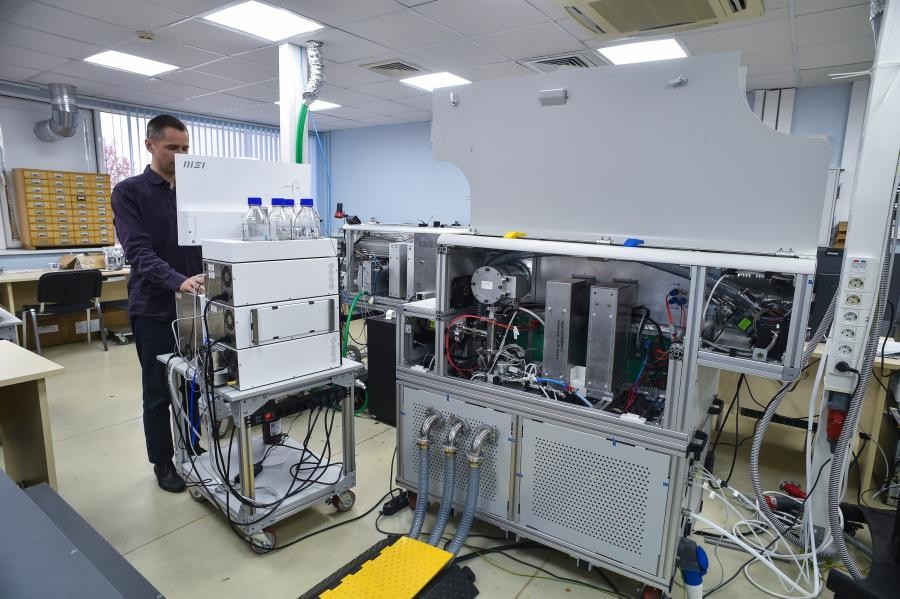
Russia's MEPhI Electrospray Ionization Triple Quadrupole Mass Spectrometer Listed in Russia's Key Scientific Instrumentation Projects
According to the 2025 activity report recently released by the Russian Ministry of Science and Higher Education, the triple quadrupole mass spectrometer with electrospray ionization developed by the National Research Nuclear University MEPhI (Moscow Engineering Physics Institute) has been listed as one of the 8 successful projects under the federal program "Development of Domestic Civil Instrumentation for Scientific Research." The mass spectrometer, developed under the guidance of MEPhI Professor Alexey Sysoev, is primarily used for quantitative analysis and identification of chemical substances, particularly suitable for identifying relevant components in complex mixtures. Previously, all such instruments on the Russian market were imported. This independently developed chromatography-mass spectrometry system can handle...
2026-08-01

U.S. Research Team Tracks Main Drivers of Global Methane Rise Using Stable Isotope Analysis
A research team from the U.S. National Oceanic and Atmospheric Administration Global Monitoring Laboratory and the University of Colorado has recently traced the sources of the rapid rise in global atmospheric methane since 2007 through high-precision methane concentration measurements and carbon and hydrogen stable isotope analysis. The findings show that over the past two decades, microbial emissions have been the primary factor driving the increase in methane concentrations, while fossil fuel-related methane emissions may have remained relatively stable overall. A methane molecule consists of one carbon atom and four hydrogen atoms, and methane from different sources differs in its carbon and hydrogen isotope composition. Researchers used this chemical fingerprint to distinguish methane sources: fossil fuel methane such as natural gas typically contains a relatively higher proportion of carbon-13, while methane produced by microbial processes in wetlands, landfills, livestock, and agricultural environments has a lower carbon-13 proportion, exhibiting a "lighter" isotopic signature. The proportion of deuterium in hydrogen isotopes also varies with the way methane is formed, providing a further basis for source identification.
2026-07-31