
Search Results
Keyword:neutrinos
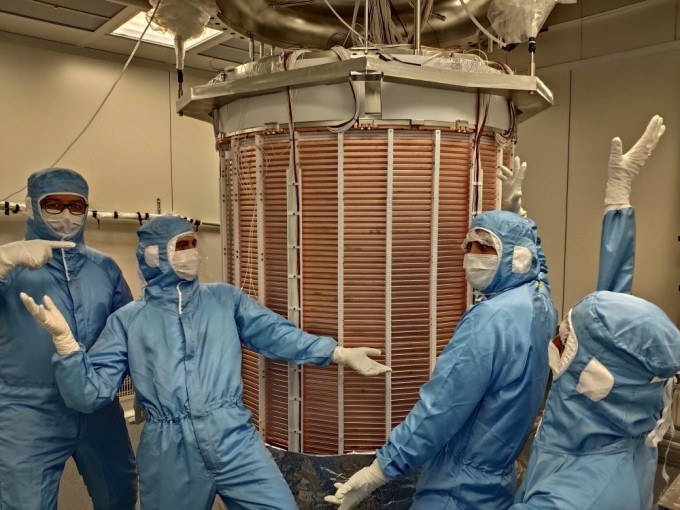
XENONnT Dark Matter Detector Captures Faintest Solar Neutrino Signal Ever Observed
September 1 news - The XENONnT dark matter detection experiment at the Gran Sasso National Laboratory in Italy has achieved new progress. The XENON collaboration research team announced that the detector has captured low-energy solar neutrino collision signals never observed before, lowering the neutrino detection energy threshold to approximately 17 kiloelectron-volts (keV). The research team's analysis indicates that the probability of the signal being merely a statistical fluctuation is less than one in a million. Neutrinos are elementary particles with no electric charge and extremely small mass, which can be produced in processes such as nuclear fusion reactions in the solar core, supernova explosions, and nuclear fission in reactors. Due to the extremely weak interaction between neutrinos and matter, vast numbers of neutrinos can pass through the Earth, which also makes detection...
2026-09-02
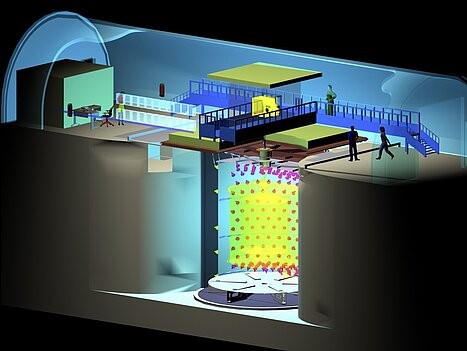
Antineutrinos Detected for the First Time in Spent Fuel Elements
Even after a nuclear reactor has been shut down, the radioactive fuel continues to emit a faint stream of antineutrinos. The Double Chooz collaboration, led by scientists from the Max Planck Institute for Nuclear Physics (MPIK), has succeeded for the first time in measuring this elusive signal, opening up new prospects for reactor monitoring, nuclear safety, and control procedures. The Double Chooz detector. Image credit: Double Chooz collaboration. The research team conducted these measurements at the Chooz nuclear power plant in northern France. The Double Chooz detector is located approximately 400 meters underground, in close proximity to two reactor cores. Inside, the detector contains more than 30 cubic meters of liquid scintillator material...
2026-08-04