Registration
REGISTER FOR THE CONFERENCE
 Apply to Exhibit
APPLICATION FOR EXHIBITION
 Sponsorship
SPONSORSHIP APPLICATION

Estonia Selects Three Candidate Sites for Its First BWRX-300 Nuclear Power Plant
Recently, the Estonian government officially announced that it will focus on three potential sites—Madala, Malla, and Letipea—in the Viru-Nigula area in northern Estonia for the development of the country's first nuclear power plant projects. Meanwhile, in accordance with the International Atomic Energy Agency (IAEA) risk assessment guidelines and for national defense and security considerations, Estonia has withdrawn from three other sites previously considered in the municipality of Lüganuse. The project development company Fermi Energia plans to deploy two GE Vernova Hitachi Nuclear Energy BWRX-300 small modular reactors (SMRs), each with a single-unit power output of 300 MW, at the selected site.
2026-11-11
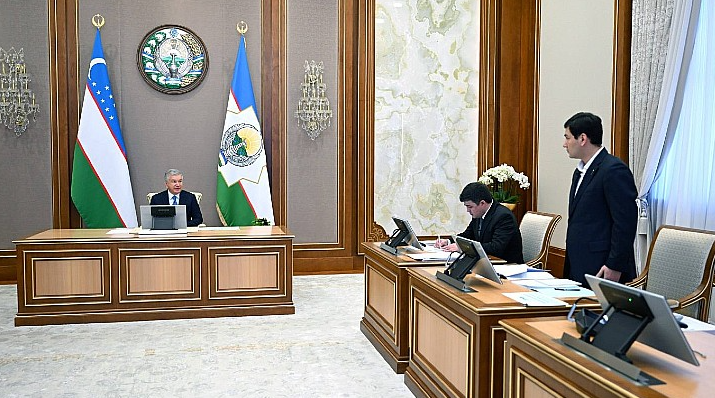
Uzbekistan Plans to Double Uranium Production by 2030
2026-11-11
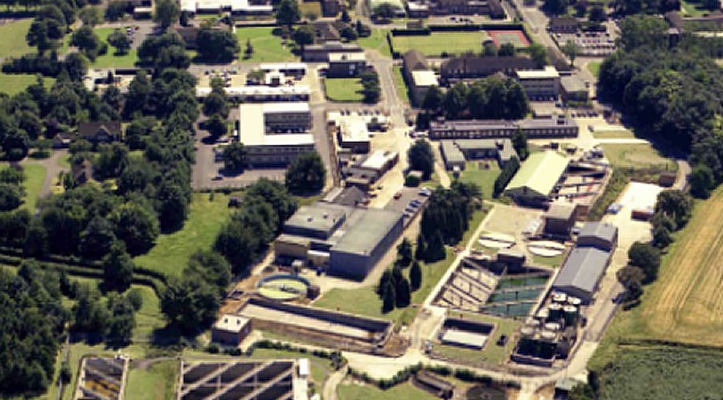
Largest-ever remediation completed at UK's Harwell nuclear research site
2026-11-11
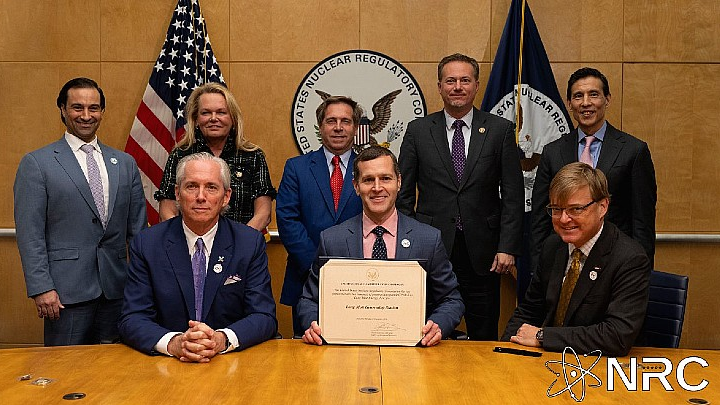
U.S. NRC Issues First High-Temperature Gas-Cooled Reactor Construction Permit in Nearly Sixty Years
2026-11-11
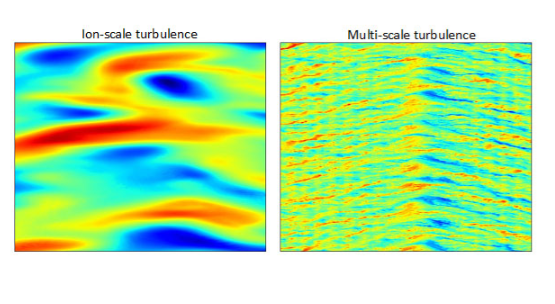
German-Italian Team Achieves Acceleration of Tokamak Turbulence Simulation Code
2026-11-11
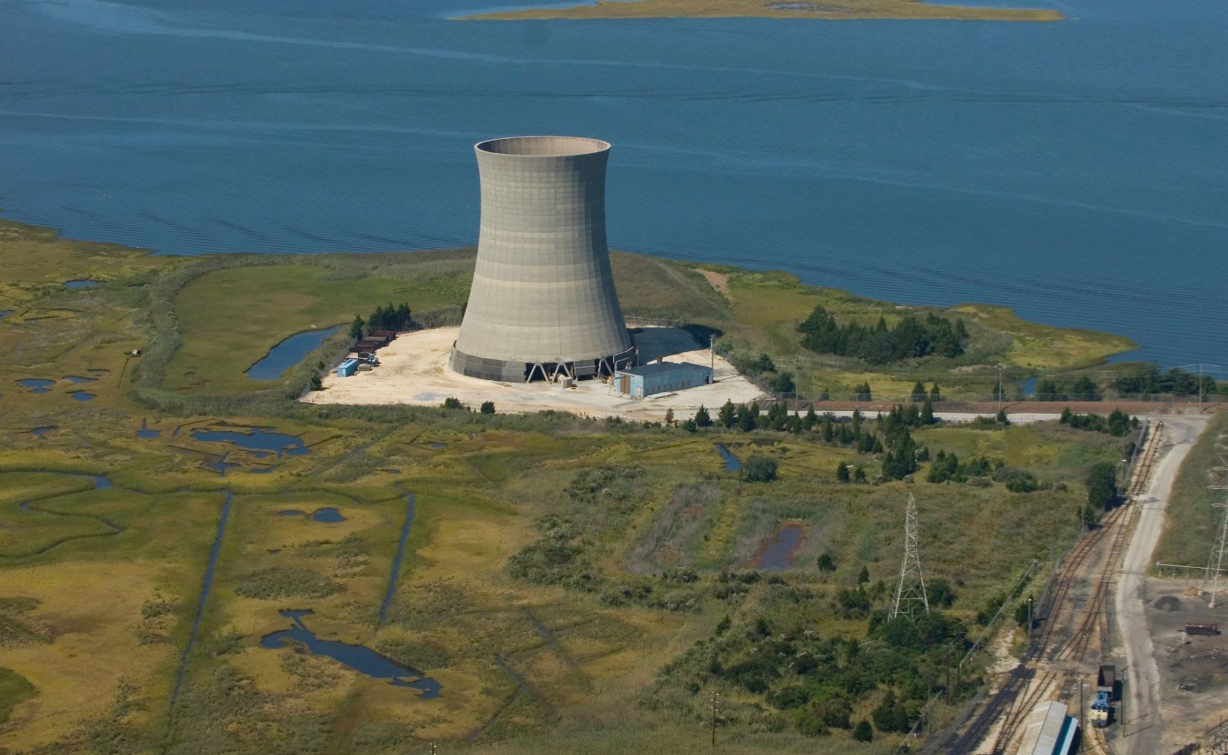
New Jersey Launches Public Comment Period for Advanced Nuclear Energy Project Review
2026-11-11
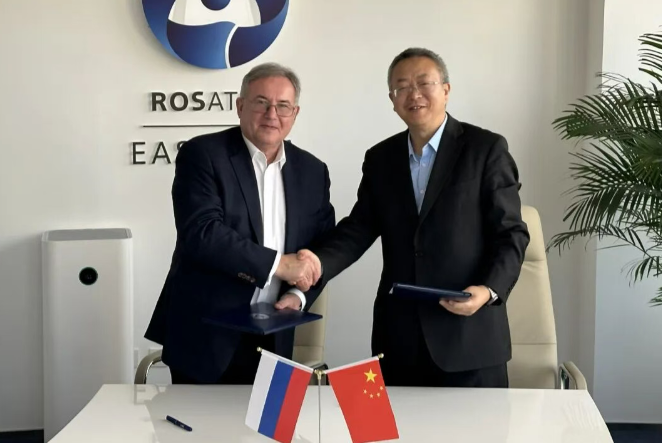
CAS and Russia's MBIR Fast Reactor Deepen Cooperation
2026-11-11

Unit 4 of CGN's Zhejiang Sanao Nuclear Power Project officially commences construction
2026-11-11
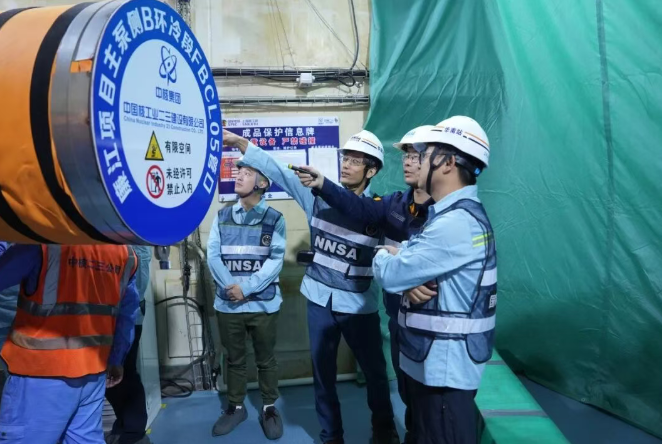
South China Regional Office conducts safety inspection of Lianjiang Nuclear Power Unit 2
2026-11-11
Recently, the Institute of Modern Physics of the Chinese Academy of Sciences and the limited liability company serving as the lead entity of the MBIR International Research Center Consortium formally signed a multilateral cooperation agreement. The two sides defined a comprehensive cooperation framework on the platform of the International Research Center for the sodium-cooled multipurpose fast neutron research reactor (MBIR), and will focus on in-depth scientific research on Accelerator Driven System (ADS) related technologies, materials science research, and neutron utilization, marking a breakthrough in practical cooperation between China and Russia in the interdisciplinary field of advanced nuclear energy and large-scale scientific facilities. As China's largest comprehensive research center in the field of heavy ion physics and its applications, the Institute of Modern Physics of the Chinese Academy of Sciences...
2026-11-11
Recently, the engineering team at Tomsk Polytechnic University in Russia has made important progress in the development of core equipment for large-scale scientific facilities, successfully developing a prototype high-precision programmable current source (FC current source) for fast correction magnets for the new SILA synchrotron radiation and free electron laser complex, and has fully launched the next stage of comprehensive testing. As an important support for the SILA project, the FC current source is designed to achieve fast current regulation over a wide range and high-precision output. Compared with conventional power supplies, this device not only needs to achieve current formation accuracy of up to 200 ppm, but must also operate within -5 to +5 A ...
2026-11-10
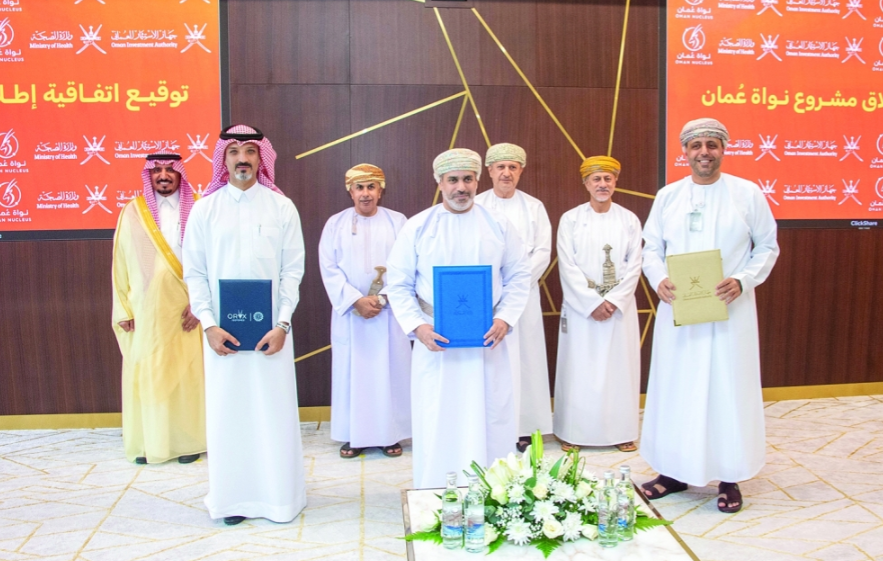
Recently, Oman officially launched its first local production project for diagnostic and therapeutic radiopharmaceuticals. Named "Nucleus Oman," the project has a planned total investment of 6.5 million Omani Rials (approximately USD 17 million) and is being jointly advanced by the Oman Investment Authority (OIA) and Saudi Arabia's Oryx Isotopes Industry Company, with strong coordination and support from Oman's Ministry of Health and Ministry of Finance. The project adopts an overall public-private partnership (PPP) model. The joint venture entity established by the Oman Investment Authority and Oryx Isotopes Industry Company will, in accordance with a long-term agreement formally signed with Oman's Ministry of Health...
2026-11-10
Recently, the University of Texas MD Anderson Cancer Center (UT MD Anderson) in the United States and Israeli proton therapy equipment company P-Cure reached a strategic collaboration to jointly develop and validate a compact upright particle therapy platform. The two parties aim to enable a single system to deliver both proton and helium ion beams, so that in the future the particle type can be selected based on tumor location, disease characteristics, and treatment goals. The collaboration will start with the existing proton therapy equipment. P-Cure's compact proton system has received marketing clearance from the U.S. Food and Drug Administration (FDA); the equipment uses a synchrotron to generate proton beams and delivers dose to the target area through pencil beam scan...
2026-11-09
Recently, the Fourth China-ASEAN Forum on Peaceful Uses of Nuclear Technology was held in Kuala Lumpur, Malaysia, with more than 170 representatives from 10 countries exchanging views on civil nuclear energy and nuclear technology applications. Under the theme "Nuclear Beauty for Our Home," the forum was hosted by the China Atomic Energy Authority, co-organized by the Ministry of Science, Technology and Innovation of Malaysia, and undertaken by China National Nuclear Corporation (CNNC). For the first time, representatives from member states of the Gulf Cooperation Council were invited to attend, further expanding the scope of regional exchanges. Industrial application was an important topic of this forum. The forum featured four thematic roundtable discussions on civil nuclear energy development, nuclear technology empowering industry and modern agriculture, nuclear technology empowering healthcare, and nuclear science and technology education and joint training of local talent...
2026-11-07
Recently, the commercial heavy water reactors at Qinshan Nuclear Power have been producing isotopes such as cobalt-60, carbon-14, lutetium-177, and yttrium-90 while continuing to supply electricity, expanding the comprehensive utilization pathways of nuclear power units. Qinshan possesses the only two commercial heavy water reactor units in China, with an annual power generation of approximately 12 billion kWh, and their reactor irradiation capability also provides production conditions for isotope preparation. Isotope production utilizes neutrons within the reactor to irradiate specially designed targets, forming target nuclides through nuclear reactions and subsequent decay. Different nuclides require different target materials, irradiation conditions, and processing procedures. After irradiation is completed, targets must undergo corresponding processing and quality inspection before entering subsequent product manufacturing...
2026-11-07
Recently, the National Synchrotron Light Source II (NSLS-II) in the United States disclosed progress in intelligent X-ray imaging experiments: the research team integrated machine learning into the beamline experimental workflow, enabling automatic identification of regions within samples that warrant further measurement, and demonstrated real-time ptychographic reconstruction capability at 200 images per second. These achievements advance data analysis into the experimental process itself, providing a new technical pathway for improving the utilization efficiency of limited beam time. In the automatic region selection experiment, the system acquires images while simultaneously analyzing complex samples, and then autonomously selects locations requiring high-resolution measurement. Researchers can therefore first conduct large-area scans and then concentrate fine measurements on regions of research value. This demonstration verified the feasibility of data-driven experiments, but does not yet mean that all samples and beamline experiments have achieved autonomous operation.
2026-11-06