
Hoisting in Place! Global Largest "Artificial Sun" Core Module Installation Progress Exceeds Two-Thirds
 Scan to share
On July 28, local time in France, the sixth vacuum vessel module of the International Thermonuclear Experimental Reactor (ITER) tokamak device—Sector Module 1—successfully completed its overall hoisting and precise positioning. Thus, the assembly progress of ITER vacuum vessel modules has exceeded two-thirds. As the general assembly enters a new phase of multi-disciplinary cross-construction, the China Nuclear Engineering Consortium led the coordination of the international team to successfully complete this critical hoisting, laying a solid foundation for subsequent assembly tasks, while fully demonstrating the cross-cultural project management and overall coordination capabilities of the Chinese team in international mega-science projects.
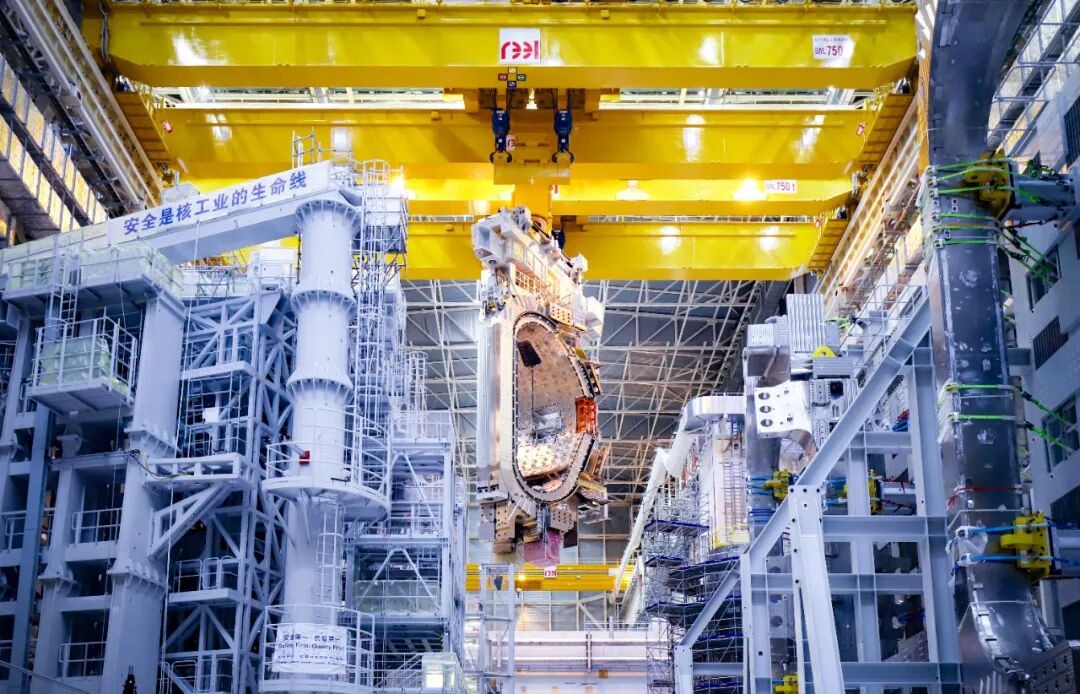
The vacuum vessel is a core component of the tokamak device, consisting of nine large sector modules installed and connected sequentially. Each module requires transport, lifting, pit entry, rotation, and millimeter-level positioning under complex spatial and interface conditions, with high construction organization difficulty and a wide range of professional coordination. As the in-pit work area becomes increasingly congested, multiple critical tasks are advancing in parallel, imposing higher requirements on work window scheduling, equipment status confirmation, technical interface alignment, and on-site resource allocation.
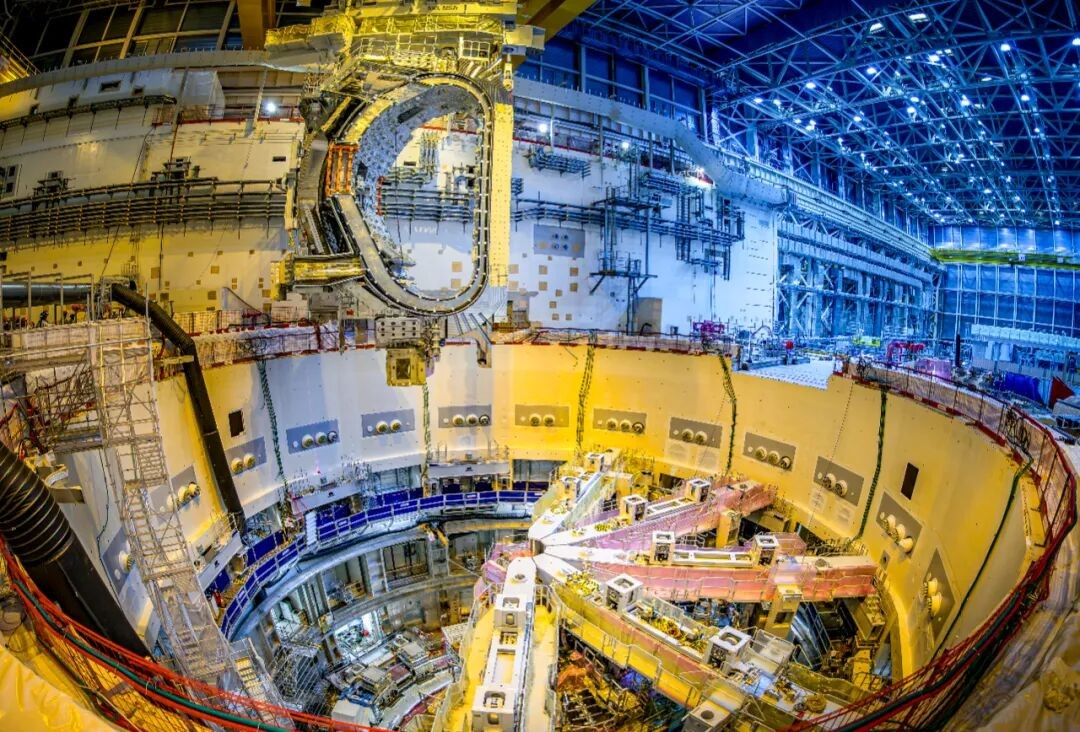
Facing complex working conditions, the China Nuclear Engineering Consortium maintained efficient coordination with the ITER Organization, various partners, and the European local supply chain. Regarding issues such as equipment status, system linkage, spatial cross-interference, and changes in construction conditions, all parties conducted timely assessments, rapid responses, and collaborative decision-making to ensure effective connections at each stage. Leveraging thorough preliminary preparations, standardized process control, and efficient collaboration among all personnel, the relay operation lasting nearly 30 hours—from lifting in the assembly hall, to rotating the module into the tokamak pit, and finally to precise positioning—achieved zero safety incidents and zero quality events, fully demonstrating the rigorous and efficient collaborative operational capability of the consortium team.
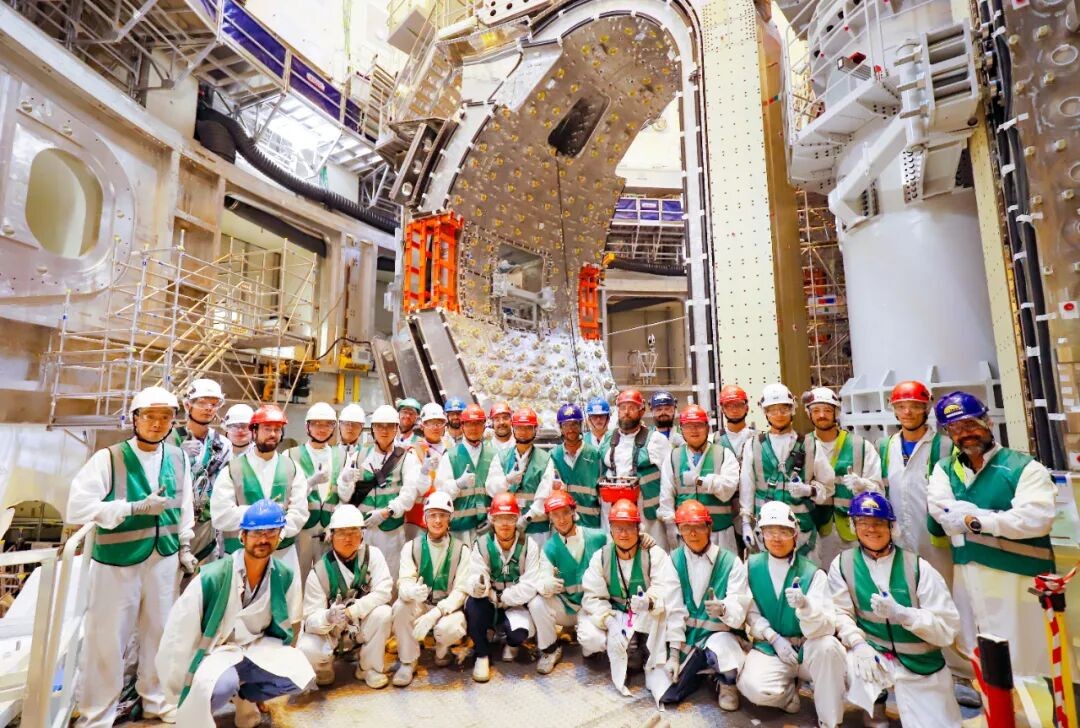
Going forward, the China Nuclear Engineering Consortium will continue to focus on key milestone nodes of the ITER project, further deepen international collaboration, strengthen overall planning, technical coordination, and risk pre-control, and make every effort to advance the installation of remaining Sector modules and related general assembly tasks, continuously contributing Chinese strength to the construction of the ITER project.
Disclaimer: Information republished from partner media, institutions or other websites is provided for reference and communication purposes only. It does not imply endorsement of its views or verification of its accuracy. Please contact us if any content infringes rights or requires correction.