
Rosatom Says Russian Nuclear Plants Operate Stably During Summer Heat
 Scan to share
In response to recent operational pressures faced by foreign nuclear power plants due to high temperatures and low water levels, Alexey Likhachev, CEO of Rosatom, stated that Russian nuclear power plants are operating normally during the summer peak electricity demand period, with stable power generation.
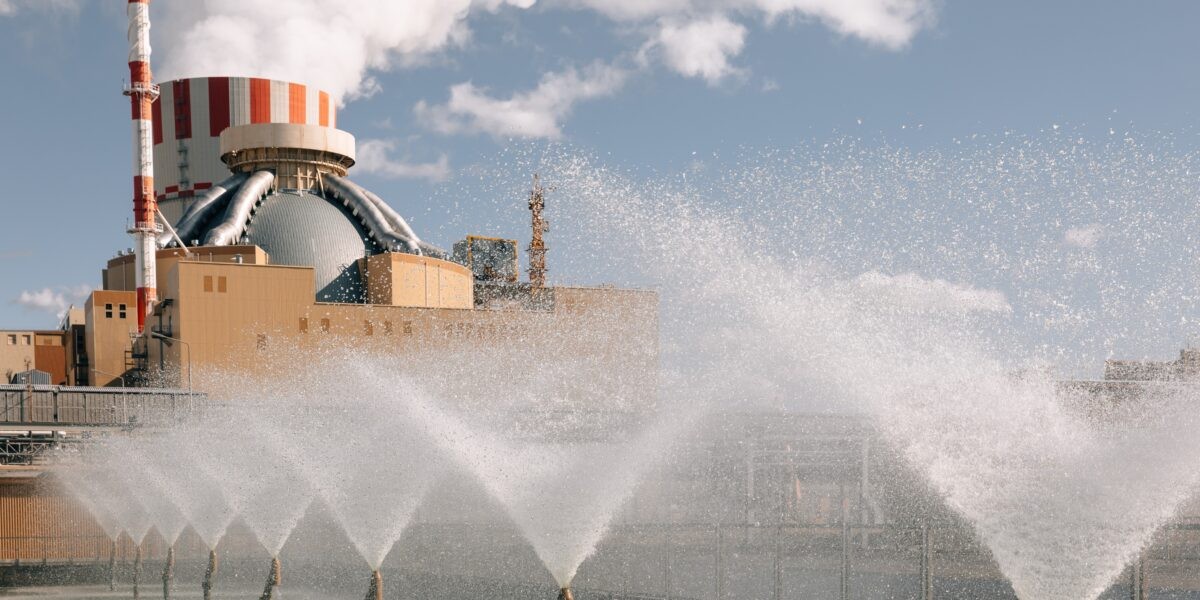
Likhachev said that hot weather does require nuclear plant operators to pay more attention to the condition of cooling systems, but for Russian nuclear plants, this is a normal seasonal factor. Russian nuclear power plants have incorporated significant climate fluctuations, including extreme weather scenarios, into their design and operational phases.
He stated that Rosatom has experience in constructing and operating nuclear power plants under diverse climatic conditions, ranging from the Arctic region to arid and hot areas. Russia currently operates the Kola Nuclear Power Plant, the Bilibino Nuclear Power Plant, and floating nuclear power plants, and is also advancing projects in temperate climate zones and hot arid regions, such as the El Dabaa Nuclear Power Plant in Egypt. From the initial design stage, these projects incorporate natural factors including site temperature, hydrological conditions, wind patterns, water supply characteristics, and seismic activity into the development of solutions.
Under high-temperature or water-constrained conditions, nuclear power plants typically ensure stable operation through multiple engineering solutions. Heat generated by turbine condenser systems can be dissipated through once-through cooling systems, which draw water from an external source for cooling before returning it; alternatively, recirculating cooling systems can be used, which repeatedly reuse cooling water in a closed loop. Cooling methods currently used at Russian nuclear power plants include evaporative cooling towers, forced-draft cooling towers, and spray ponds.
Automated systems are also an important tool for modern nuclear power plants to cope with complex operating conditions. These systems can monitor key parameters such as temperature, pressure, and coolant flow rate in real time. At some newly built nuclear power plants, automated systems are used not only to identify operational deviations but also to help optimize equipment operating modes, thereby reducing the risk of abnormal conditions escalating further.
Likhachev noted that at Novovoronezh Nuclear Power Plant II, each unit is equipped with an evaporative cooling tower approximately 171 meters high; at Kursk Nuclear Power Plant II, the cooling towers reach a height of 179 meters, with heat dissipation capacity increased by approximately 22%. The Leningrad Nuclear Power Plant and Balakovo Nuclear Power Plant use cooling systems that include spray ponds.
He also cited the Rostov Nuclear Power Plant as an example of operational assurance under high-temperature conditions. Located in southern Russia, the Rostov plant experiences summer temperatures exceeding 40 degrees Celsius, with soil temperatures reaching 60 degrees Celsius. After the plant began operating at full capacity, it was found that process water temperatures at Units 3 and 4 were higher than optimal levels during the hottest periods. To address this, the plant constructed a group of small forced-draft cooling towers, which were commissioned in 2021. These cooling towers operate in coordination with the main cooling towers, enhancing heat exchange capacity during peak temperature periods and ensuring stable unit output. A similar group of cooling towers for Unit 4 is currently under construction, with commissioning expected in 2027.
Likhachev stated that for modern nuclear power plants built to Russian designs, low water levels and drought are not insurmountable operational obstacles. Even under abnormally high temperatures, these plants can maintain reliable and safe operation at 100% rated capacity. According to his remarks, Russian nuclear power generation has so far this year reached 129.6 billion kWh, exceeding the federal plan target by 7.8%.
Disclaimer: Information republished from partner media, institutions or other websites is provided for reference and communication purposes only. It does not imply endorsement of its views or verification of its accuracy. Please contact us if any content infringes rights or requires correction.