
U.S. nuclear energy company Holtec advances on two fronts this week: decommissioning aging nuclear plants and positioning small reactors in the southern U.S.
 Scan to share
U.S. nuclear energy company Holtec recently announced two significant developments, reflecting the dual trend in the current nuclear power industry of “retiring existing capacity while expanding new capacity.” On one hand, the U.S. Nuclear Regulatory Commission approved the license termination plan for the Oyster Creek nuclear power plant, moving the decommissioning process of this veteran commercial nuclear facility in New Jersey, which began operations in 1969, past a key regulatory milestone. On the other hand, Holtec announced a partnership with Entergy and Hyundai Engineering & Construction to evaluate potential sites for deploying new reactors in the southern Gulf Coast region of the United States.
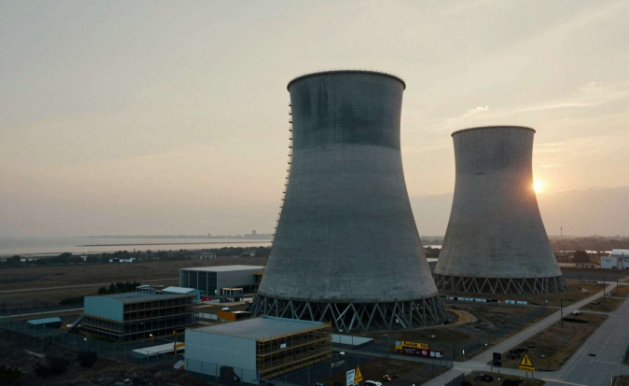
The Oyster Creek plant ceased power generation in 2018 and was subsequently taken over by Holtec for decommissioning. The recently approved license termination plan is a critical document in the nuclear facility decommissioning process that demonstrates the site can meet unrestricted release standards, signifying that regulators have accepted Holtec's proposed approach for cleanup, decontamination, and final closure. While this does not mean decommissioning is complete, it establishes the institutional foundation for subsequent on-site cleanup, radiation level verification, and the eventual termination of the nuclear facility license.
This progress also reflects the accelerated decommissioning model Holtec has championed in recent years. Traditional nuclear plant decommissioning often employs a long-term safe storage approach, where sites may remain idle for decades—up to 60 years—before gradual dismantlement and decontamination begin. Holtec, by contrast, favors moving more quickly into active decontamination and dismantlement phases to shorten timelines, control costs, and allow surrounding communities to see the potential for land reuse sooner. For the coastal New Jersey communities near Oyster Creek, the lifting of the facility's nuclear regulatory status will make land-use conversion a practical reality.
Meanwhile, Holtec is also accelerating its regional positioning for new nuclear projects. The company is partnering with Entergy, a major southern U.S. utility, and Hyundai Engineering & Construction to conduct feasibility assessments for potential reactor deployment in the southern Gulf Coast region, covering site conditions, grid interconnection, regulatory pathways, and construction suitability. Entergy operates grid infrastructure and customer bases in Louisiana, Mississippi, Arkansas, and Texas—regions with high industrial loads and notably growing electricity demand—making them priority areas for commercial evaluation of small modular reactors.
The SMR-300 small modular reactor Holtec is developing remains in the U.S. Nuclear Regulatory Commission review process, and the project is still a considerable distance from actual construction. This partnership is not a construction announcement but rather an early-stage site selection and commercial feasibility exploration. However, the involvement of a major utility indicates that regional U.S. power companies are reassessing the role of nuclear energy in their long-term electricity generation mix. For Holtec, simultaneously cleaning up the previous generation of nuclear assets while advancing the deployment of next-generation reactors is becoming its core role during the nuclear industry's transition.
Disclaimer: Information republished from partner media, institutions or other websites is provided for reference and communication purposes only. It does not imply endorsement of its views or verification of its accuracy. Please contact us if any content infringes rights or requires correction.