
Latin American Energy Experts Learn About Russia's Nuclear Industry Development and Peaceful Use Prospects in Russia
 Scan to share
Energy experts from several Latin American countries recently visited the “ATOM” Museum at VDNKh in Moscow to gain a systematic understanding of the history of Russia's nuclear industry, key technological solutions, and future directions for the peaceful use of nuclear energy. The visit spanned from early scientific research to modern nuclear technology applications, with a focus on the operating principles of nuclear power plants, the structure of water-water power reactors, and the fundamentals of how nuclear energy is converted into electricity.
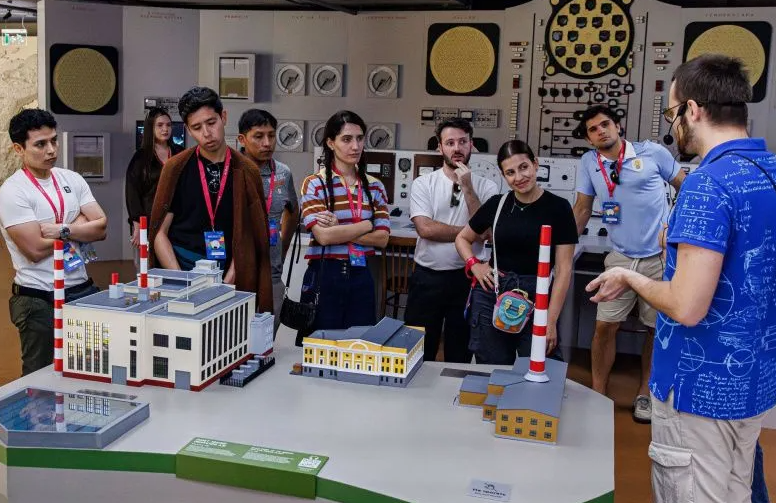
The exchange not only focused on traditional nuclear power but also showcased future-oriented technologies such as small nuclear power plants. A power transmission network planning expert from Peru noted that he had previously been unfamiliar with the development path of Russia's nuclear industry, and the visit gave him a more tangible understanding of the relevant technologies, with future solutions such as small nuclear power plants leaving a particularly strong impression. For Latin American countries, energy transition, power supply stability, and low-carbon development are all shared concerns, making Russia's nuclear energy experience of considerable reference value.
The application of nuclear technology in medicine was also a key focus of the visit. The museum introduced guests to the role of radioisotopes in human examination, disease detection, and tumor treatment, presenting the practical significance of nuclear technology extending from energy production to industry, medicine, and other fields. A project participant from Argentina believes that this experience helps to rethink his country's energy system and also demonstrates that international knowledge exchange and expert network building will remain important directions for future cooperation.
In addition to the professional visit, the Latin American delegation also toured the “Tsaritsyno” Museum-Reserve to learn about Russian history, culture, and palace and park architectural traditions. The delegates visited the Grand Palace and ceremonial halls, learned about the design concepts of architects Bazhenov and Kazakov, and expressed appreciation for the coexistence of natural landscapes and historical architecture in Moscow's urban space. A participant from Ecuador mentioned that the rivers, green spaces, parks, and lakes in the city create a natural atmosphere strikingly different from the city center.
This event was part of the cultural and professional exchange program of the InteRussia internship project. The 2026 project brought together 10 representatives from Ecuador, Cuba, Peru, Brazil, Uruguay, Chile, Bolivia, and Argentina, including ministry staff from energy departments, oil and energy industry engineers, power grid development experts, university faculty, and public relations consultants. The project is jointly organized by the Autonomous Non-Profit Organization “International Affairs,” the Gorchakov Public Diplomacy Support Fund, St. Petersburg State University of Economics, and the TV BRICS international media network, and will continue in St. Petersburg and Moscow until August 22, 2026.
Disclaimer: Information republished from partner media, institutions or other websites is provided for reference and communication purposes only. It does not imply endorsement of its views or verification of its accuracy. Please contact us if any content infringes rights or requires correction.